- Home
- News & Events
- News
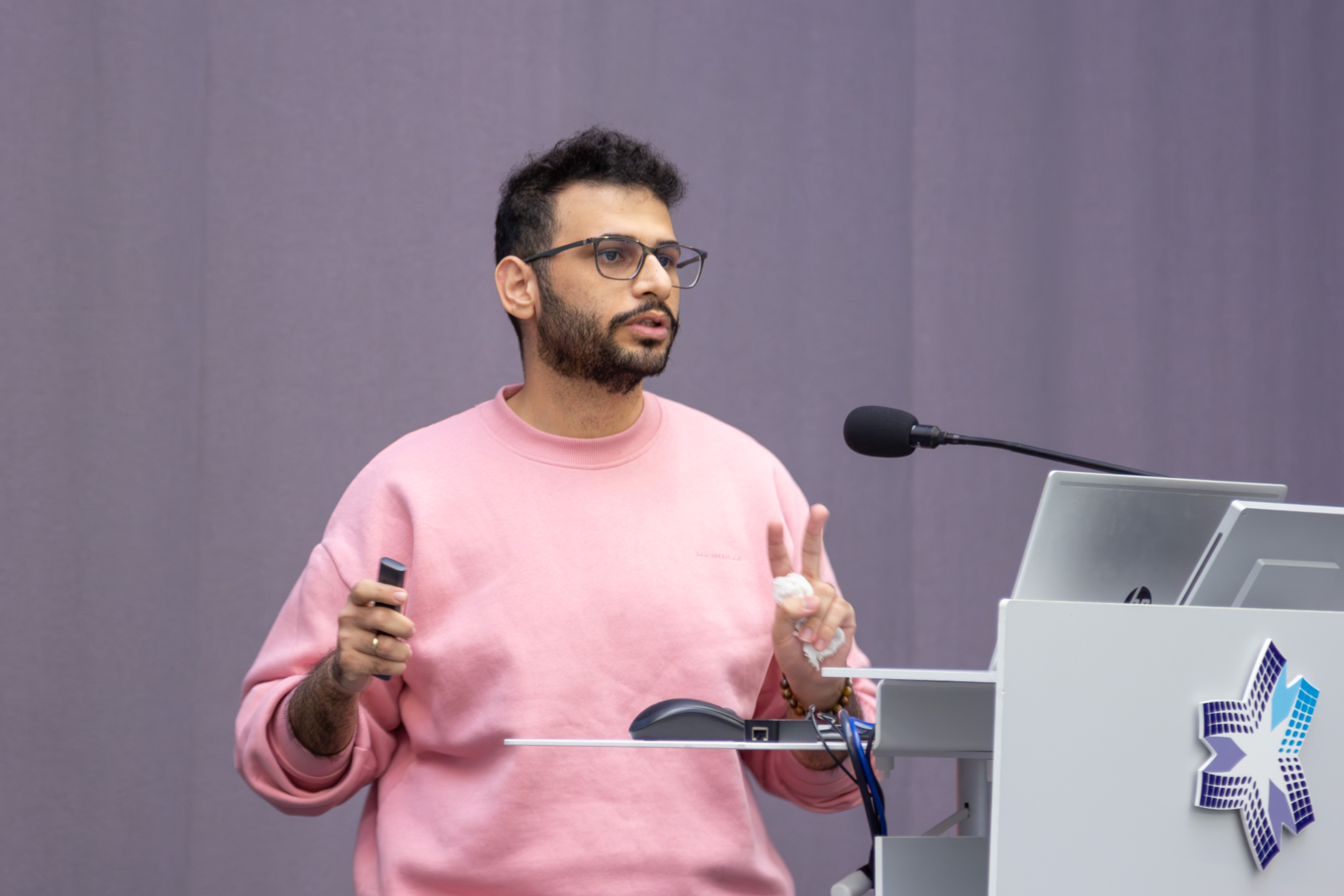
Smart wound patch, semiconductors and water pollution monitoring: innovative ideas from FTMC PhD students reach the final of the new-format “FizTeCh 2026”
Scientific research can be communicated differently. At FTMC, the young researchers’ and science communication event “FizTeCh 2026: Ideas Beyond Disciplines” brought that message to life.
The annual conference, where doctoral researchers present their work, was organised in a new format this year. In the competition final, 14 selected participants had just three minutes to explain their research to both the audience and the judging panel in a clear, engaging and accessible way.
The finalists were evaluated by a panel comprising representatives of FTMC and other organisations: FTMC Director Prof. Dr Ramūnas Skaudžius; Evaldas Pabrėža, Co-founder and CEO of Integrated Optics; Vita Remenytė, Adviser to the Director for Studies at the VU Business School; and Dr Karolina Maleckaitė-Mačiulė, Project Manager at Light Conversion and winner of the Researchers’ Grand Prix 2022.
Topics relevant to society and industry
First place went to Adei Abouhagger, a doctoral researcher at the FTMC Department of Functional Materials and Electronics, who is developing an advanced wound patch that treats wounds in an innovative way. When illuminated with red light, tiny specialised beads embedded in the patch release reactive oxygen species that destroy bacteria within the wound.
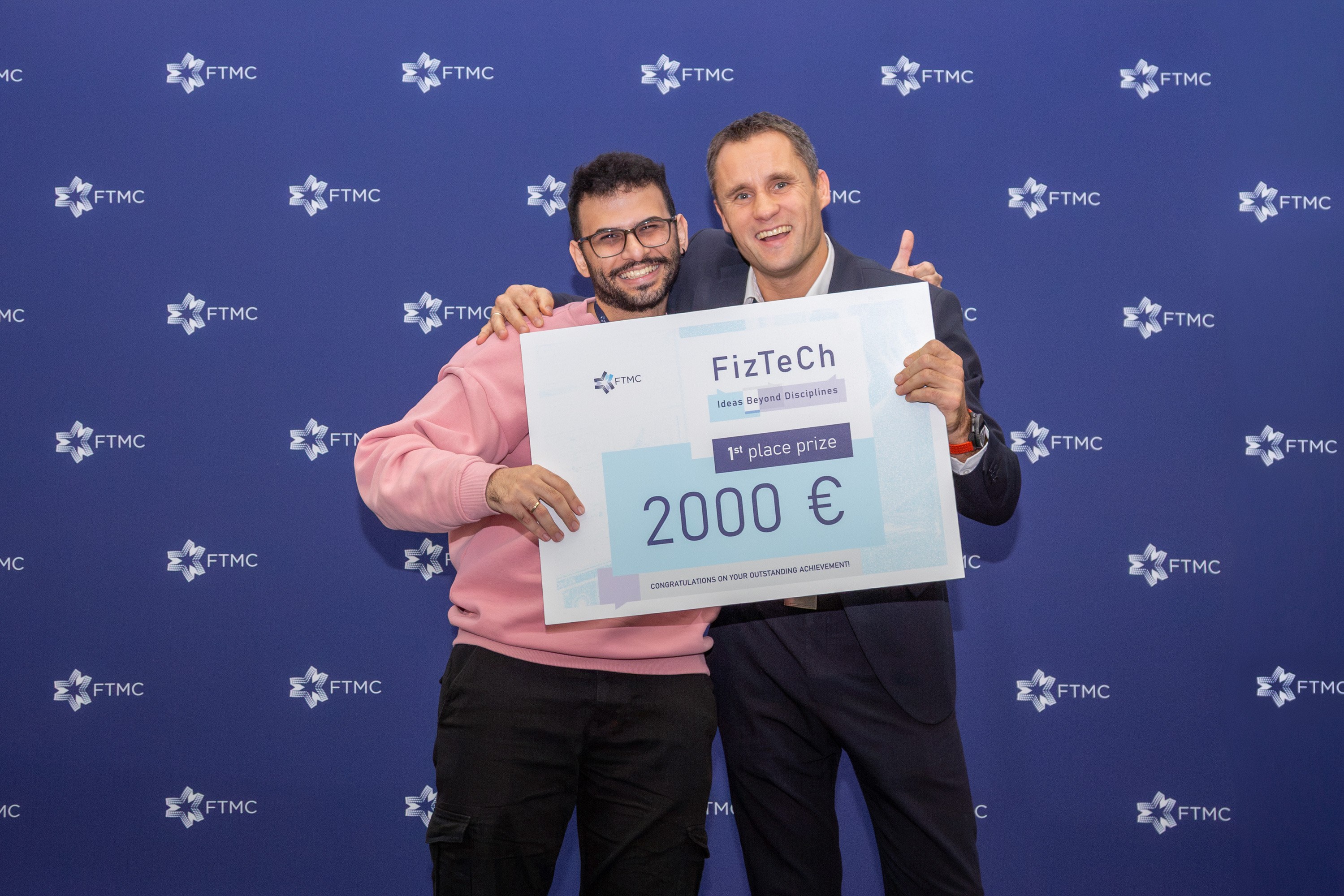
(Adei Abouhagger and FTMC Director Prof. Dr Ramūnas Skaudžius. Photo: Gabrielius Mackevičius / FTMC)
“My research focuses on microbial infections, particularly wound infections. Science must keep pace with the rapid spread of antimicrobial resistance, as it already causes a significant number of deaths worldwide. The World Health Organization has repeatedly warned about this growing threat. Our research aims to develop new technologies that can help combat these infections more effectively.
Specifically, we work with infectious wounds and use photoactive materials that respond to light and can eradicate harmful bacteria. Our innovative approach allows us to tackle infections without relying on traditional antibacterial agents, helping to avoid the problem of resistance. By combining light with simple dyes and applying the right scientific tools, we can turn this concept into an effective treatment strategy. Bringing together physics, chemistry, and engineering, we aim to develop practical solutions to one of the most alarming healthcare challenges of our time,” says Abouhagger.
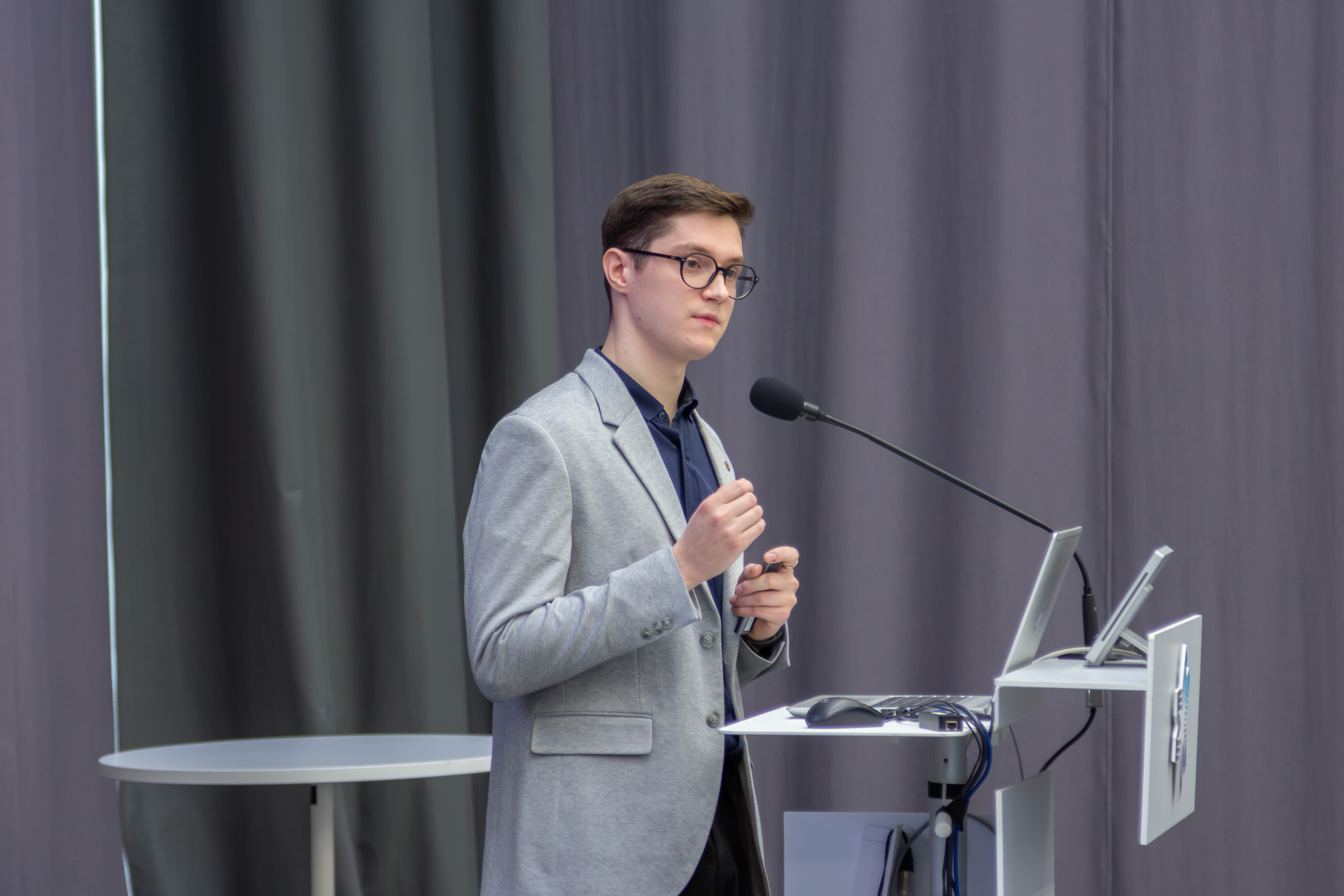
(Šarūnas Mickus. Photo: Gabrielius Mackevičius / FTMC)
The runner-up was Šarūnas Mickus, a doctoral researcher at the FTMC Department of Laser Technologies. His presentation focused on developing advanced interconnects for semiconductor components, enabling them to be manufactured faster and more efficiently.
“To achieve this, we use a patented technology called SSAIL (Selective Surface Activation Induced by Laser), which enables us to write copper tracks directly onto the surface of virtually any dielectric material using lasers.
With this approach, we can achieve copper tracks narrower than five micrometres, while maintaining equally small gaps between adjacent lines. This capability is particularly important for the advanced semiconductor packaging industry, where manufacturers face increasing demands for both higher production speeds and finer feature sizes. Our technology helps meet these requirements by enabling the rapid fabrication of interconnects with dimensions below the critical five-micrometre threshold,” explains Mickus.
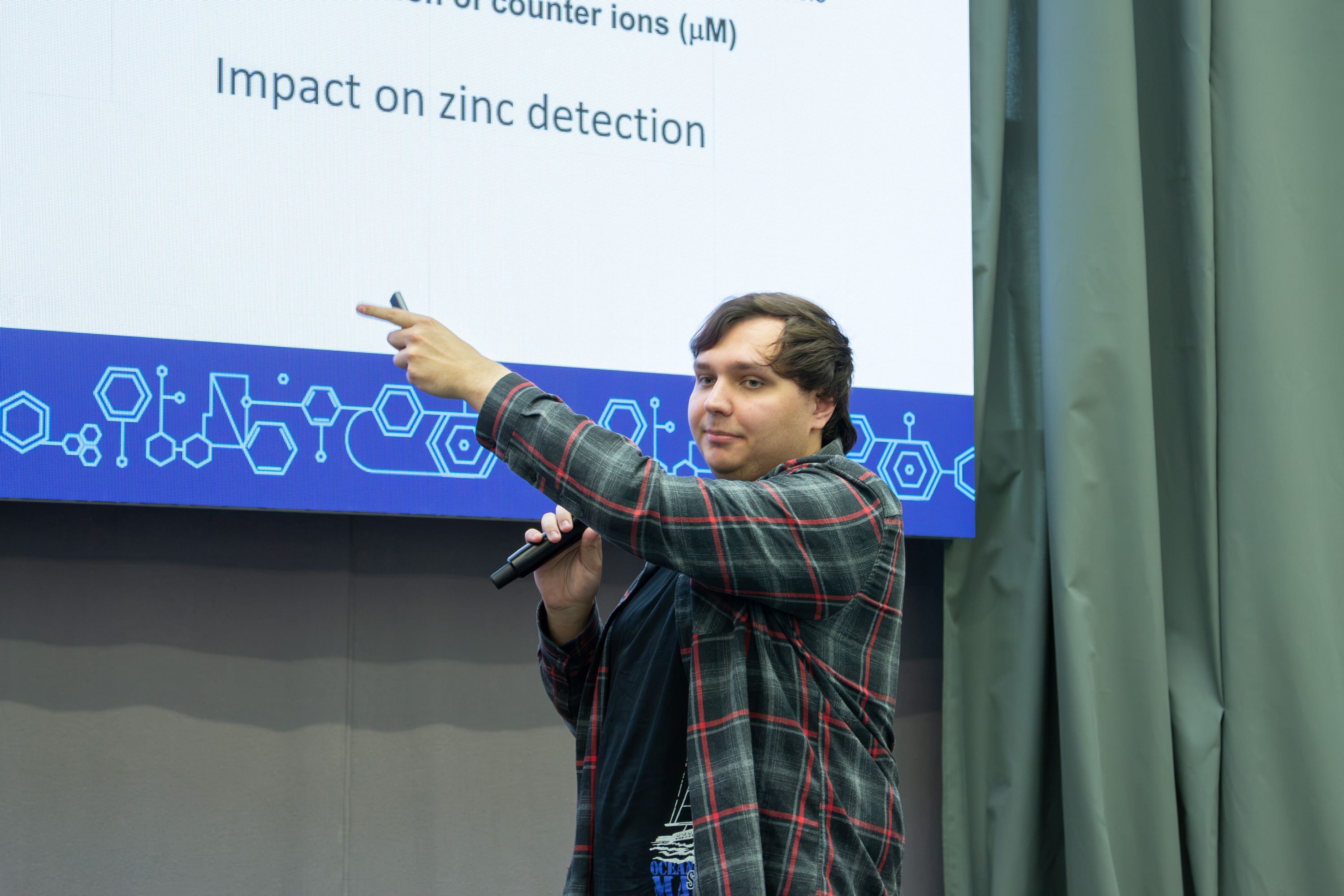
(Ilya Navitsk. Photo: Gabrielius Mackevičius / FTMC)
Third place was awarded to Ilya Navitski from the FTMC Department of Electrochemical Material Science. He presented a compact electrochemical device capable of measuring the presence of heavy metals such as zinc, cadmium and lead directly in water on site. The device relies on MXenes, microscopic sheet-like materials resembling stacks of paper that are invisible to the naked eye. It could potentially be linked to a smartphone, providing instant results.
“Heavy metal contamination remains a serious problem in many parts of the world, as pollutants from industrial activities and mining operations can enter rivers, lakes, and groundwater supplies, making the water unsafe for consumption.
Protecting water quality is essential for safeguarding public health, which is why I believe this research is highly relevant today. We need to preserve human lives, and hopefully my research will help with that,” says Navitski.
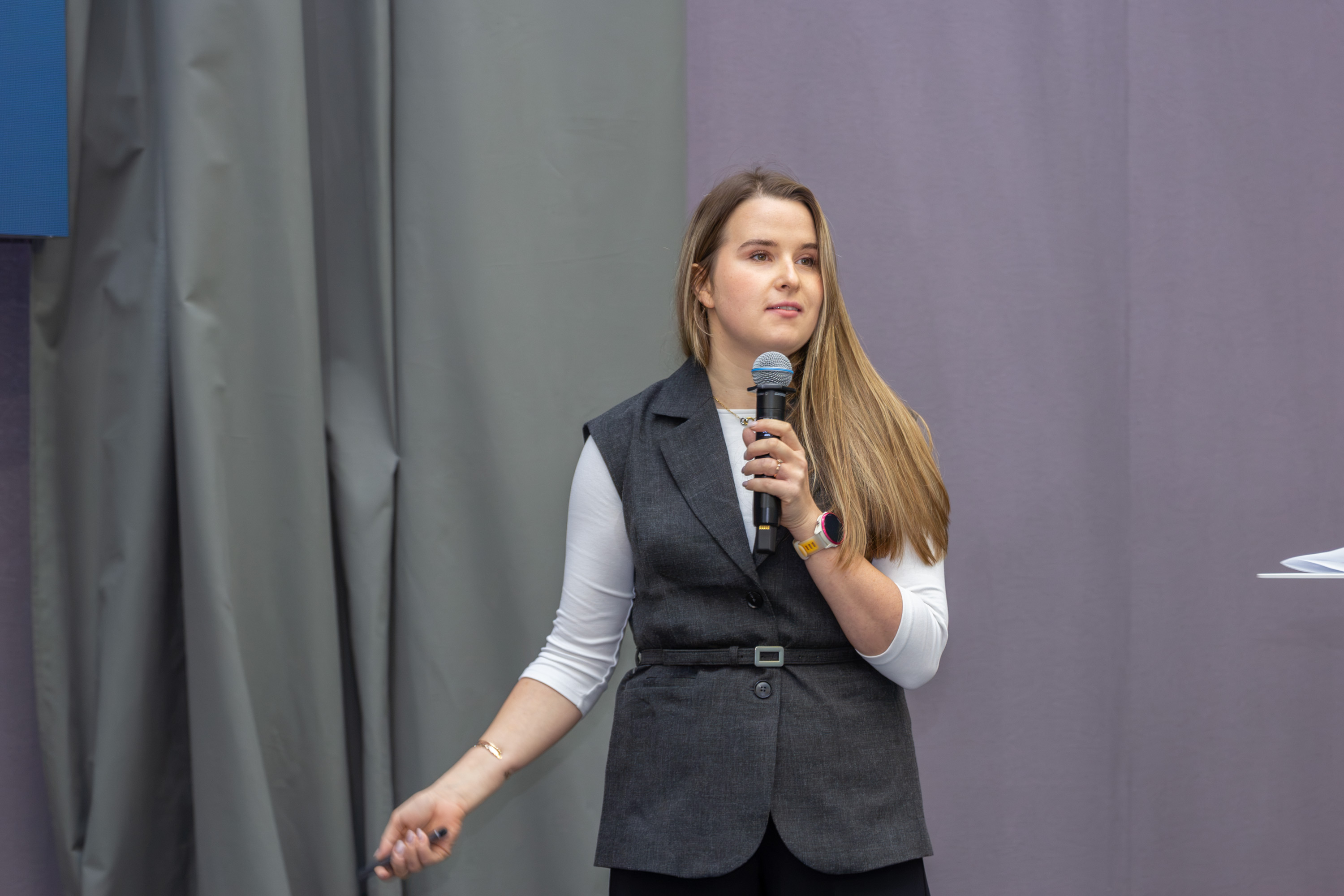
(Paulina Nemaniutė-Daubarė. Photo: Gabrielius Mackevičius / FTMC)
At FizTeCh 2026, the audience also selected their favourite finalist, while Integrated Optics presented a separate award. Both distinctions were won by Paulina Nemaniutė-Daubarė from the FTMC Department of Chemical Engineering and Technology, whose work focuses on improving next-generation sodium-ion batteries, expected to provide a more sustainable alternative to today’s lithium-ion batteries.
“My research focuses on sodium-ion batteries, specifically on developing a better binder for battery electrodes. For more than thirty years, the industry has relied on PVDF, a fluorinated polymer that must be processed using NMP, a solvent that is harmful to health. The manufacturing process also requires the solvent to be recovered and removed, which increases both energy consumption and production costs.
To address these challenges, I am investigating a cross-linked polyurethane binder as an alternative. A fully cross-linked polyurethane forms a network that holds the electrode particles together while also providing strong adhesion and elasticity. This allows the electrode to better withstand the volume changes that occur during battery charging and discharging cycles.
Our preliminary results suggest that polyurethane is a highly promising alternative to PVDF. Its performance is comparable to that of conventional PVDF-based binders, achieving similar efficiency and capacity while offering potential advantages in terms of sustainability and processing,” notes Nemaniutė-Daubarė.
The winners of the competition received cash prizes of €2,000, €1,500 and €1,000 respectively.
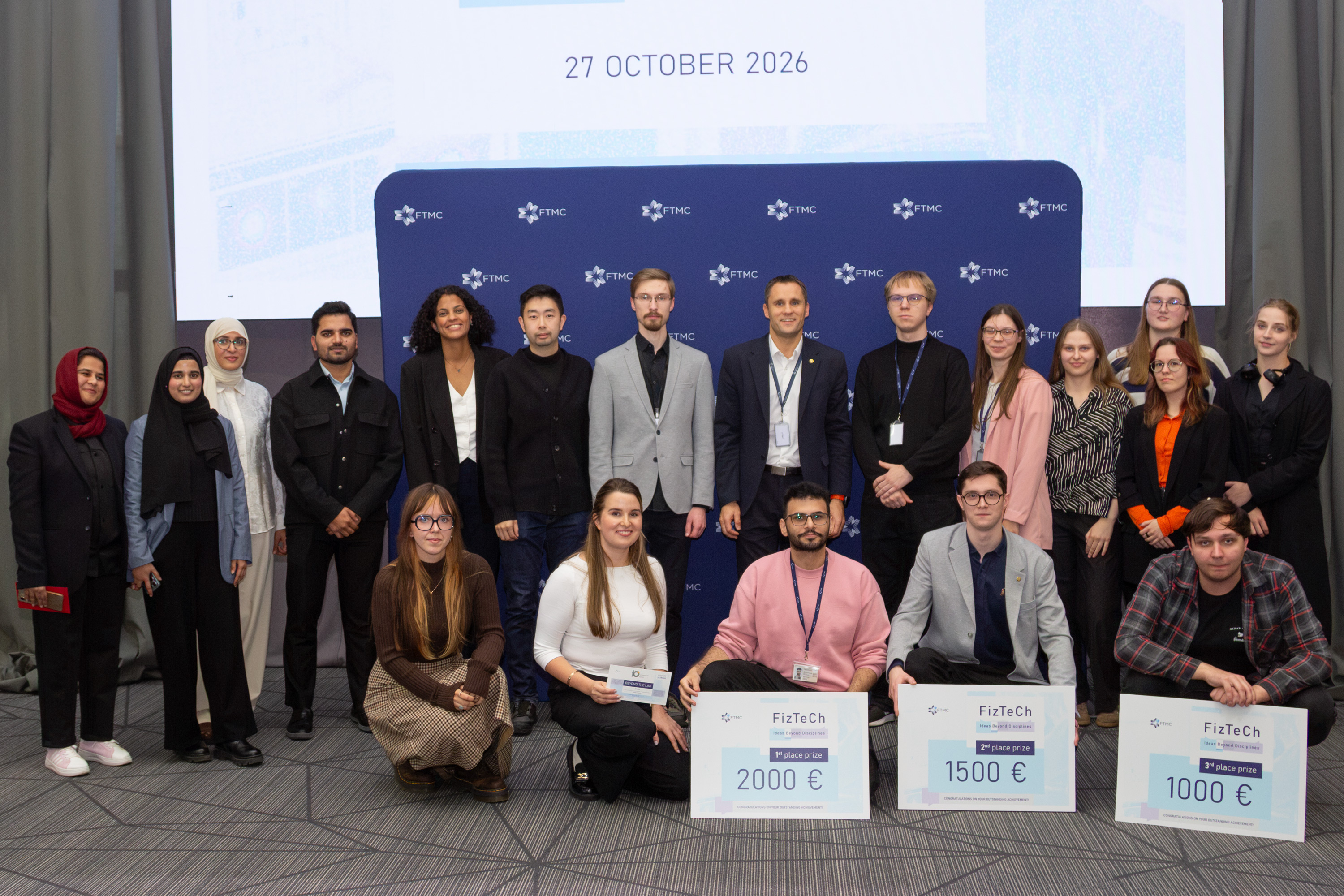
(The finalists of FizTeCh 2026 and the winners of the poster presentation competition. Photo: Gabrielius Mackevičius / FTMC)
A highly attended event
Meanwhile, other doctoral researchers from FTMC and partner institutions presented their work during poster sessions, attracting around 80 participants in total. At the end of the conference, prizes were awarded to the best posters as selected by conference participants and attendees. The winners were Ifra Bibi, Ūla Elena Sauliūtė, Giedrė Čepurnaitė, Justina Žemgulytė, Barbora Škėlaitė, Farah Mumtaz, Shahid Nawaz, Karina Vjūnova, Dmytro Shyshkin and Julija Usavičiūtė.
Special awards for poster presenters were also established by the Lithuanian research and technology organisation RTO Lithuania. Its Director, Rasa Kulvietienė, presented prizes in the Interdisciplinary Research category to Arnas Vyšniauskas, Ioanna-Angeliki Petsi and Ali Ashry Elsayed Alaref. These PhD students were recognised for interdisciplinary research with strong potential for innovation, practical applications, and societal impact. In addition to other prizes, the winners received RTO Lithuania consultation on developing their research idea, finding partners and funding opportunities.
RTO Lithuania also honoured doctoral researchers in the Rising Stars category. The award recipients were Muhammad Usman Khalid and Zarqa Hassan.
One of the event organisers, Eglė Rimkienė, Project Manager at the FTMC Doctoral School, was delighted by the strong interest in this year’s event and the large audience it attracted.
“It was wonderful to see not only a full auditorium during the final presentations, but also lively discussions throughout the poster sessions. This demonstrated that doctoral research is both relevant and engaging for the wider FTMC community. We have already received a great deal of positive feedback, so we can confidently say that the new event format has been a success.
One of the most memorable parts of the event was the three-minute research presentations. It was fascinating to see how participants managed to explain complex scientific work clearly and effectively in such a short time. All finalists rose to the challenge, demonstrating not only strong scientific expertise but also excellent science communication skills,” says Rimkienė.
By Simonas Bendžius