- Home
- News & Events
- News

Towards Eco-Friendly Clothing: FTMC Scientists and Renowned Fashion Designer Develop Green Textiles
Clothing is an integral part of our daily lives and culture, yet it also presents numerous environmental challenges. Garment production consumes significant amounts of land, water, energy and chemicals, while around 7 million tonnes of textile waste are discarded across Europe each year.
Is it possible to produce clothing in a way that is more environmentally friendly? A team of researchers from the FTMC Department of Textile Technologies is developing sustainable clothing solutions. To achieve this goal, they are working together with one of Lithuania's best-known fashion designers, Serge Gandzumian.
A New Collection of Sustainable and Fashionable Clothing
One of the key projects carried out by FTMC Department of Textile Technologies focuses on the development of sustainable casualwear. To ensure that the garments are not only environmentally friendly but also aesthetically appealing, the researchers have once again teamed up with Serge Gandzumian. Their previous collaboration resulted in a collection launched in 2022, featuring waistcoats, sweatshirts and trousers made from blends containing industrial hemp fibres. This time, however, the aim is to use exclusively pure hemp fibre in knitted fabrics, a first for Lithuania.
Why hemp? According to Dr Aušra Abraitienė, Chief Research at the FTMC Laboratory of Smart and Functional Textiles and the project leader, sustainability is the key reason:
"Cotton dominates the global natural fibre market, yet its cultivation requires large amounts of pesticides and water and depends on crop rotation. Cotton yields per hectare are relatively low, meaning it is no longer regarded as an environmentally friendly fibre. Industrial hemp, by contrast, is much easier to grow. It requires no chemical treatment, is highly adaptable to different climatic conditions, does not require crop rotation, and can yield roughly twice as much fibre as cotton from the same area of land.
Another major advantage is that almost every part of the plant can be utilised. Hemp can be used to produce textile fibres, oil, construction materials and insulation products. Furthermore, hemp fibre possesses a wide range of valuable properties. It is lightweight, extremely strong and highly durable."
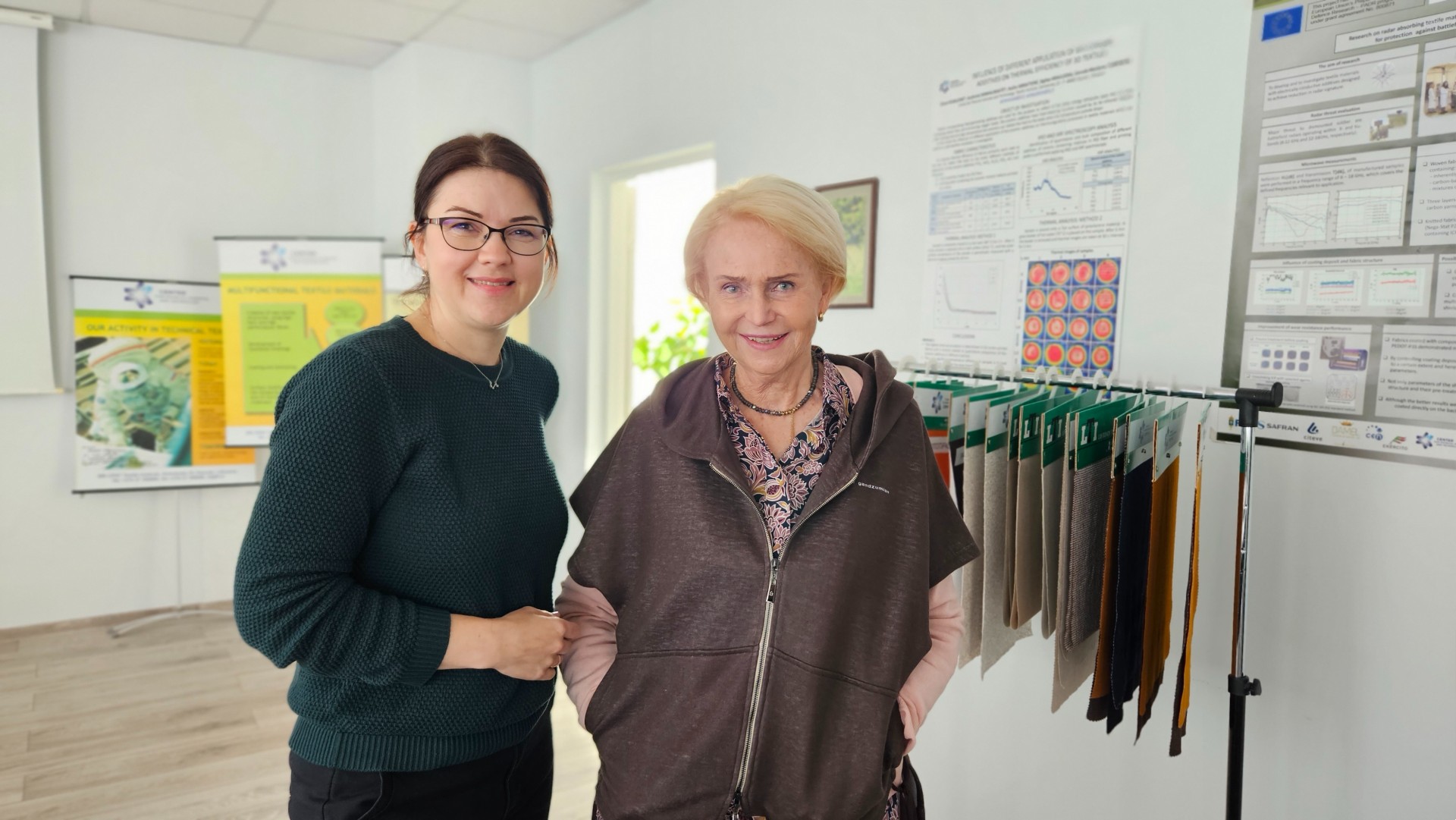
(Dr Ingrida Padleckienė and Dr Aušra Abraitienė, wearing an eco-friendly garment made by FTMC and designer Serge Gandzumian. Photo: FTMC)
The FTMC researcher adds that hemp fibre is resistant to mould and moths and offers excellent thermal insulation properties. The project therefore aims to create a sustainable alternative to cotton-based products while expanding the market for eco-friendly clothing and introducing manufacturers and consumers alike to new opportunities in environmentally responsible textile production.
The new clothing collection is scheduled to be unveiled in January 2028.
"This project aligns perfectly with the path I have chosen as a designer: creating sustainably. Working together with the FTMC team allows me to engage with the latest innovations and explore previously uncharted possibilities in both materials and creative design. In today's fashion industry and constantly changing environment, that is essential," says fashion designer Gandzumian.
According to Dr Abraitienė, it is considerably easier to develop textile products when hemp is blended with synthetic fibres. While such fibres simplify processing and manufacturing, they degrade very slowly in nature, making their end-of-life management problematic. The FTMC textile researchers are therefore pursuing the more ambitious goal of producing fabrics from pure hemp yarn without any synthetic additives.
Another innovation concerns the colouring of the fabrics. Instead of using conventional chemical dyes, the materials will be coloured with natural dyes derived from biological sources. Suitable raw materials may include plant waste, spent coffee grounds, fruit and vegetable residues, wood-processing by-products and other biomass sources rich in natural pigments.
"Our aim is to ensure that the entire production process, from beginning to end, is as environmentally friendly as possible. We invited Serge Gandzumian to join the project because of his extensive expertise in sustainable and ecological fashion. His involvement is an important endorsement of both our work and the project itself," says the researcher.
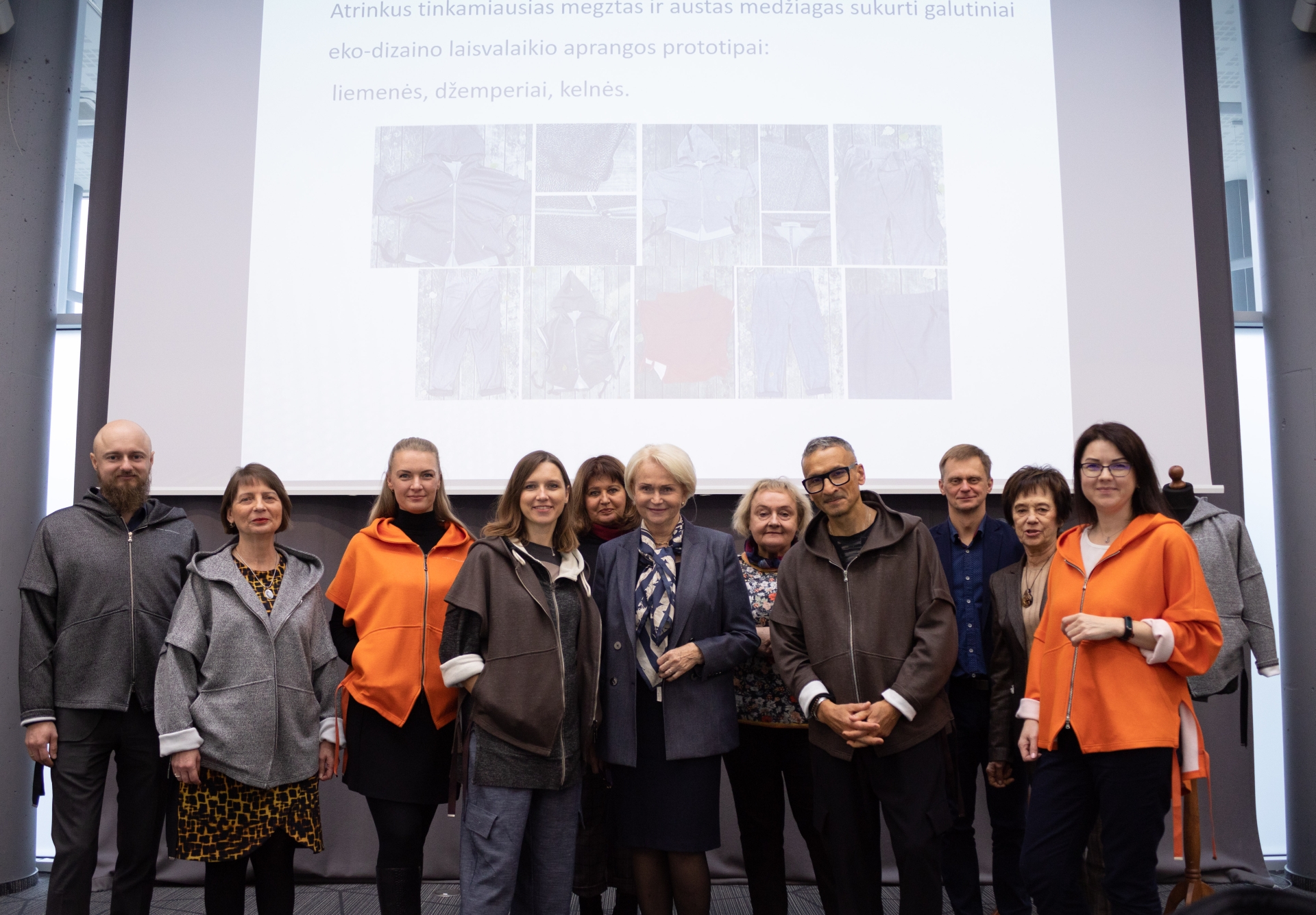
(Presentation of the Eco-Friendly Leisurewear Collection, 2022. Photo: Domantas Jakaitis)
For Gandzumian, sustainability has always been fundamental to his work:
"Since the beginning of my professional career, I have designed long-lasting garments made from high-quality natural materials. At that time, the term 'sustainability' was not yet widely used, but the underlying philosophy has always been at the heart of my work. Today, I also share my knowledge and experience with young designers. Together with my partner in both professional and personal life, I have been organising the international sustainable fashion festival Sustainable Fashion Week Vilnius for the past seven years."
Solutions Needed for Today's Challenges
A few weeks ago, the festival brought together leaders from the worlds of fashion, business, science and innovation who are shaping the future of sustainable fashion. Among the participants was Dr Ingrida Padleckienė, a researcher at FTMC Laboratory of Smart and Functional Textiles, who delivered a presentation and took part in a panel discussion.
"The future belongs to sustainable textiles: materials made from renewable resources, designed to last longer and easier to recycle," she says.
Dr Padleckienė focuses on developing environmentally friendly textile solutions by applying methods that allow future garments to gain additional functionalities while using less water, energy and fewer chemicals.
For example, her team's research involves treating natural-fibre materials with low-pressure plasma. This process activates the surface of the material, reducing the amount of dyes and chemicals needed during dyeing and finishing. Meanwhile, biological materials derived from agricultural, food-processing and forestry waste are used in dyeing and finishing applications.
Equally important are the properties of the newly developed materials, including comfort, durability and resistance to environmental factors.
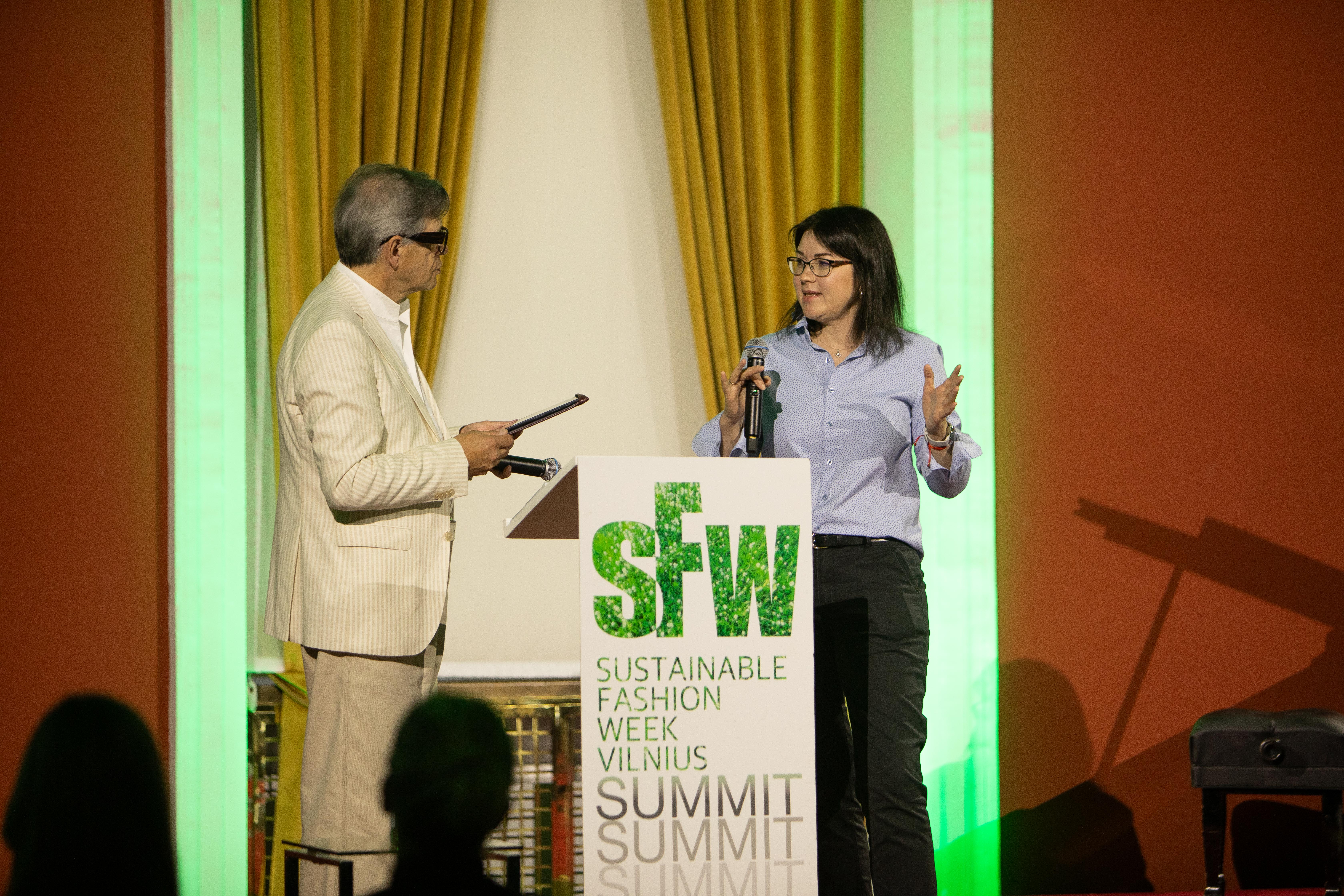
(Prof. Dr Eugenijus Skerstonas and Dr Ingrida Padleckienė. Photo: Sustainable Fashion Week Vilnius)
According to Dr Padleckienė, such innovations are becoming increasingly important because the production of clothing and other textile products represents one of the largest, though often overlooked, challenges associated with modern consumption. She addressed these issues and potential solutions during the Sustainable Fashion Week event.
"Fast fashion is a major problem. Clothes are purchased more frequently, worn for shorter periods and discarded more quickly. Most textile waste, approximately 85 per cent, ends up in general waste streams and is subsequently incinerated or landfilled. Products made from synthetic fibres can take centuries to decompose.
Around 15 per cent of textile waste is collected separately and sorted for recycling or technical applications, such as cleaning cloths. Yet less than 1 per cent of textiles worldwide are recycled back into new clothing, meaning that most valuable raw materials are simply lost.
There are good reasons for these low figures. Textile products made from two or more different fibres generally require chemical recycling, in which one of the fibres must be dissolved. This is neither economical nor particularly environmentally friendly, as it requires large quantities of chemicals. Consequently, chemical recycling is used relatively rarely, and opportunities to recycle blended-fibre textiles into new garments remain limited."
She emphasises that challenges arise not only from textile waste but also from production itself, which requires substantial land, water and energy resources and relies heavily on chemical inputs. Around 60-70 per cent of textiles today are made from synthetic fibres, primarily polyester derived from petroleum products. Washing synthetic garments releases microplastics into the environment, and capturing these particles in wastewater treatment facilities remains a significant challenge. As a result, some microplastics ultimately find their way into rivers, lakes and other bodies of water.
Three Pathways Towards More Sustainable Textiles
At the fashion festival, Dr Padleckienė highlighted several solutions being promoted by experts worldwide. Single-fibre materials, wool and hemp are increasingly recognised as some of the most promising approaches because they reduce waste, extend product lifespan and improve recyclability.
"The principal advantage of single-fibre materials is that they are much easier to recycle and can be reintroduced into textile production processes. This is one of the core principles of the circular economy.
However, sustainability does not always mean using a single fibre. Although such textiles are often easier to recycle, it is important to consider the entire lifecycle of a product. A carefully selected blend of natural and synthetic fibres may enhance durability, improve shape retention and allow a garment to be worn for many years. In some cases, such a product may be more sustainable than a single-fibre garment that wears out quickly and becomes waste. Achieving a lower environmental impact therefore requires balancing recyclability, functionality and longevity," says the scientist.
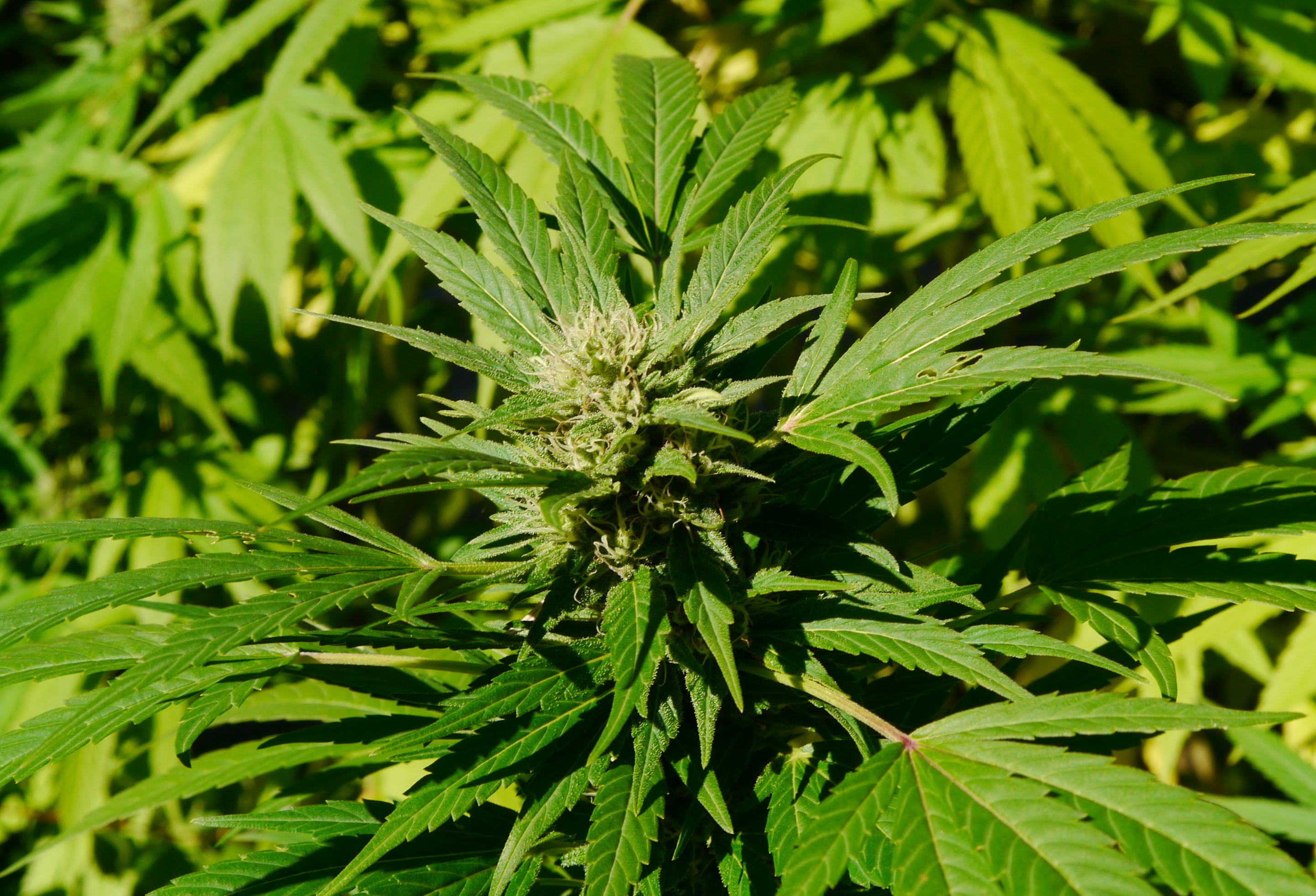
(Cannabis sativa, a plant widely used in industry. Photo: Thayne Tuason / Wikipedia)
Another promising solution is wool, a natural, renewable and biodegradable fibre. According to the researcher, wool offers excellent thermoregulatory properties: it keeps the wearer warm in winter while remaining comfortable in warmer weather. Wool absorbs moisture without feeling damp and naturally resists odours, meaning garments can be washed less frequently. This reduces both water and energy consumption. High-quality wool products can often last for many years or even decades.
"Nevertheless, wool production also presents certain environmental challenges, so it is important to choose products made from responsibly sourced or recycled wool," Dr Padleckienė notes.
Regarding hemp, the FTMC researcher reiterates its strengths: durability, environmentally friendly cultivation and biodegradability. The challenge, however, lies in processing hemp fibres and transforming them into soft, consumer-friendly garments. This is precisely why intensive scientific research is being carried out in the field, seeking ways to preserve hemp's desirable properties while improving wearer comfort.
"In summary, single-fibre materials help address textile recycling challenges, wool extends product lifespan and reduces maintenance requirements, and hemp offers opportunities to create garments from raw materials with a lower environmental footprint. All of these approaches ultimately serve the same purpose: developing durable textiles that remain in use for as long as possible and can be returned efficiently to a circular production cycle at the end of their useful life," concludes the researcher.
By Simonas Bendžius