- Home
- News & Events
- News
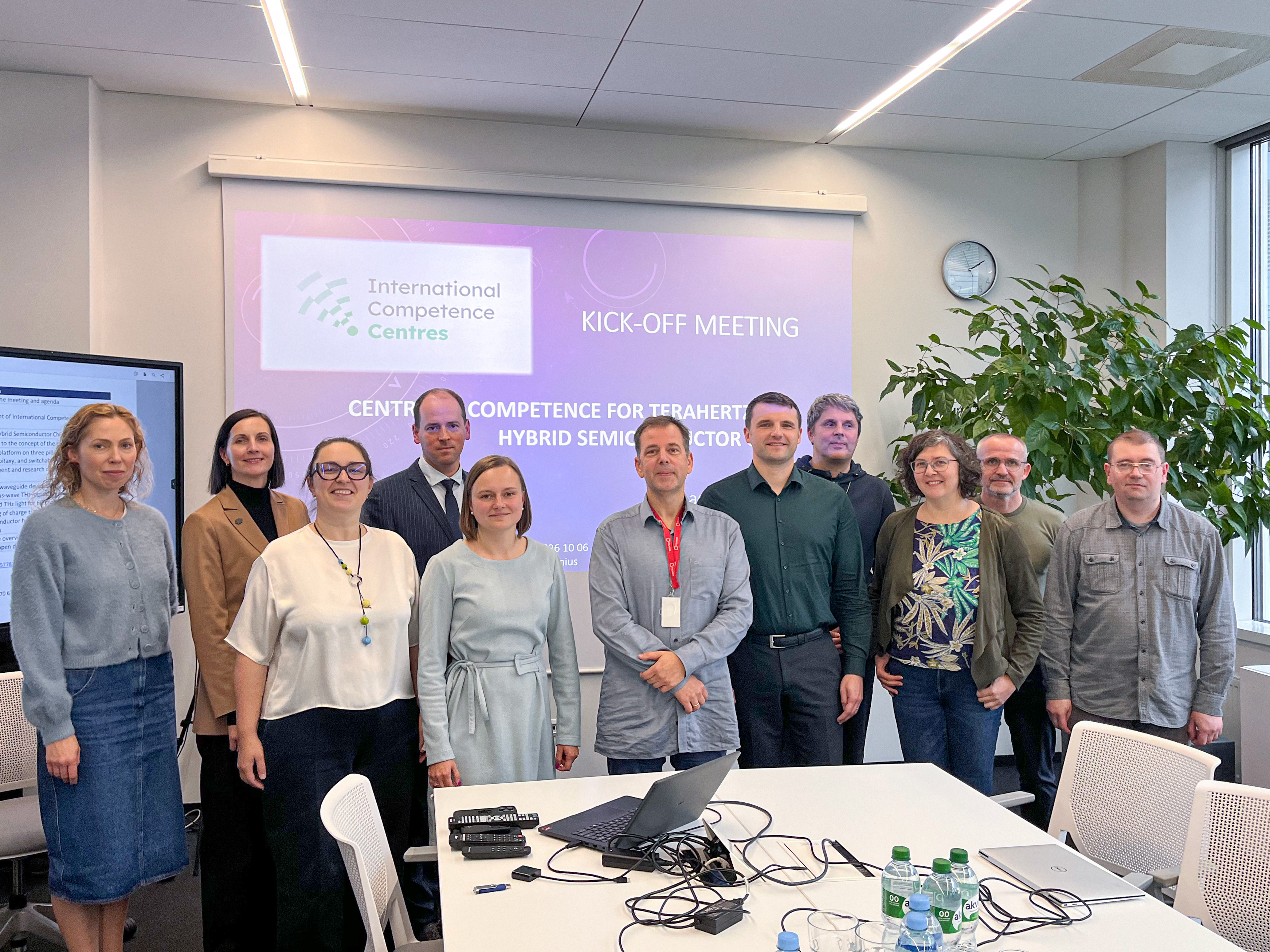
Towards 6G Technologies: Centre of Competence for Terahertz and Hybrid Semiconductor Chips Launches in Lithuania
Centre of Competence for Terahertz and Hybrid Semiconductor Chips officially began its activities.
The centre is being jointly established by Vilnius University (VU) and the FTMC. It will bring together the expertise of Lithuanian and international researchers to develop advanced semiconductor chips, materials and components required for future 6G communication technologies.
The establishment of the centre forms part of the project “Tarptautinių kompetencijų centrų steigimas” (“Establishment of International Competence Centres”) (No. 10-030-P-0001), coordinated by the Research Council of Lithuania (RCL) and co-funded by the European Union.
Research Priorities and Collaboration Opportunities Presented at the Kick-Off Meeting
At the project’s kick-off meeting, researchers presented the centre’s operational concept, planned research directions and implementation roadmap for the next three years. The event brought together scientists from VU and FTMC, representatives of other institutions and invited guests.
The meeting was opened and chaired by Dr Linas Minkevičius, Acting Head of FTMC Department of Optoelectronics and Head of the Centre. Julija Baniukevič, representing the Research Council of Lithuania, introduced the international competence centres initiative, its objectives and the concepts underpinning the five centres being established. The scientific vision of the project and its planned areas of activity were presented by Professor Gintaras Valušis.
Beyond conducting high-level scientific research, the new centre will seek to strengthen collaboration between Lithuanian academia and industry, promote technology transfer and create the conditions necessary for the development of new high-value-added products.
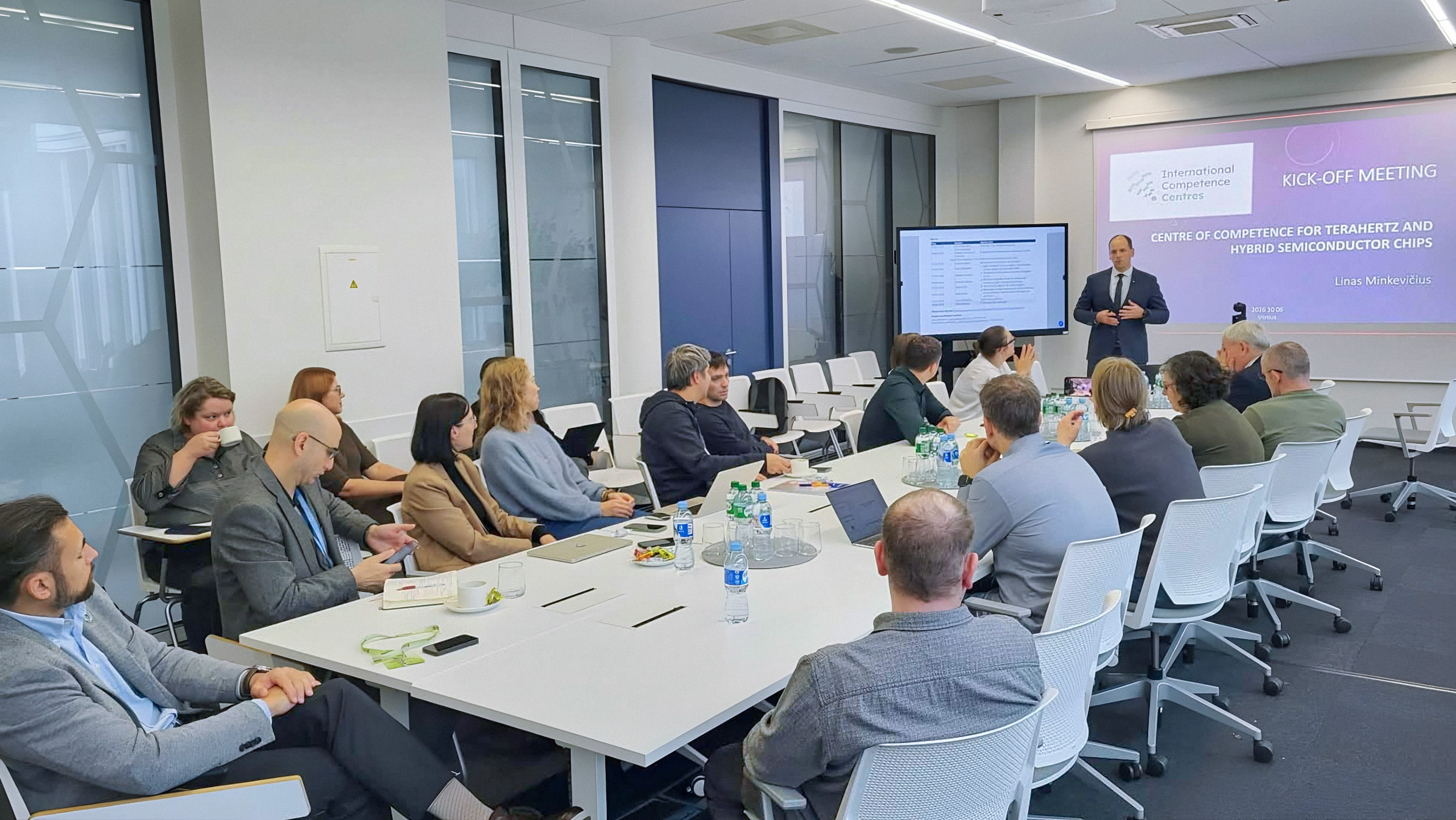
(Dr Linas Minkevičius, Head of the Centre of Competence for Terahertz and Hybrid Semiconductor Chips, opens the meeting. Photo: RCL)
Terahertz Technologies for the Future of 6G Communications
As mobile data traffic continues to grow rapidly, the need for technologies capable of delivering higher transmission speeds and more efficient communication systems is becoming increasingly pressing. One of the most promising directions for future 6G communications is the use of terahertz-frequency technologies.
Located between microwaves and infrared radiation in the electromagnetic spectrum, terahertz waves offer the potential to support extremely high-capacity data transmission. However, unlocking this potential requires new semiconductor components, integrated circuits and advanced technological solutions.
To address these challenges, the new centre will bring together expertise from a wide range of scientific disciplines, spanning semiconductor materials research, ultrafast process modelling, photonic chip development, terahertz signal control and the design of integrated communication systems.
Five Research Groups United by a Common Technological Goal
The centre will comprise five research groups working across the 100-340 GHz frequency range. Each group will pursue a specific technological direction, with their results ultimately integrated into a shared platform for terahertz communication technologies.
As part of this initiative, FTMC has established a new organisational unit, the Centre for Terahertz and Hybrid Semiconductor Chips, headed by Dr Dovilė Čibiraitė-Lukenskienė, a physicist from the Department of Optoelectronics. Two research groups will operate within the FTMC branch.
One group, led by Dr Sergejus Orlovas, will investigate the application of structured terahertz light to 6G communications. Researchers will develop active metasurfaces capable of controlling electromagnetic wave propagation and shaping beams with specific properties. One of the project’s targets is to demonstrate a terahertz communication link exceeding 100 metres.
A second group, led by Dr Armandas Balčytis, will focus on photonic waveguide technologies for terahertz-to-optical communication conversion. The team will develop photonic chips capable of integrating fibre-optic and terahertz communication systems, enabling more efficient data transmission.
Meanwhile, three research groups will operate at Vilnius University.
The group led by Professor Alvydas Lisauskas will develop terahertz integrated circuits, including detectors, mixers, frequency multipliers and receiver circuits. The researchers will also work on integrating chips fabricated using different technologies into unified systems and demonstrate high-speed communication solutions under laboratory conditions.
The group headed by Dr Agnė Žukauskaitė will develop a gallium nitride (GaN)-based platform for terahertz technologies. Their research will focus on advanced semiconductor nanostructures and transistors designed for the generation, detection and modulation of terahertz waves.
The third VU group, led by Dr Patrik Ščajev, will focus on modelling charge transport and ultrafast processes in semiconductor materials. These studies will help improve the understanding of material properties and support the development of more efficient terahertz detectors and other components.
All five groups will work towards a shared objective: reaching Technology Readiness Level (TRL) 5, where technologies and their components have been validated in a relevant environment. This milestone is intended to facilitate the transition of research results from laboratory development to practical applications.
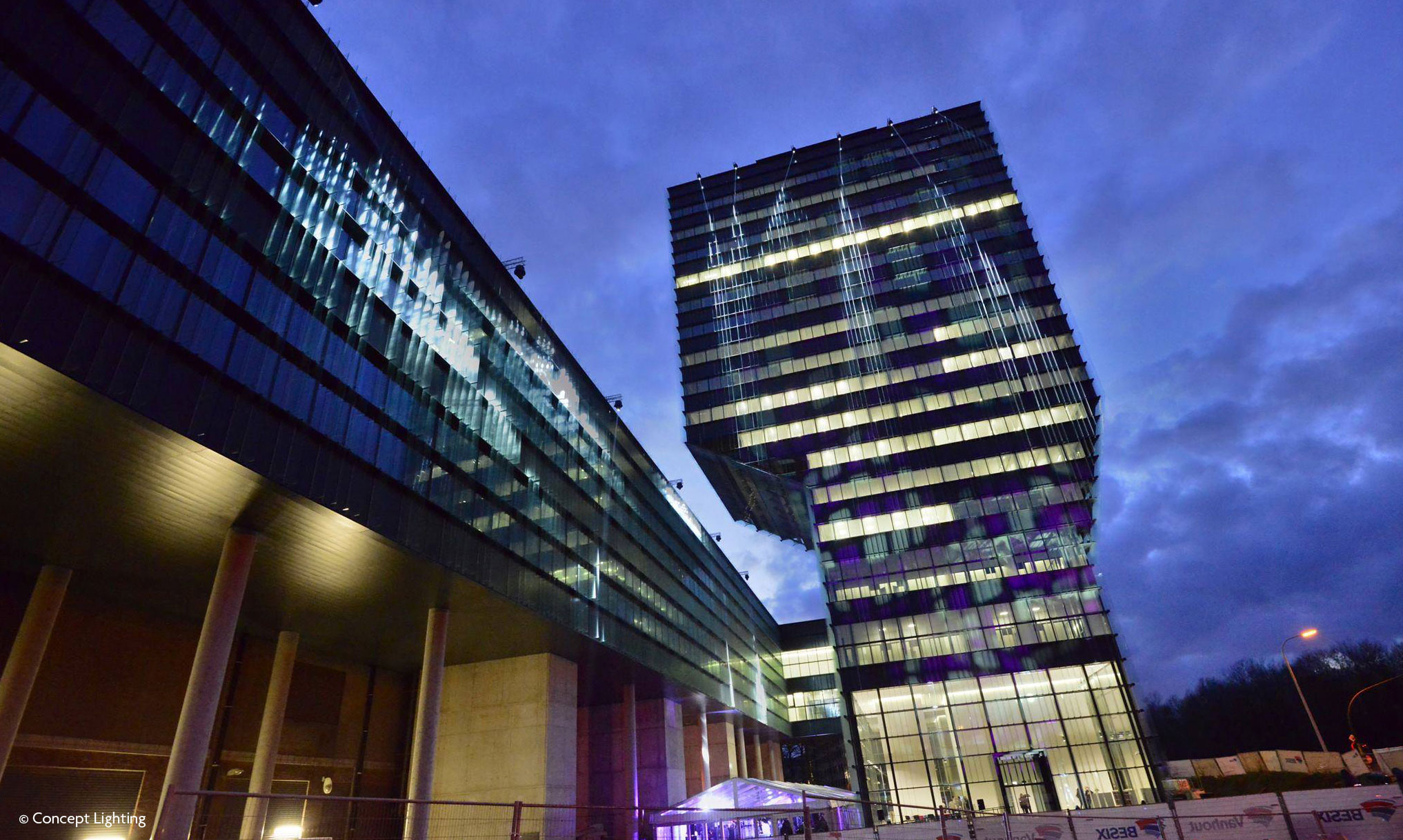
(The IMEC research centre in Belgium. Photo: Concept Lightning / IMEC)
International Partnerships and Ambitious Three-Year Objectives
The centre is being developed in collaboration with Eindhoven University of Technology (TU/e, Netherlands) and IMEC (Belgium), one of the world’s leading nanoelectronics research centres. These partnerships will enable Lithuanian researchers to exchange knowledge, benefit from international expertise and strengthen their participation in European research and innovation networks.
The centre’s progress will be overseen by an International Advisory Board, comprising representatives of foreign research institutions, the Research Council of Lithuania and the ministry responsible for education and science policy.
The three-year project is divided into three main phases. The first year will focus on developing technological models and characterising materials and components. The second year will concentrate on component prototyping, while the third year will be dedicated to creating an integrated technological platform and demonstrating a terahertz communication link.
The project aims to generate at least eight European patent applications and a minimum of twenty peer-reviewed scientific publications. It will also strengthen the competencies of early-career researchers, attract new specialists and create or fill approximately 40 positions.
Long-Term Vision: A Sustainable Research and Innovation Ecosystem
The activities of the Centre of Competence for Terahertz and Hybrid Semiconductor Chips are designed to deliver long-term benefits for Lithuanian science, technological advancement and the high-tech sector.
Following the completion of the project, the centre is expected to continue operating as a joint initiative of Vilnius University and FTMC. Future activities will include ongoing collaboration with international partners, the attraction of funding from European Union and national programmes, and the implementation of joint projects with industrial partners.
The establishment of the centre will contribute to the internationalisation of Lithuanian research, strengthen national expertise in advanced semiconductor technologies and create new opportunities for both researchers and innovative businesses.
The Centre of Competence for Terahertz and Hybrid Semiconductor Chips is being established through the project “Tarptautinių kompetencijų centrų steigimas” (“Establishment of International Competence Centres”) (No. 10-030-P-0001), coordinated by the Research Council of Lithuania (RCL). The project is co-funded by the European Union.
Source: RCL