- Home
- News & Events
- News
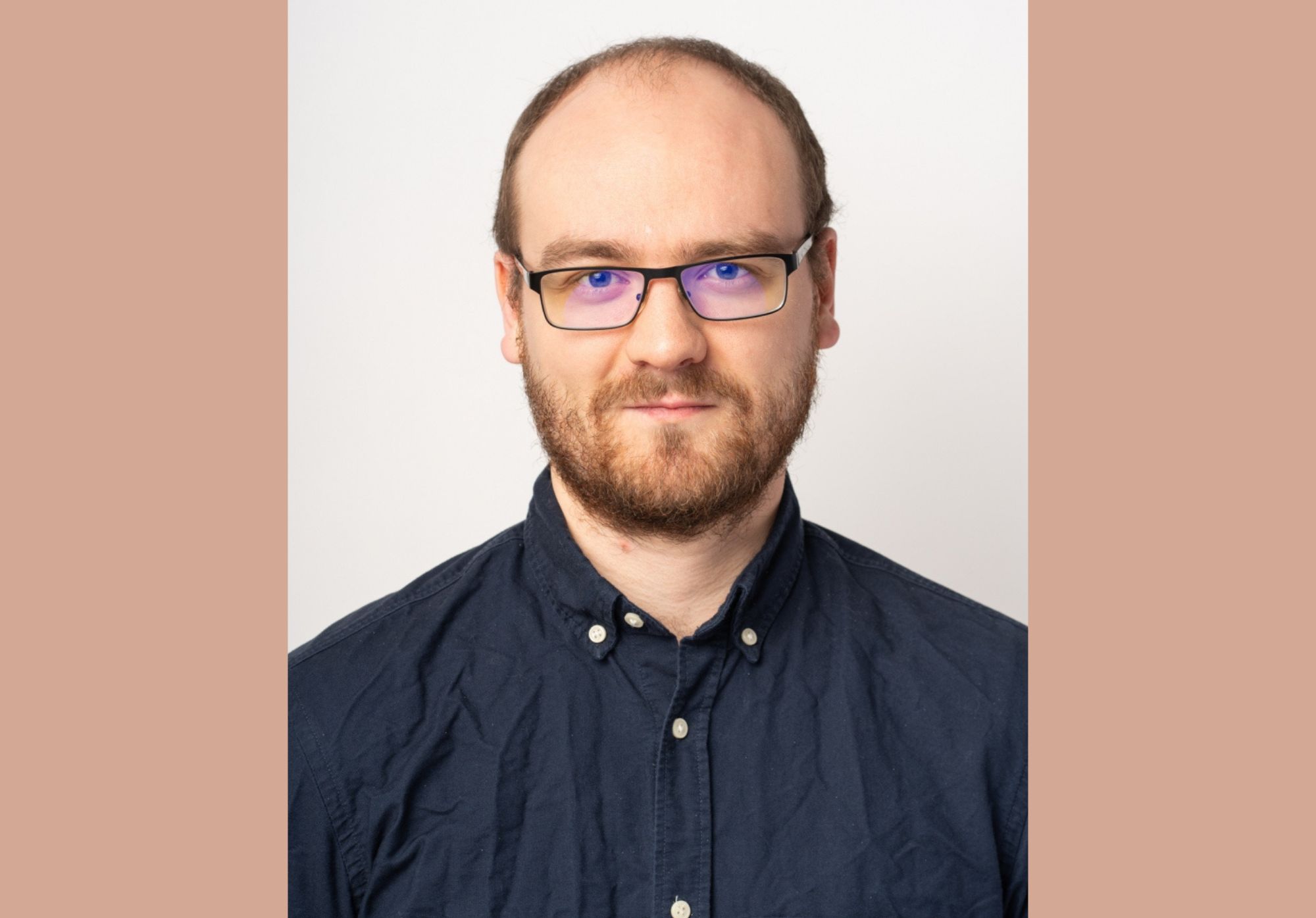
Physicist Modestas Sadauskas Has Earned His PhD in Laser Material Processing
The FTMC Department of Laser Technologies has a new Doctor of Natural Sciences. This title has been awarded to physicist Modestas Sadauskas, who defended his dissertation “Selective Formation of Metallic Microstructures on Transparent Dielectric Surfaces Using Combined Ultrafast Laser and Chemical Technologies” (academic supervisor: Dr Karolis Ratautas).
As stated in Modestas’ work, rapid technological development is driving an increasing demand for small yet powerful electronic components. Glass and flexible polymers are becoming important materials in modern electronics due to their durability, stability, and suitability for a wide range of applications – from displays to wearable and foldable devices.
However, forming narrow electrically conductive traces on the surfaces of these components remains challenging. These traces – extremely thin “lines” that carry electric current and transmit signals – are difficult to produce using conventional methods, which involve multiple stages, are costly, inflexible, and limit the achievable structure size.
As a result, simpler and more efficient technologies are being sought. One of the most promising is selective surface activation induced by laser (SSAIL). This method allows highly precise electrical traces or complete circuits to be formed directly on virtually any dielectric substrate – such as glass, plastic, or ceramics. Electronic components can then be mounted and soldered directly onto the prepared surface, simplifying manufacturing processes and eliminating traditional chemically aggressive production steps.
“The main objective of this research was to investigate the physical limits of SSAIL technology and determine the minimum achievable width of conductive traces using this method. The study resulted in a technological breakthrough: it was experimentally demonstrated that microtraces with a width of just 700 nanometres can be formed on a glass surface using this technology. Such submicrometre resolution opens entirely new standards in microlaser processing,” explains Dr Sadauskas.
According to the physicist, the work is also notable for its fundamental scientific contribution – it provides, for the first time, a comprehensive explanation and scientific validation of the operating mechanism of SSAIL technology on glass surfaces. Until now, the exact physical and chemical processes occurring when glass is laser-treated prior to metallisation were not fully understood. The theoretical clarity achieved by the FTMC researcher not only enables better control of the process itself but also allows for prediction and optimisation of results when applying the technology to new materials.
“The obtained results have significant practical potential and directly address current industrial challenges. The developed technology can be effectively applied to next-generation semiconductor and advanced packaging. As there is a constant demand in the market to integrate increasingly powerful and dense electronics into smaller areas, 700-nanometre-wide tracks enable the creation of highly compact, integrated three-dimensional electronic components and biosensors.
This not only reduces the size of end devices but also increases their speed and energy efficiency, which is critically important for the development of future technologies,” says the new PhD.
The dissertation (in Lithuanian with English summary) can be accessed via this link.
FTMC information