- Home
- News & Events
- News
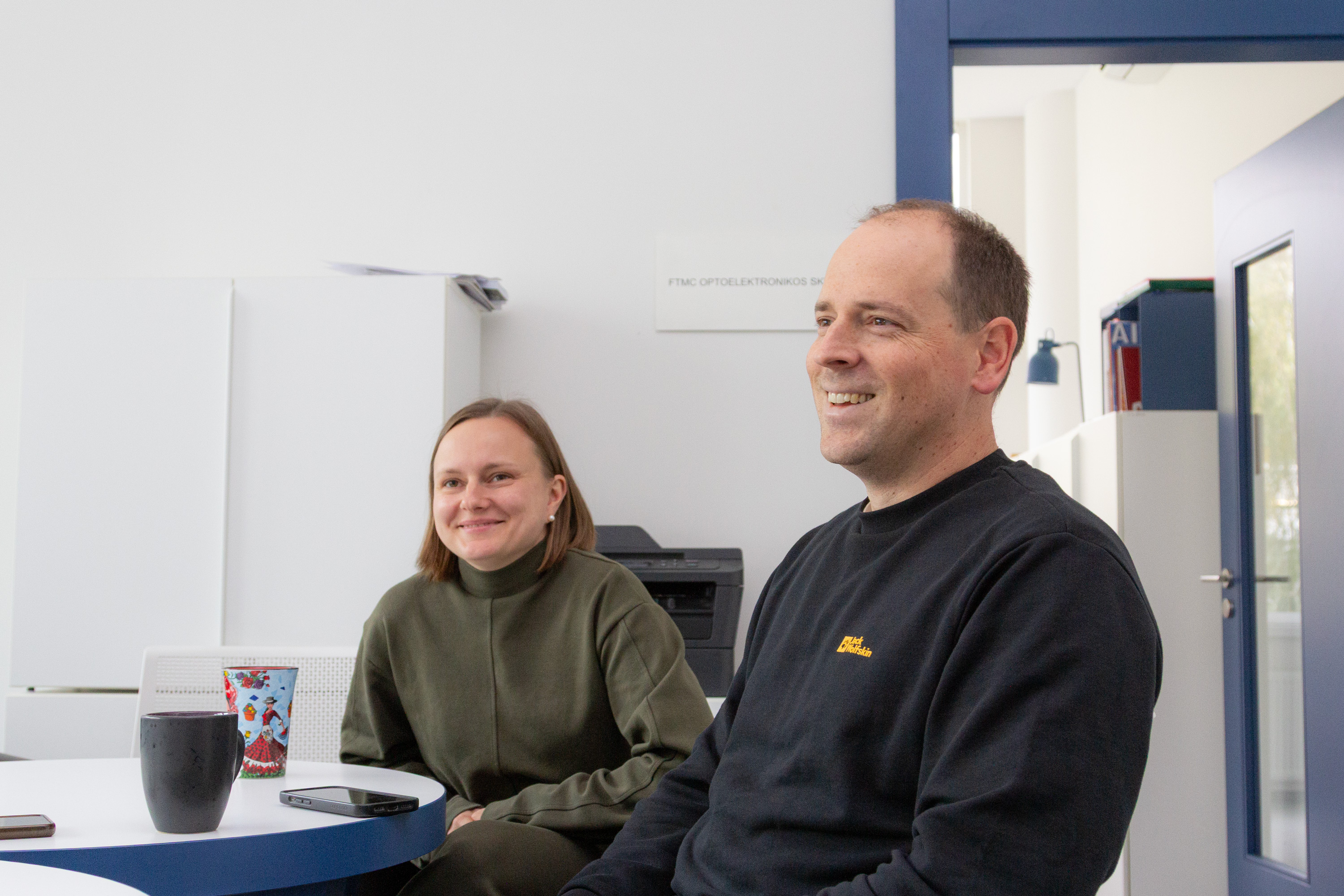
Organisers of the Young Scientists’ Symposium on a Promising New Research Direction and Meeting World Science Leaders
An international symposium for young scientists, Frontiers of Photonics & Semiconductor Technology, organised by FTMC, recently took place in Vilnius.
During the four-day event, 50 PhD students from various institutions in Lithuania and abroad explored cutting-edge semiconductor and photonics technologies that are shaping the future of communications, sensing, computing, and integrated systems.
The participants attended lectures delivered by internationally renowned scientists and engineers, while creative workshops encouraged them to exchange ideas on how technological solutions can address pressing societal challenges.
A New Synergy Between Light and Electronics
One of the highlights of the symposium had a distinctly Lithuanian connection. Dr Armandas Balčytis, a physicist who recently returned to FTMC from the Royal Melbourne Institute of Technology (RMIT) in Australia, delivered a presentation. He is now joining the recently established Centre of Competence for Terahertz and Hybrid Semiconductor Chips, founded by Vilnius University and FTMC, where he will contribute to the development of the highly promising field of photonic integrated circuits.
“The convergence of light and electronics is one of the most promising directions for reducing energy consumption and accelerating computing and communication systems. We plan to place significant emphasis on this area in FTMC by developing new competencies in hybrid photonic chip technologies.
What does this mean in practice? Electronics is moving towards ever higher frequencies, while photonics, the science of controlling light, is extending into lower frequency ranges. We are now approaching a stage where the two technologies can be combined and complement one another. This opens possibilities for entirely new technologies that we have not seen before,”says Dr Dovilė Čibiraitė-Lukenskienė, Head of the FTMC branch of the Centre of Competence for Terahertz and Hybrid Semiconductor Chips and one of the symposium organisers.
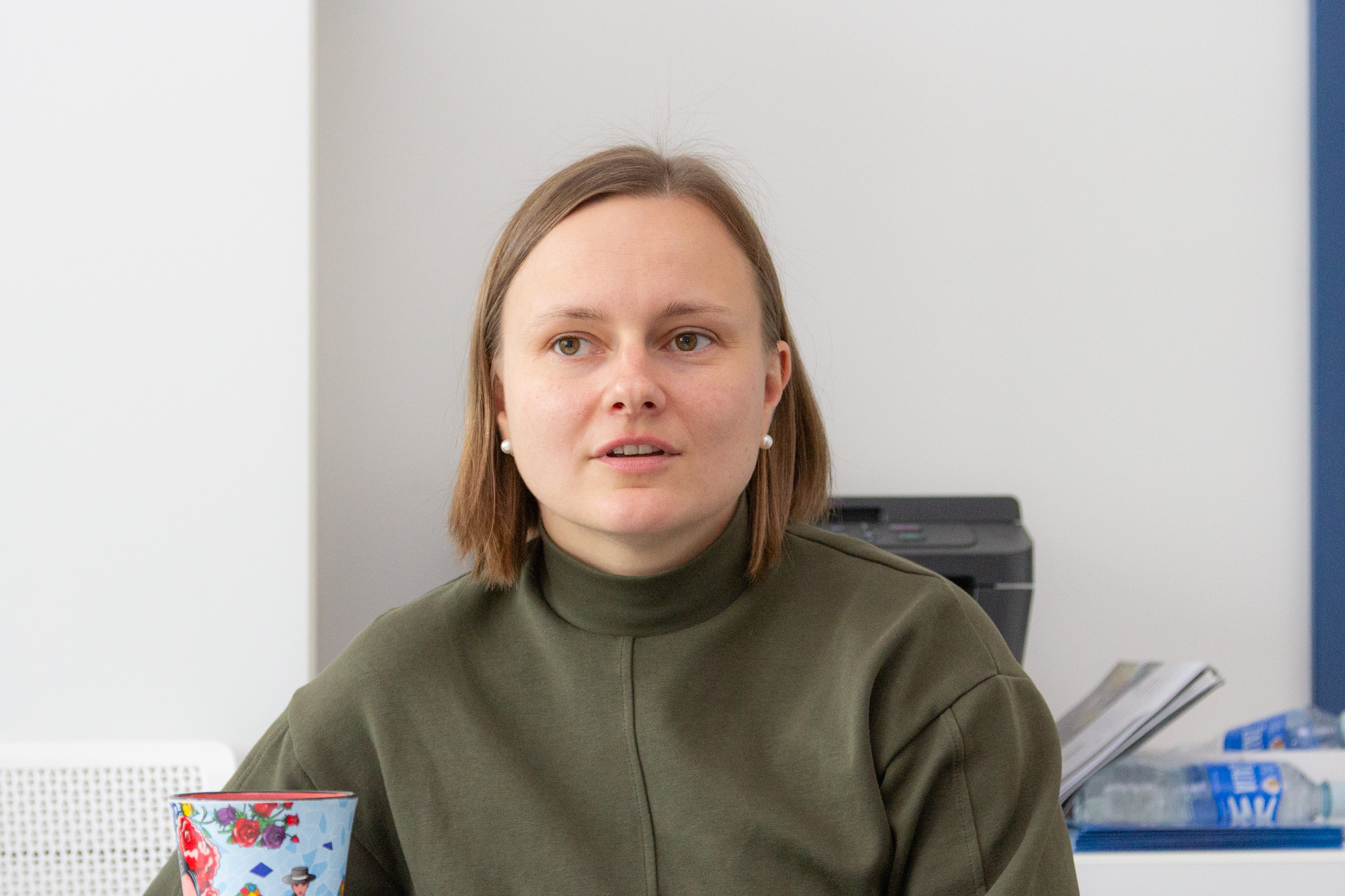
(Dr Dovilė Čibiraitė-Lukenskienė. Photo: Gabrielius Mackevičius / FTMC)
“In photonic chips, light can travel through specialised waveguides, be split, delayed, mixed and processed in much the same way that signals are handled in electronic circuits. Such technologies have important applications in communication systems, sensors, amplifiers, signal sources, and even next-generation computers.
At the same time, new challenges arise, such as how to efficiently couple light into and out of a chip. This is where diffractive optics, microlenses, and other advanced optical technologies play a crucial role. FTMC already possesses strong expertise in these areas and can make a significant contribution to the future development of photonic chips,” explains Dr Linas Minkevičius, Acting Head of the FTMC Department of Optoelectronics and one of the organisers of the symposium.
According to him, it was particularly valuable for students to hear first-hand accounts of how research and technology development take place in practice. For example, Dr Balčytis emphasised that manufacturing advanced semiconductor chips can take as long as nine months, meaning that even a single mistake can be costly not only financially but also in terms of time. The symposium helped participants understand that deep-tech solutions are developed over long cycles and require exceptional precision and attention to detail.
Dr Minkevičius adds that the lectures generated numerous ideas for both PhD students and FTMC researchers, inspiring further scientific breakthroughs.
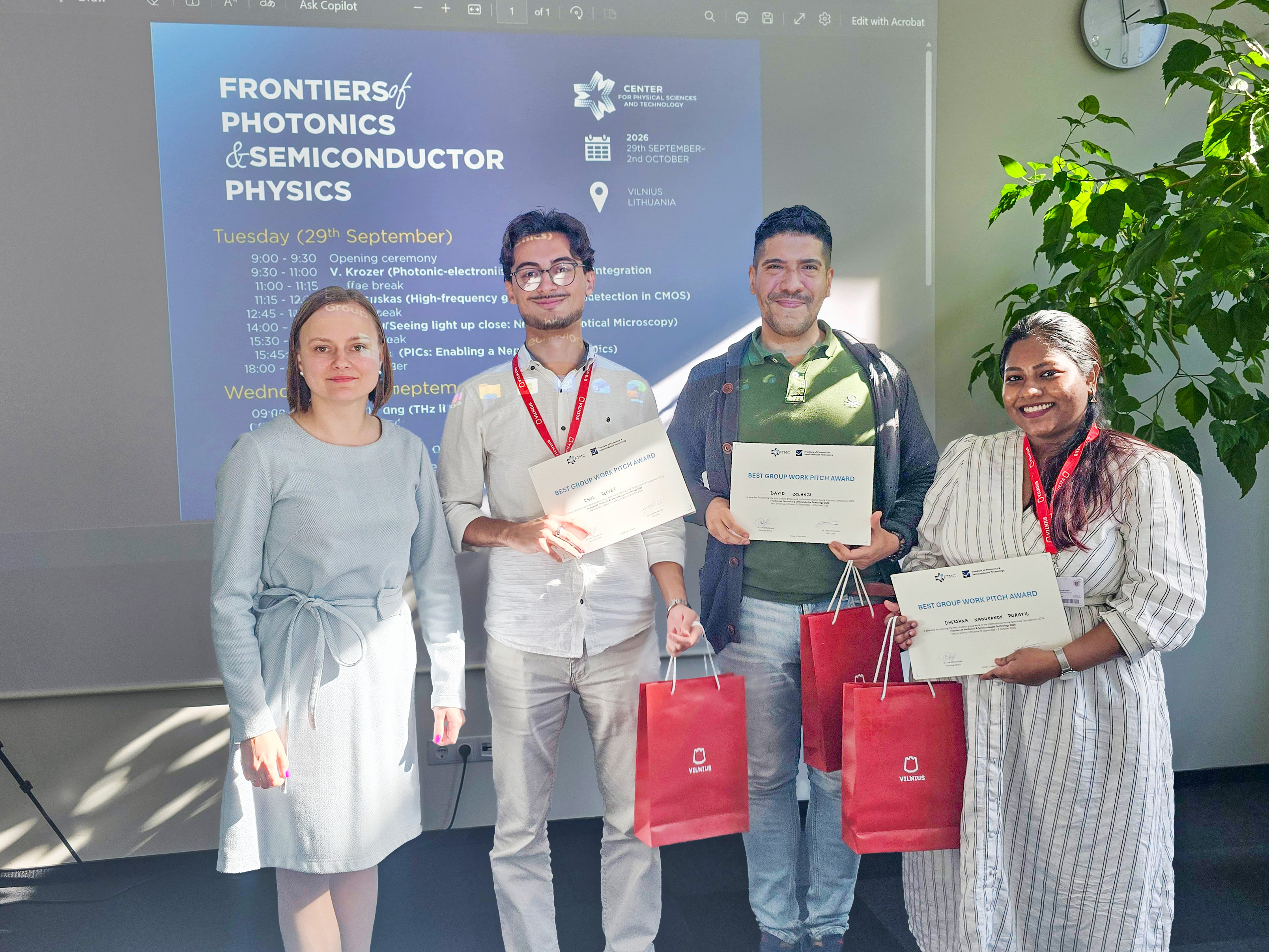
(Dr Dovilė Čibiraitė-Lukenskienė with some of the winners of the creative workshop competition: Raul Aliyev, David Bolanos and Dheeshna Nadukandy Purayil. Photo: FTMC)
Solutions to Societal Challenges
The organisers note that after the introductory lectures, participants had acquired sufficient background knowledge to tackle real-world challenges. During the creative workshops, teams worked on topics including 6G communications, environmental sustainability, and solar-cell efficiency. Participants were required not only to understand the problem and its requirements, but also to propose a viable technological solution within a very limited timeframe, presenting their concepts to an evaluation panel on the final day of the symposium.
“The two strongest presentations focused on Wireless Communication in the 200-300 GHz Range (by Augustė Bielevičiūtė, David Bolanos and Dheeshna Nadukandy Purayil) and Photonic Sensor for Environmental Monitoring (by Ričardas Petkus and Raul Aliyev).
The key advantage of the first proposal was a significantly lower-cost ‘scientific-grade’ system suitable for short-range communications. The second featured an exceptionally compact technology that could be integrated into very small, lightweight systems,”says Dr Čibiraitė-Lukenskienė.
The symposium also devoted considerable attention to interactions between students and representatives of technology companies. During one session, for example, PhD students were able to gain hands-on experience in optical-system alignment.
“Participants were challenged to align a laser optical path as quickly and accurately as possible. This gave them a practical insight into how specialists work in industry and research laboratories. In fact, the task closely resembles the work carried out every day in FTMC’s terahertz and other optics laboratories, where mirrors and other optical components must be aligned with great precision for scientific experiments,” says Dr Minkevičius.
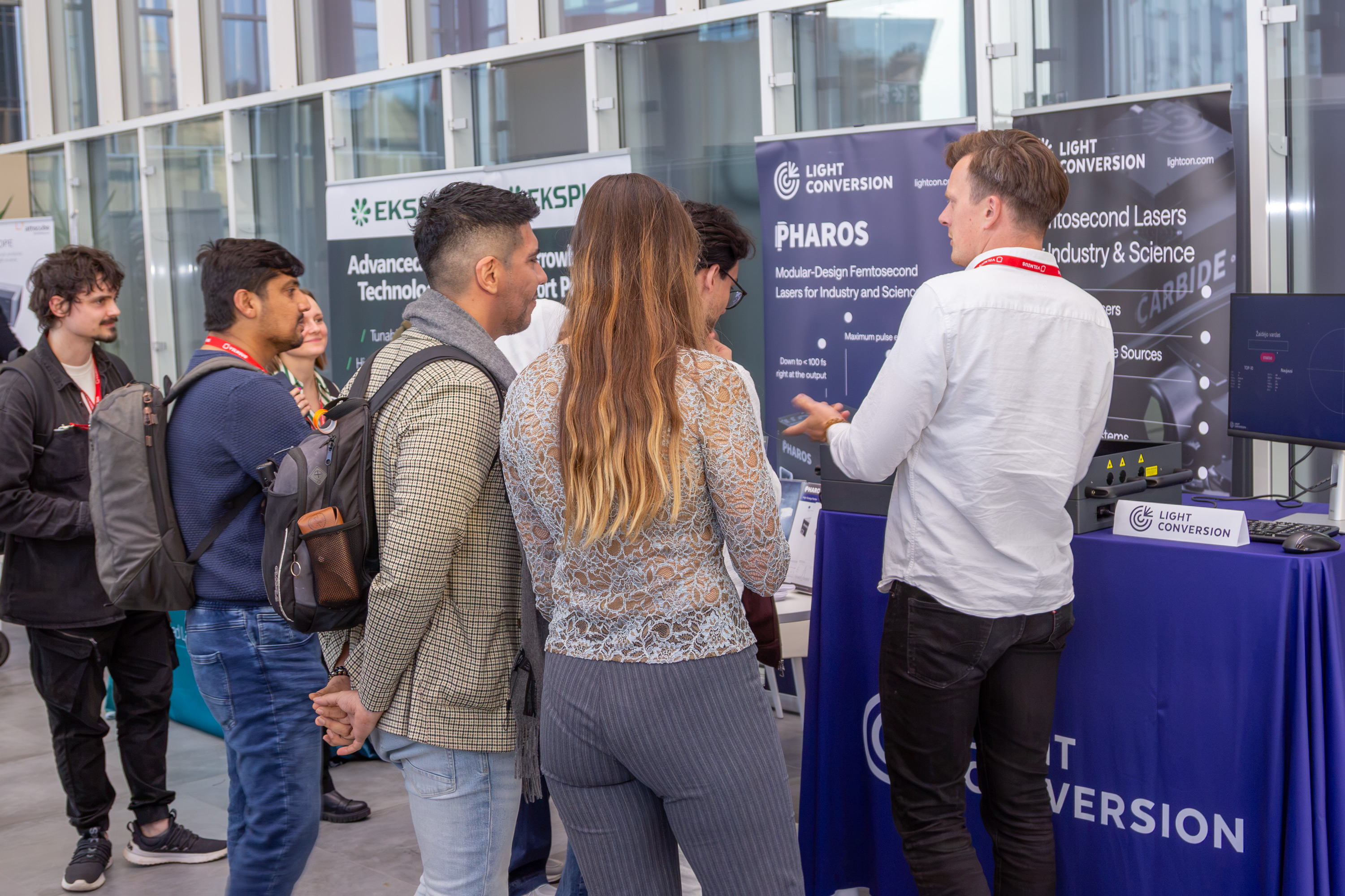
(Photo: Gabrielius Mackevičius / FTMC)
Meeting Global and Lithuanian Leaders
The flexible structure of the symposium allowed participants to choose the activities most relevant to their interests, including lectures, practical workshops, networking events, and even presenting their own research at the international conference APROPOS 2026, also organised by FTMC. Symposium participants were able to attend presentations delivered by invited speakers at the conference.
Dr Minkevičius particularly highlights a talk given by Professor Xi-Cheng Zhang of the University of Rochester, one of the world’s leading experts in terahertz science:
“I first attended one of his lectures while studying at the Vilnius University Faculty of Physics. At the time, he presented applications of terahertz technologies for inspecting ceramic coatings on spacecraft, which left a lasting impression on me. Back then, I could never have imagined that I would one day get to know him personally.
Nearly two decades have passed since then, and today I meet him as a colleague at conferences. This demonstrates the profound impact that opportunities to hear world-class researchers in person can have on young scientists.”
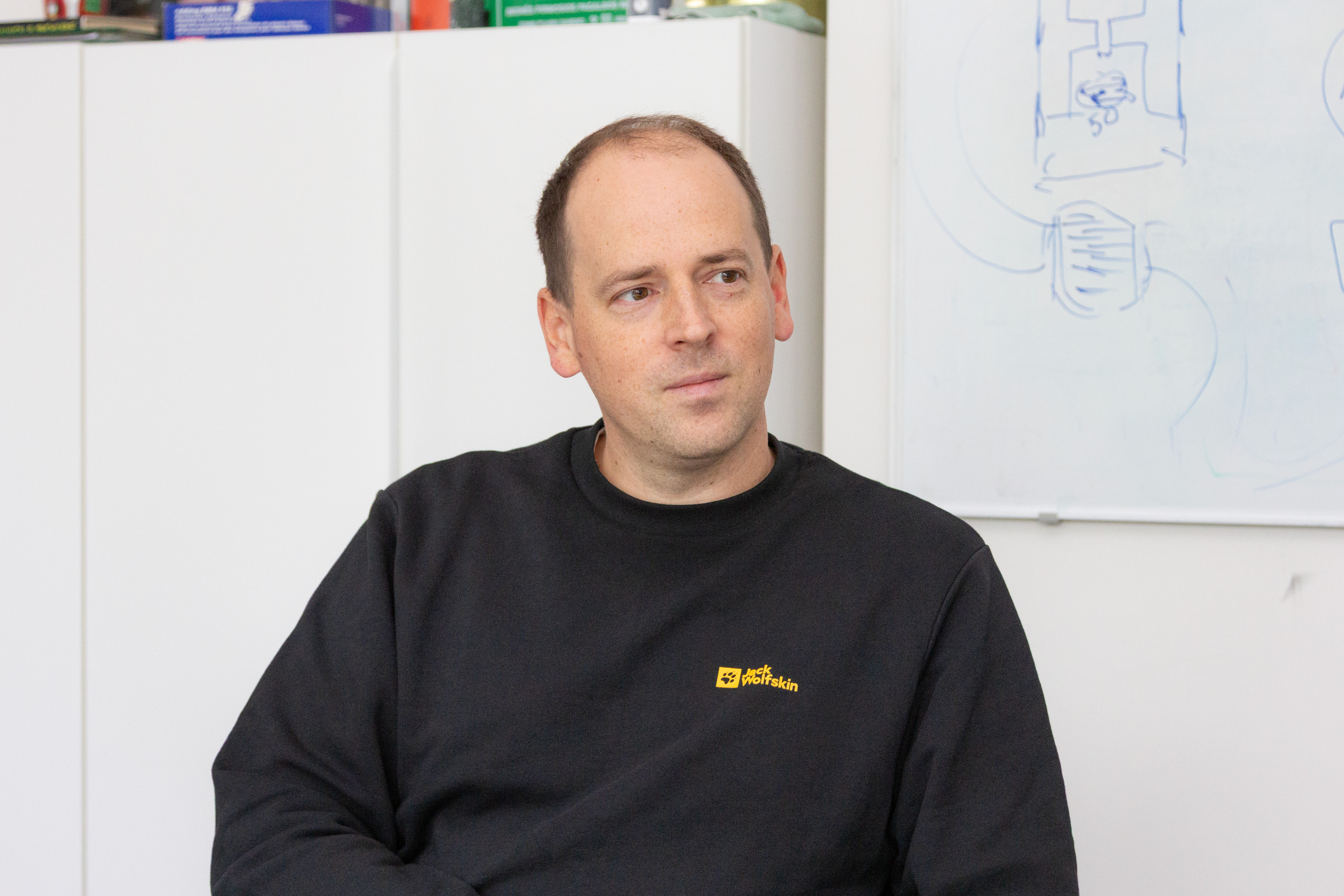
(Dr Linas Minkevičius. Photo: Gabrielius Mackevičius / FTMC)
Reflecting on the symposium as a whole, Dr Minkevičius believes that its greatest value for PhD students lay in the opportunity for direct interaction and knowledge exchange with people actively contributing to the development of cutting-edge technologies.
“It is especially encouraging that among these people are colleagues from the FTMC Department of Optoelectronics, bringing with them new ideas and international connections. Such connections do not arise by chance. The fact that we can attract leading experts to Lithuania demonstrates that we operate at a very high level and that our Center is well known within the global scientific community. It is worth noting that comparable international conferences elsewhere in the world often feature fewer speakers of this calibre than we had in Vilnius.”
Dr Čibiraitė-Lukenskienė adds that conversations with representatives of Lithuania’s technology industry were also highly valuable for participants.
“Students had an opportunity to see not only academic research but also its practical applications in society and industry. This helps them understand that the solutions developed in laboratories, the work they are already doing or could contribute to in the future, play a direct role in addressing real technological and societal challenges,” says the FTMC researcher.
Source: FTMC