- Home
- News & Events
- News
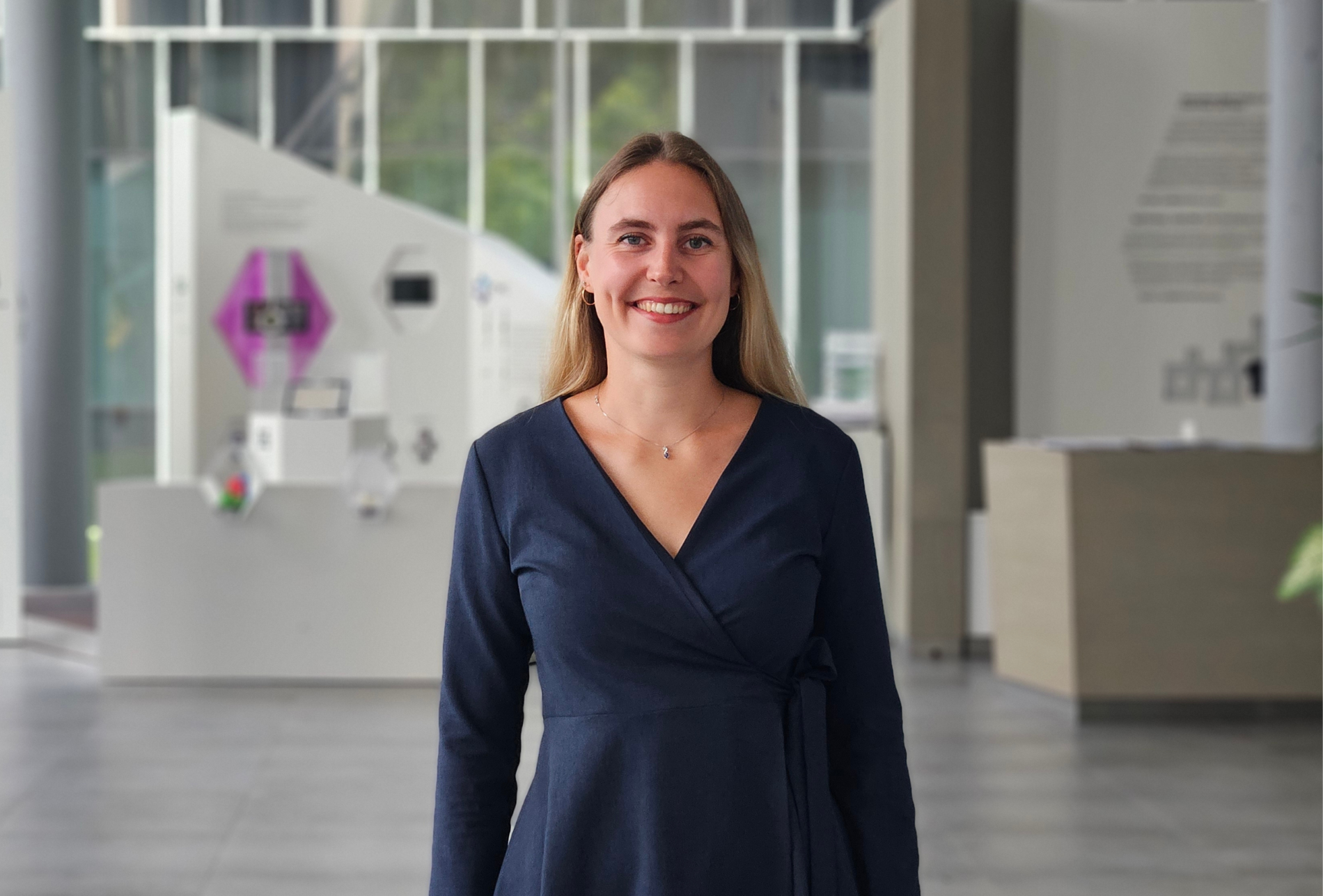
One of the First in Europe: FTMC PhD Student Is Creating a Sensor for Detecting a Common Allergen
Developing one of Europe’s first molecularly imprinted electrochemical sensors for the detection of geraniol is among the key goals of Greta Kasputė’s PhD research at the FTMC Department of Nanotechnology. Yet behind this ambition lies much more: exploring a new scientific field, conducting hundreds of experiments, learning from setbacks, and completing a four-year journey that has led to a technology with the potential to help address real-world challenges.
At the end of September this year, Greta will defend her doctoral dissertation in chemistry, presenting a prototype sensor designed to detect geraniol. Geraniol is a naturally occurring monoterpene alcohol characterised by its distinctive rose-like fragrance. It is widely used in the cosmetics, perfumery, and household products industries, meaning that we encounter it daily in a range of products. However, geraniol is also classified as a fragrance allergen that can trigger allergic reactions in sensitive individuals, making it important to accurately determine its concentration in products and in the environment.
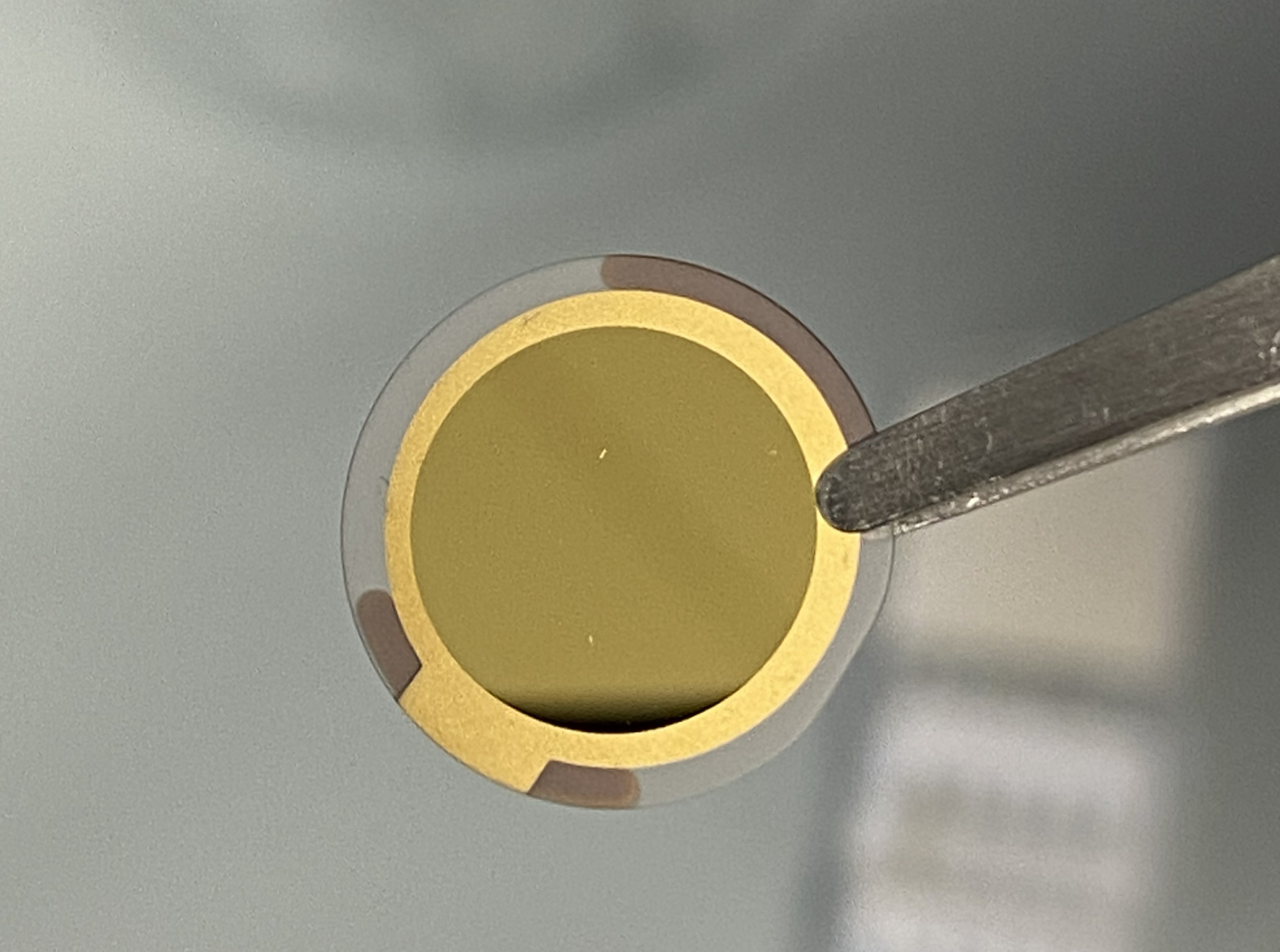
(Prototype sensor for geraniol detection / Photo from Greta Kasputė’s personal archive)
“Whether we realise it or not, we are constantly exposed to geraniol. We inhale it in various environments, so it is important to understand when, where, and in what concentrations it can be detected. That is precisely why we are developing this sensor,” explains the PhD researcher.
According to Greta, the prototype currently has very few counterparts in Europe. The sensor enables rapid, sensitive, and selective determination of geraniol concentrations in a variety of products and could, in the future, contribute to the authenticity verification and quality control of essential oils.
From Pharmacy to Electrochemistry
Although Greta is now developing advanced sensors, she entered her PhD studies from a somewhat different scientific background. After completing a degree in pharmacy and gaining substantial experience in plant research, she chose FTMC because of its strong research environment and the opportunity to work on a topic that genuinely interested her.
“FTMC always seemed to me a serious, well-organised, and purpose-driven institution. It was also important that there was an opportunity to work on a topic I was truly passionate about. Several important factors came together: a strong team, an excellent supervisor, and my desire to be here,” Greta recalls.
Has she ever regretted her decision?
“No, I haven’t. I would make exactly the same choice again,” she says without hesitation.
During her doctoral studies, Greta had to master an entirely new field: electrochemistry. According to her, theoretical knowledge and practical laboratory work often differ far more than one might initially expect.
“When I arrived, I thought I already knew chemistry, but I quickly realised how much there still was to learn. Everything fascinated me, from data analysis to the interpretation of results. Electrochemistry became one of the most interesting aspects of my PhD journey,” she says.
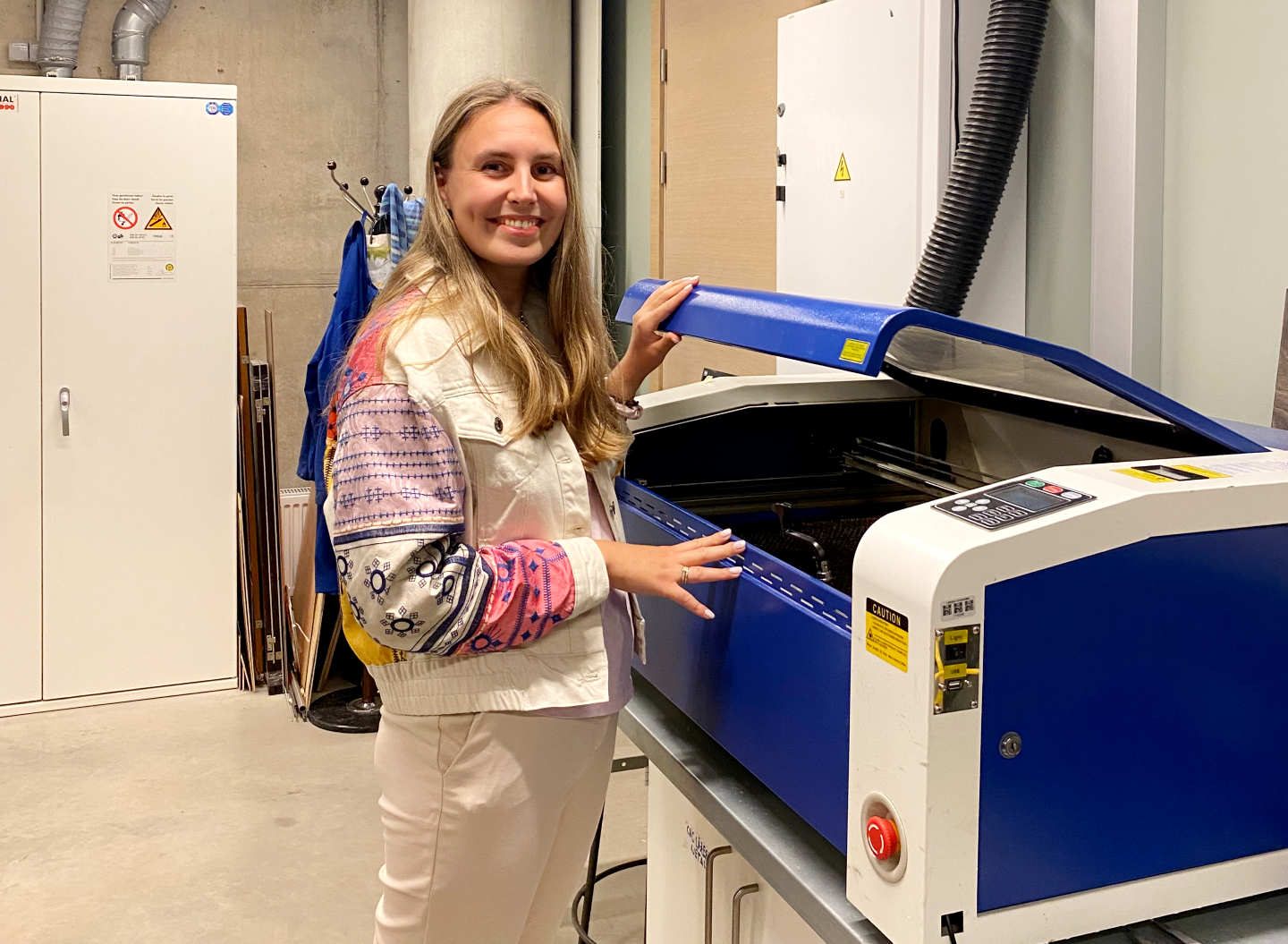
(Greta Kasputė. Photo from personal archive)
The Reality of PhD Life
Speaking about doctoral studies, Greta does not hide the fact that this stage should not be romanticised. Scientific research does not always go according to plan, and learning to cope with failure is an essential part of the process.
“A PhD student’s day often begins with the understanding that the laboratory may bring either a highly successful day or a complete failure. This happens constantly in research, so you must be prepared for both scenarios,” she says with a smile.
Nevertheless, Greta believes that the most important factor for success is having a genuinely engaging research topic and strong intrinsic motivation.
“If you are truly interested in your subject, many things become natural. It is easier to get up in the morning, come to the laboratory, plan your activities, and carry them out. You do not need to keep finding ways to motivate yourself,” she explains.
Over the four years of her doctoral studies, her work has been divided into several stages. The first year focused on examinations and preparing publications, followed by a period largely dedicated to experiments and sensor development. More recently, her attention has shifted towards writing scientific papers and completing her dissertation.
Science, Bees, and Public Education
Greta is also actively involved beyond the laboratory. She is a member of the Lithuanian Apitherapy Society and has received an award established by the association in recognition of her scientific research and contributions to this field of science. Apitherapy involves the use of bee-derived products, such as honey, propolis, beeswax, and other bee products, for therapeutic and health-promoting purposes.
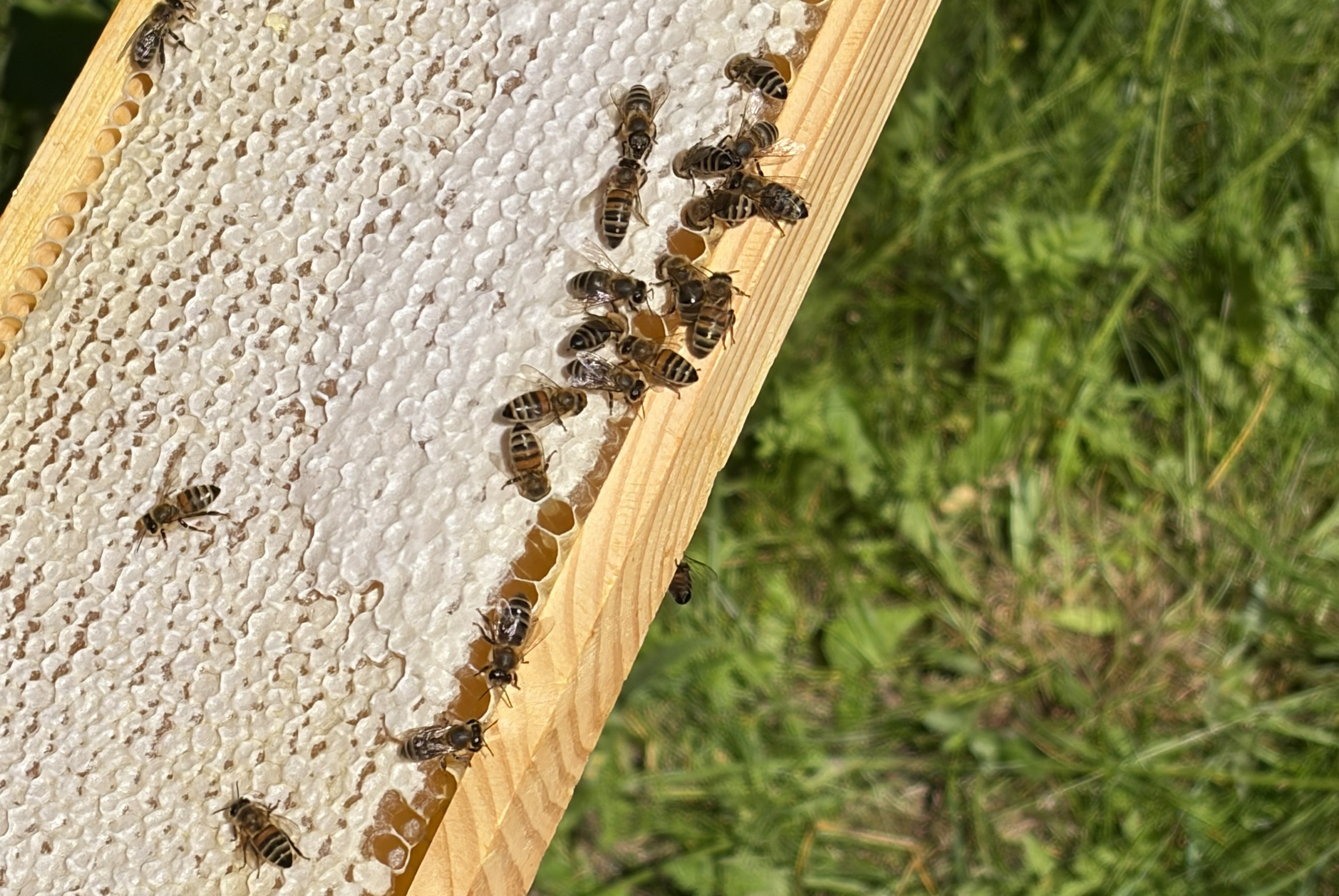
(Photo from Greta Kasputė’s personal archive)
She has a particular interest in bee products, aromatherapy, and phytotherapy. According to Greta, these fields are closely linked to science and require reliable analytical methods.
“I want to be confident that the products we recommend to people have been properly investigated and that their effects are supported by scientific evidence,” she emphasises.
For this reason, she is interested not only in the properties of bee products but also in the development of new analytical solutions. In the future, the sensors she is developing could help determine the composition of various substances more rapidly, detect allergens, and assess product quality.
From Laboratory Prototype to Real-World Product
One of the most important lessons Greta has learned during her PhD is understanding just how long the journey is from an initial laboratory prototype to a market-ready product.
“When we create a prototype in the laboratory and it works, that does not mean we already have a finished product. The next step is ensuring that it performs reliably under real-world conditions, integrating the necessary electronics, and developing a user-friendly solution. This requires collaboration between chemists, engineers, and many other specialists,” she explains.
According to Greta, this broader perspective on technology development has become one of the most valuable lessons of her doctoral studies.
What Comes Next?
For now, Greta’s primary goal is to successfully defend her dissertation. However, her future plans extend beyond research alone.
She hopes to continue conducting scientific research, provide professional consultations to patients, and actively engage in public education on aromatherapy, phytotherapy, and apitherapy.
“It is important to me to combine science, practice, and education. I want to continue sharing knowledge, writing articles, and contributing to the preservation of traditional knowledge and cultural heritage,” says Greta.
Her story is a powerful reminder that a PhD is not only about a dissertation or scientific publications. It is a journey through which new ideas emerge, interdisciplinary skills are developed, and solutions are created that may contribute to society’s well-being in the future.
Source: FTMC