- Home
- News & Events
- News
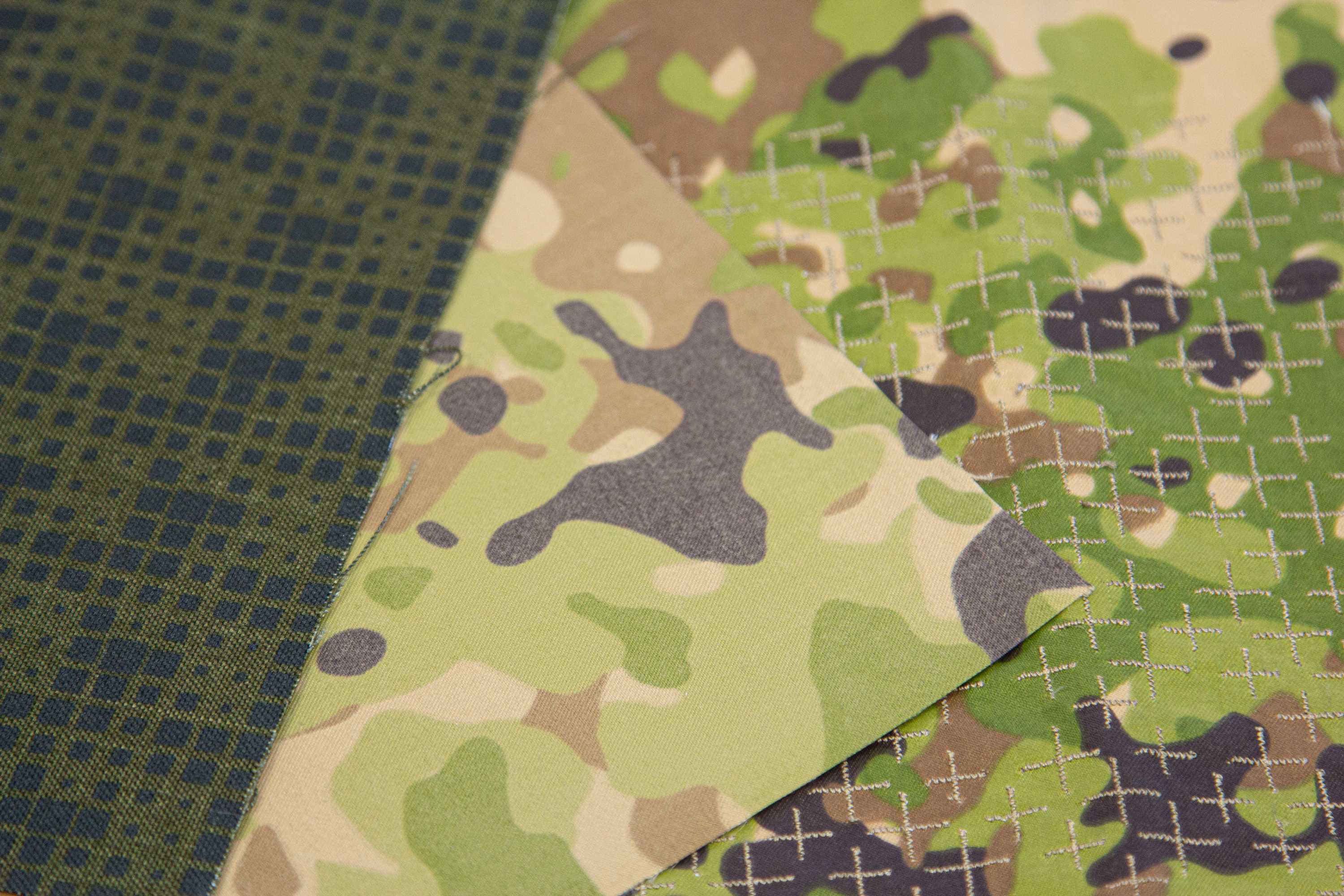
Lithuania Joins Ambitious European Defence Project: Smart Textiles to Help Hide from Enemy Eyes
Modern warfare is changing rapidly. Remaining undetected is becoming increasingly difficult as soldiers are continuously monitored by radar systems, drones and other advanced technologies, day and night. A conventional helmet and bulletproof vest are no longer enough. This is where scientists step in, developing smart textiles that could make soldiers virtually "invisible".
Nineteen partners from nine European countries are working towards this goal through the European Defence Fund project ACROSS (Adaptive Camouflage for Soldiers and Vehicles). The first successful field trials of so-called adaptive camouflage have already been completed, and the technologies are now being further refined to develop reliable radar-countering concealment solutions for both personnel and military vehicles.
Lithuania is also contributing to the effort. One of the project partners is the Center for Physical Sciences and Technology (FTMC).
Hiding Not Only from Humans but Also from Robots
"In warfare, the most important element is the human being, and people require protection when they leave a tank or emerge from cover. Appropriate clothing helps ensure safety, comfort and the maintenance of a suitable body temperature.
The camouflage we are developing is designed to allow a soldier to blend into their surroundings. Every person has a certain 'signature' that can be detected by radar and other systems, including thermal sensors. Our goal is to reduce that signature as much as possible," says Dr Julija Baltušnikaitė-Guzaitienė, Head of FTMC Department of Textile Technologies.
The countries participating in the project are developing adaptive camouflage solutions capable of helping soldiers and vehicles blend into their environment across the electromagnetic spectrum, from ultraviolet and visible light to the near- and far-infrared ranges and the microwave spectrum.
FTMC's primary focus is on protective textiles for personnel, including radar-shielding fabrics and materials that reduce thermal emissions in the far-infrared range.
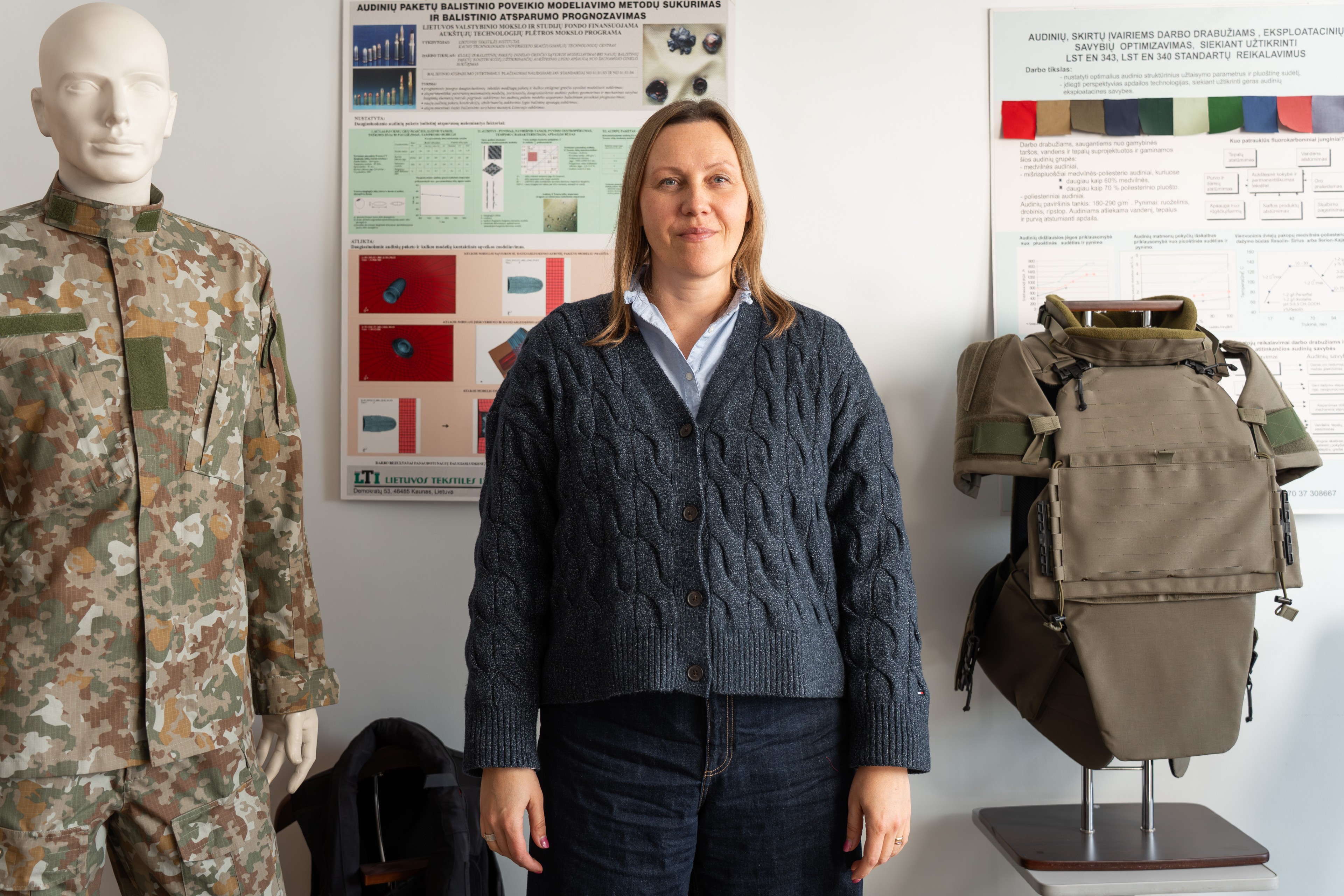
(Dr Julija Baltušnikaitė-Guzaitienė. Photo: Gabrielius Mackevičius / FTMC)
"ACROSS has already achieved significant progress. Each research stream within the project has undergone a technology assessment, and the most promising solutions have been selected for the next phase of testing. Two radar-protection technologies continue to be developed, while seven solutions have been shortlisted for reducing thermal signatures.
The ultimate objective of ACROSS is to create a versatile system integrating technologies from all project partners into a single outfit capable of protecting both personnel and vehicles from detection by electromagnetic means," explains Dr Baltušnikaitė-Guzaitienė.
According to Dr Karolis Stašys, FTMC Head of Defence R&D, these technologies could bring substantial benefits as warfare becomes increasingly sophisticated.
"Robotic and autonomous systems perceive their surroundings differently from humans. Since all sides in modern conflicts use drones and autonomous platforms, a new challenge has emerged: how to remain hidden from them. We now need to conceal ourselves not only from people but also from robots. This is precisely the problem we are tackling together with our partners, and it is what makes this project unique."
Tiny Structures that "Deflect" Radiation
How is this adaptive camouflage created? Dr Baltušnikaitė-Guzaitienė's textile research team collaborates closely with FTMC Microwave Laboratory, part of the Department of Physical Technologies and led by Dr Paulius Ragulis. The laboratory develops metamaterials: engineered structures, often composed of squares, rings or other simple geometric shapes, whose arrangement gives them properties not found in conventional materials.
Radar systems typically operate with electromagnetic waves measuring several centimetres in length. Accordingly, metamaterial elements are manufactured on a similar scale, ranging from a few millimetres to several centimetres. Their shape and arrangement are carefully designed so that incoming radar waves are absorbed or scattered rather than reflected back towards the radar source. The less signal returned to the radar, the more difficult it becomes to detect a person.
Scientists at the Microwave Laboratory design these structures by modelling, on computers, which shapes and dimensions can most effectively reduce radar reflections. The role of the textile specialists is to transfer those designs onto fabrics while ensuring the final product remains comfortable to wear, withstands bending and everyday use, and retains the required electromagnetic properties.
"Of course, it would be easier to create such electromagnetic structures on a rigid substrate. However, that would be impractical for a soldier, who must remain mobile and comfortable. Our challenge is therefore to integrate these structures into textiles that are lightweight, flexible and breathable," says Dr Baltušnikaitė-Guzaitienė.
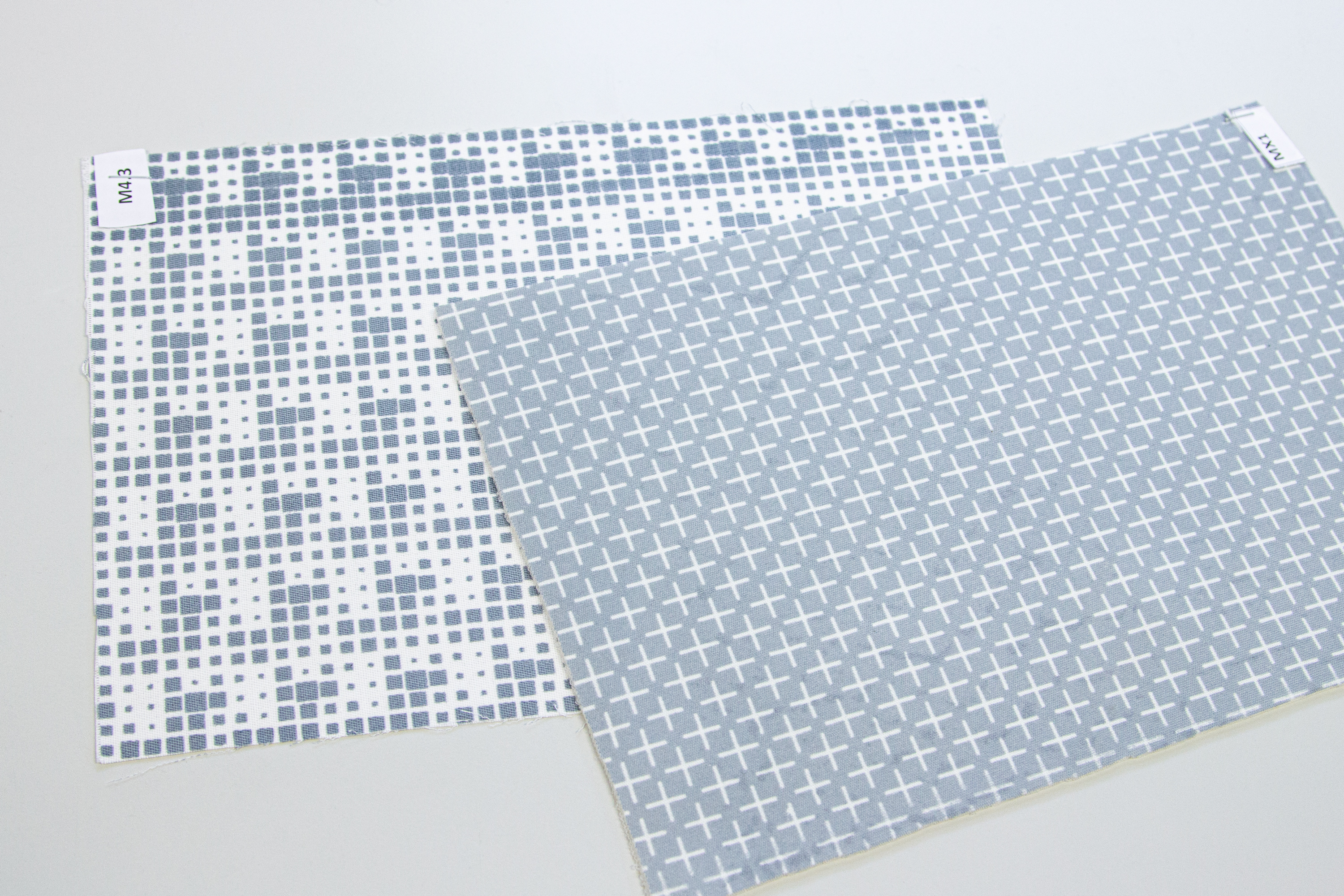
(Textile samples with metamaterials. Photo: Gabrielius Mackevičius / FTMC)
The structures are first modelled digitally, with researchers adjusting parameters such as element shape, pattern, size and spacing until the metamaterial operates at the desired frequencies and exhibits the required characteristics. Computer simulations allow numerous configurations to be tested before the most effective design is identified.
"We can create metamaterial structures not only on fabrics but also on rigid substrates. One of the simplest, fastest and most cost-effective methods is to use printed circuit boards similar to those found inside every mobile phone or computer. Unnecessary copper is chemically etched away, leaving behind the required pattern.
When it comes to future military clothing, however, FTMC textile researchers create these structures on fabric using conductive polymers, materials capable of carrying an electric current," explains Dr Ragulis.
The manufactured samples are then tested in FTMC' Microwave Anechoic Chamber. Its walls are lined with special microwave-absorbing pyramidal structures, ensuring that waves are barely reflected from the surroundings and allowing researchers to measure only the properties of the sample under investigation. This enables them to verify whether the metamaterial performs exactly as predicted during modelling.
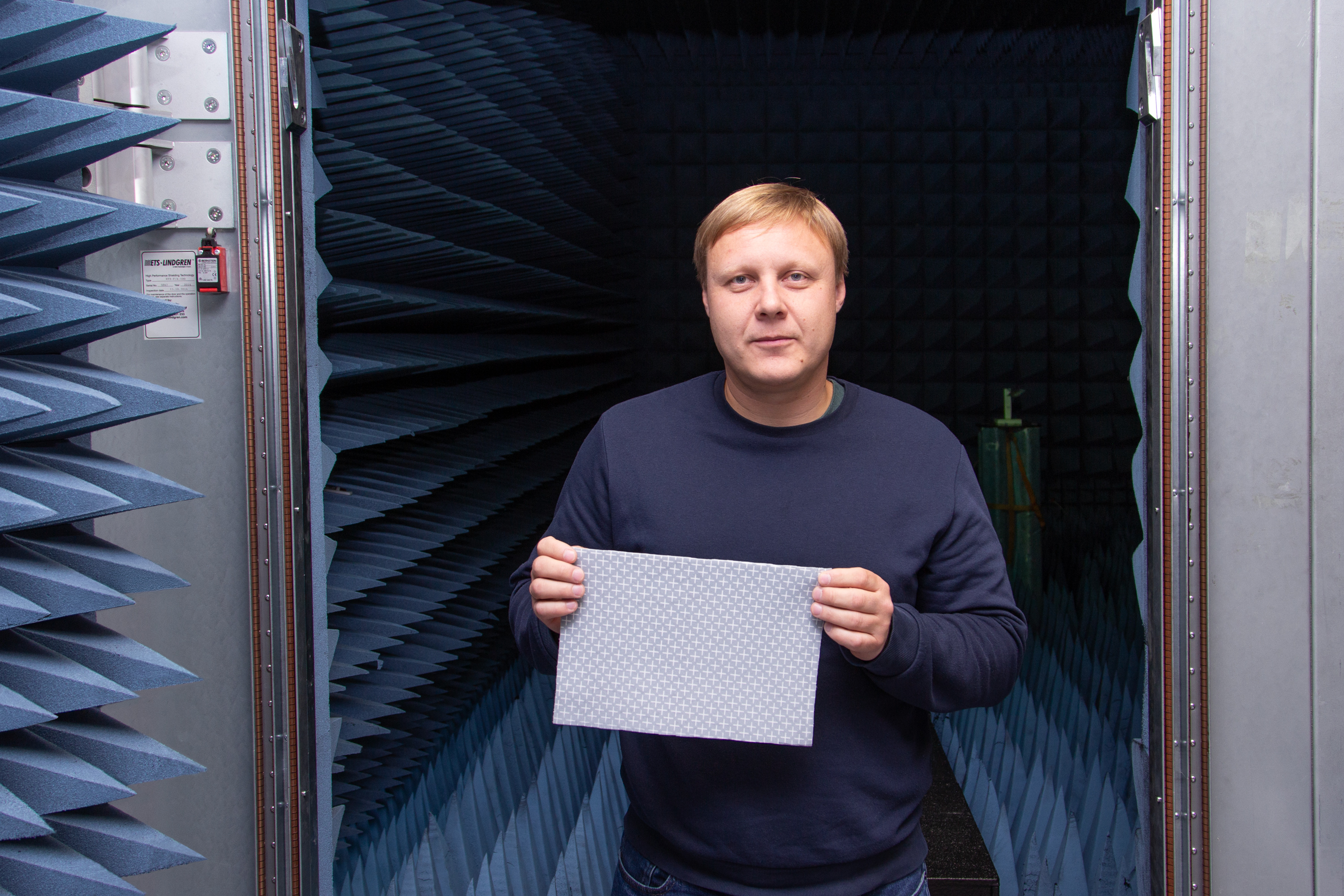
(Dr Paulius Ragulis. Photo: Gabrielius Mackevičius / FTMC)
First Field Trials at a Military Training Ground
Researchers from the other eight participating countries carry out similar experiments aimed at concealing targets from different regions of the electromagnetic spectrum. Several months ago, all partners gathered at the 6th Cavalry Regiment Base (Regimento de Cavalaria N.º 6) in Braga, Portugal, where they conducted the first field trials in cooperation with the Portuguese Armed Forces. The trials focused not on individual materials or isolated technologies, but on combinations of solutions developed by different project partners.
Soldiers wearing the newly developed camouflage systems took part in the field tests, while adaptive camouflage solutions for vehicles were also evaluated. Additional measurements were carried out using standardised surrogate targets, including mannequins and other objects routinely employed in testing to represent real-world targets. This made it possible to assess the technologies under conditions that were both realistic and carefully controlled.
"The trials evaluated how the combined technologies performed in different environments, at varying distances, during both day and night, and across different regions of the electromagnetic spectrum. The most important objective was to determine whether solutions that work effectively on their own retain their capabilities when integrated into a single multispectral system.
The results helped identify which technology combinations have the greatest potential and which directions are most promising for further development. At the same time, they revealed solutions requiring additional optimisation. Some technologies have now reached a sufficient level of maturity to be incorporated into the final demonstrators, while others remain promising but will require further development and therefore will not be included in the project's final demonstrations," says Dr Baltušnikaitė-Guzaitienė.
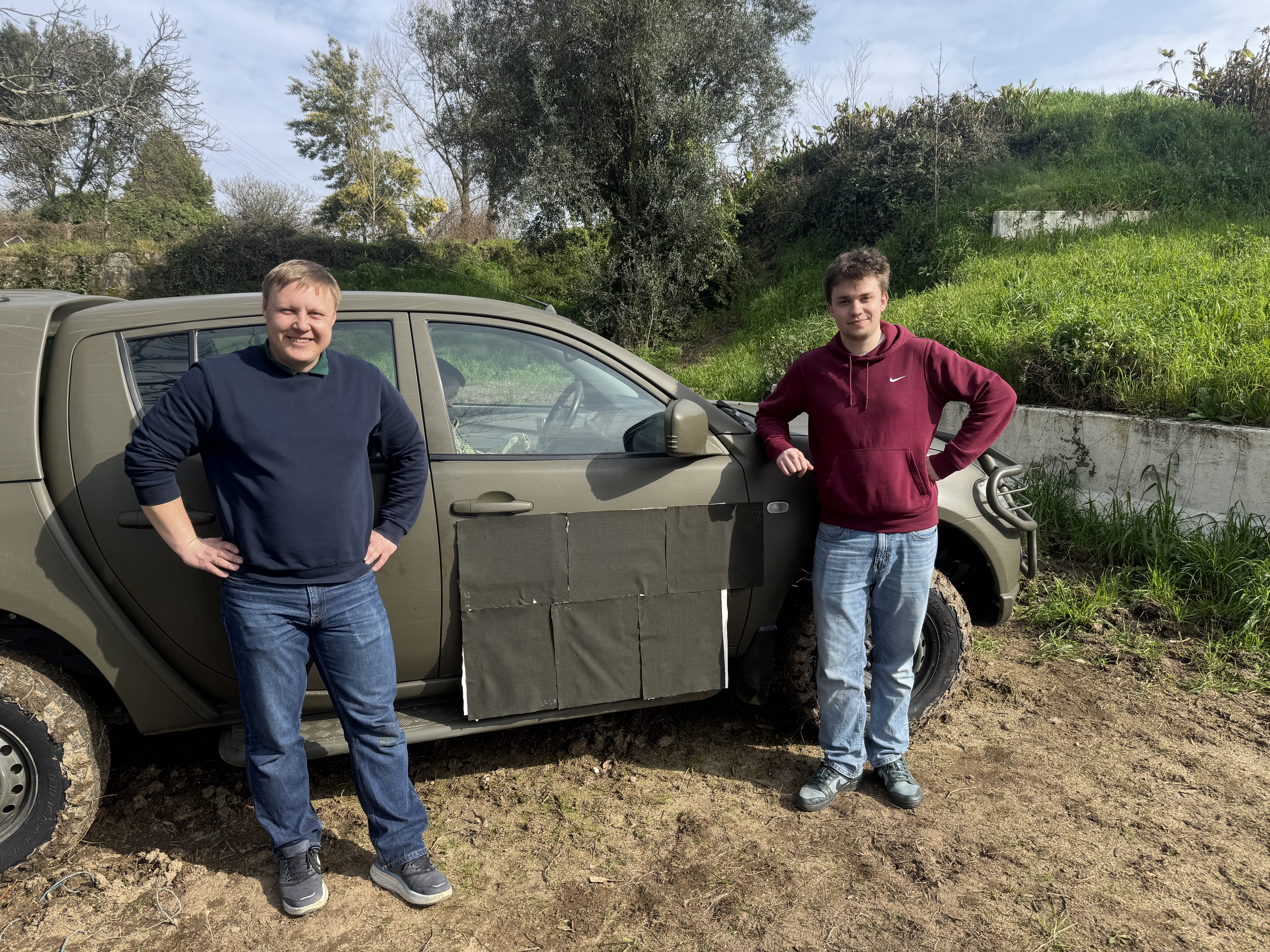
(Dr Paulius Ragulis and FTMC engineer Augustas Koklevičius. Photo: FTMC)
Following the field trials, the selected technologies underwent further assessment. Researchers evaluated not only their camouflage performance but also their sustainability, scalability, cost, energy requirements, ease of integration, level of technological maturity and prospects for practical deployment.
According to the FTMC scientist, one of the project's key tasks now is the development of the final demonstrators based on the accumulated results. The aim is not to produce a single universal solution, but rather several different camouflage configurations in which the most promising technologies are combined to provide effective concealment across as much of the electromagnetic spectrum as possible.
"A great deal of attention is being devoted to integration. We must ensure that the technologies developed by different partners not only perform well within their own operating ranges but also function effectively together without interfering with one another. They must retain the required camouflage capabilities while remaining practical for real-world use. As a result, further optimisation, compatibility assessments and final design work still lie ahead."
She adds that efforts are also being made to develop certain technologies as standalone solutions. In FTMC's case, one such avenue is radar-countering technology.
Defence Technologies Beyond Defence
Defence is one of FTMC's strategic priorities, and Dr Baltušnikaitė-Guzaitienė emphasises that, living in what might be described as a geopolitical "seismic zone" and wishing to preserve peace and security, societies must be fully prepared. Science, she argues, plays an important role in that preparedness.
"It is also important to remember that defence technologies often have dual-use applications. For example, we are developing textiles that help regulate body temperature. Such clothing could be valuable not only on the battlefield but also for industrial workers operating in extreme heat.
I believe every scientist should consider how their knowledge and expertise might contribute to strengthening national security," she says.
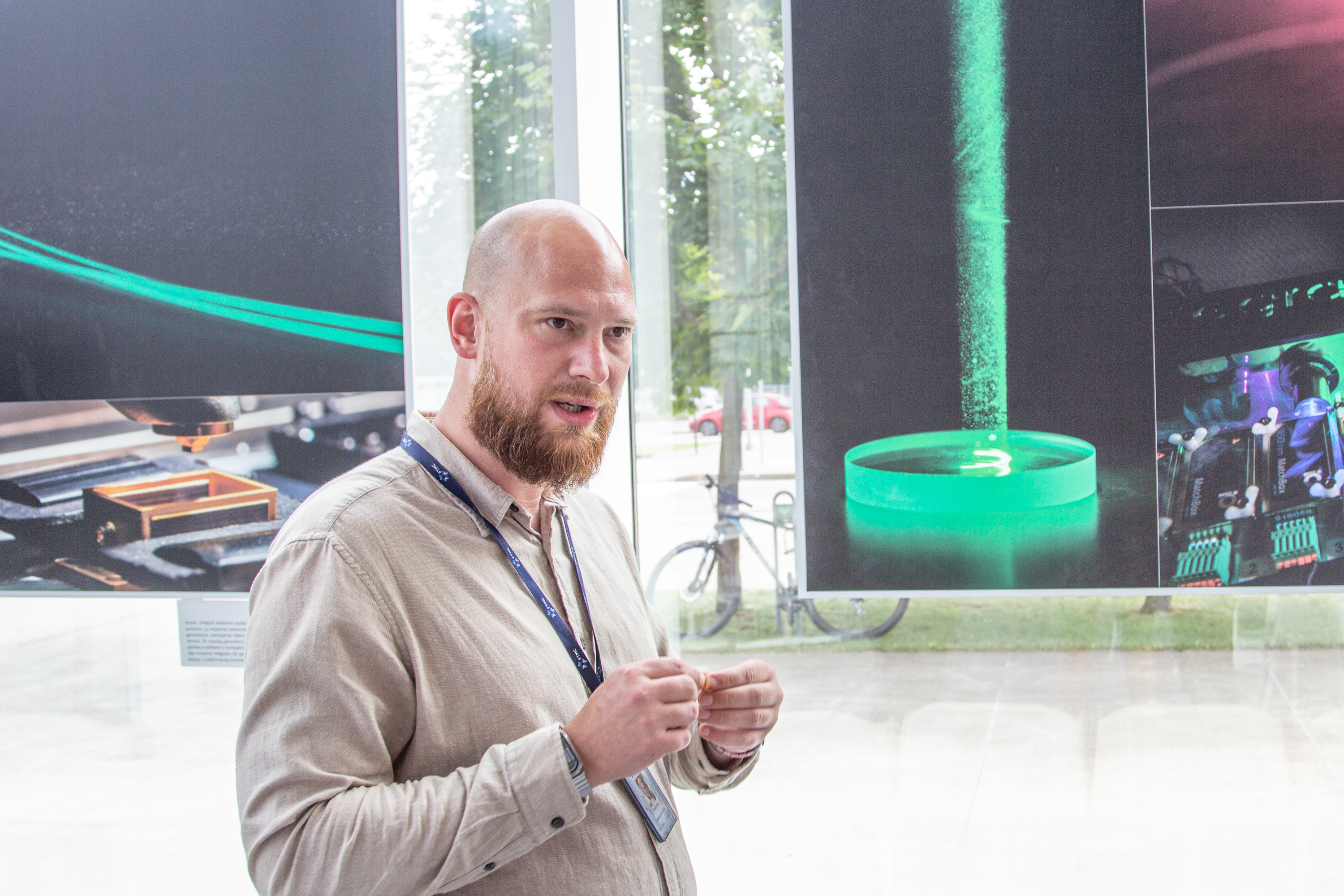
(Dr Karolis Stašys. Photo: Gabrielius Mackevičius / FTMC)
Dr Stašys adds that security-related research should be attractive to scientists not merely because of external threats, but also because of the opportunities it presents.
"This field constantly introduces new unknowns. It is one thing to search for solutions in scientific literature and quite another to work in defence, where feedback can arrive very quickly from actual battlefield conditions, revealing what works and what does not. This enables solutions to be tested in real environments rather than solely in laboratories.
Although defence technologies have been under development for decades, warfare itself has fundamentally changed. It has become increasingly intelligent and technology-driven, creating opportunities to apply many fundamental scientific advances to the development of new defence capabilities. That is what makes this area so fascinating.
History shows that military conflicts often act as powerful catalysts for scientific and technological breakthroughs. Wars bring suffering, and we seek to prevent them wherever possible. Yet when conflicts occur, we must work together to develop solutions that help protect us from threats both today and in the future," concludes Dr Stašys.
By Simonas Bendžius