- Home
- News & Events
- News
How to Talk About Quantum Physics in Schools? FTMC Researcher Shares Insights at an International Conference in Finland
Quantum physics is an integral part of modern technology. Many of the devices we use every day operate according to the laws of quantum physics, and its importance is only expected to grow in the future. As a result, both academia and industry are seeking ways to collaborate in developing new technologies, as well as effective ways of communicating their significance to younger audiences.
These topics were discussed at the international conference Finnish Quantum Days 2026, held in Jyväskylä, Finland. Researchers, technology developers and education specialists explored advances in quantum technologies, their applications and the training of future professionals.
Lithuania was represented at the conference by Dr Mažena Mackoit-Sinkevičienė, a physicist at the FTMC Department of Optoelectronics; Mantas Skaržinskas, FTMC Innovation Manager; and Žymantas Mozūraitis, Third Secretary at the Embassy of Lithuania in Finland.
Bringing Quantum Physics Closer to School Students
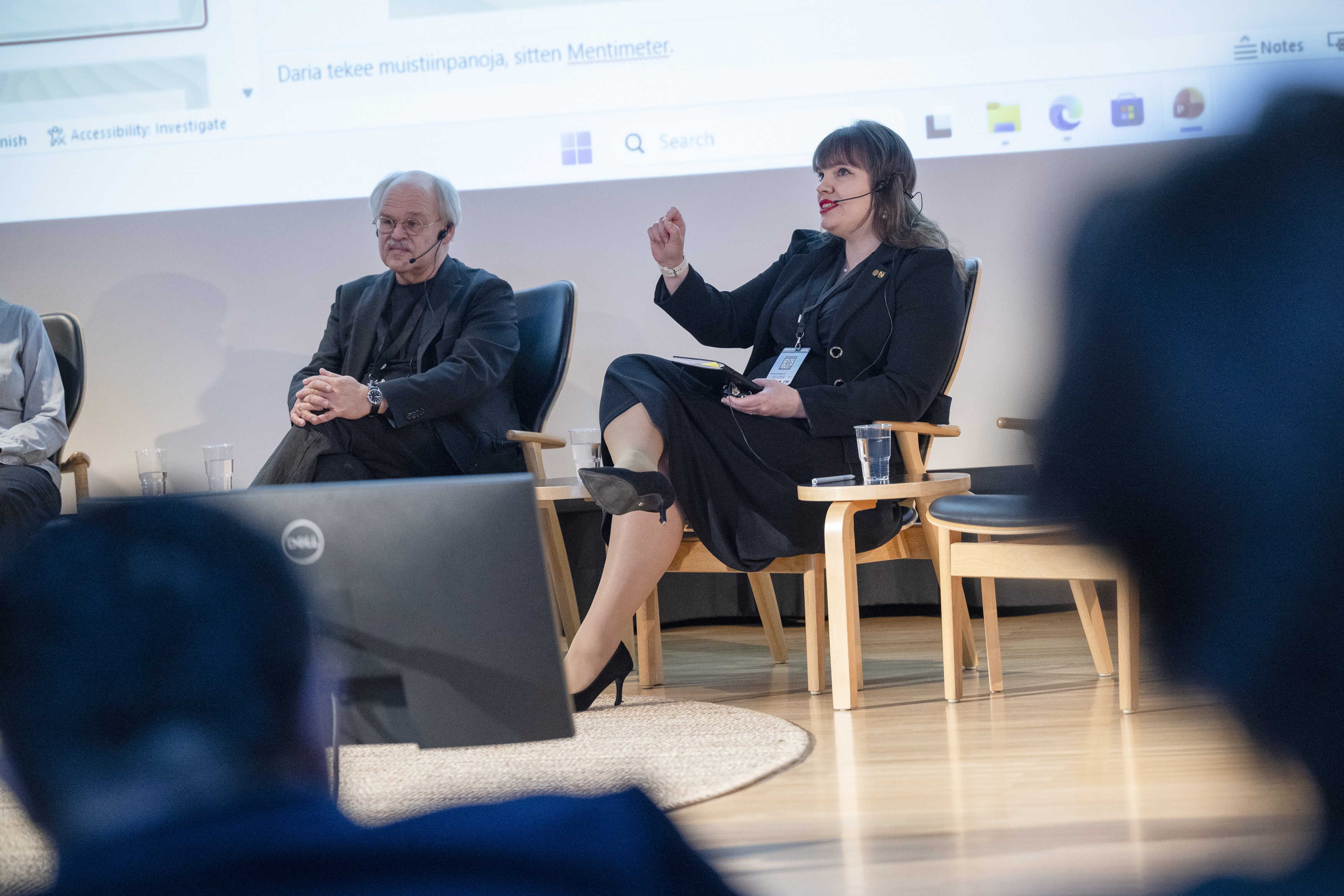
During the event, Dr Mackoit-Sinkevičienė shared her experience and insights in a panel discussion on how modern quantum physics can be introduced in schools and what support teachers need to teach the subject effectively. The discussion also included representatives of universities and schools from Finland and the Netherlands.
“Teaching quantum physics is important not only for educating future specialists in the field, but also for helping society better understand the scientific principles behind the promises of emerging technologies,” says the researcher.
For many years, Mažena has been actively involved in promoting quantum physics through school visits, educational events and competitions. Her efforts have been recognised on several occasions by the Lithuanian Academy of Sciences. In 2021, the FTMC physicist won first place in a science communication competition for organising the Education Session of the European Quantum Week in Lithuania, an initiative later featured in the journal Europhysics News. In 2023, together with her husband Jurgis Sinkevičius, she received an award for organising Lithuania’s World Quantum Day event series.
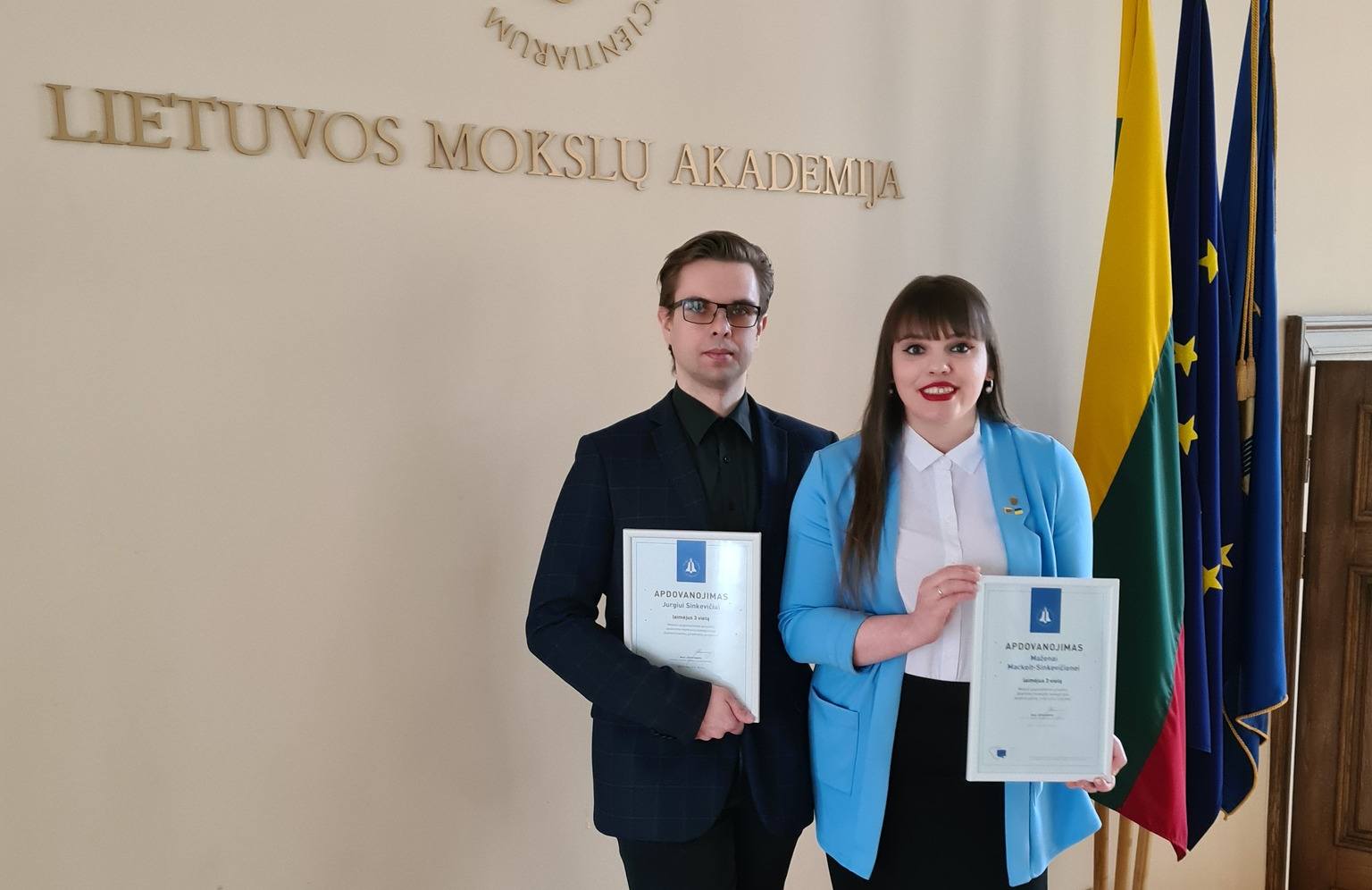
(Jurgis Sinkevičius and Dr Mažena Mackoit-Sinkevičienė. Photo from personal archive)
World Quantum Day has been celebrated in Lithuania since 2022 and features a variety of educational activities designed to introduce quantum mechanics to school pupils and the wider public.
In 2025, Dr Mackoit-Sinkevičienė was also named a laureate of the Baltic for Women in Science scholarship programme in recognition of her research in quantum technologies.
“During the discussion in Finland, I emphasised that quantum physics is not yet part of the Lithuanian school curriculum. However, pupils are already introduced to the atom as a probabilistic electron cloud, and the double-slit experiment is also discussed. In lessons, teachers use episodes I have prepared about the IQM quantum computer, as well as introductory materials on quantum physics. The challenge is not only to include more quantum topics in education, but also to connect them with technologies being developed today. Quantum physics becomes more relatable for students when they learn that Lithuanian lasers are used in quantum computers, including the first quantum computer operating in space.
Teachers need ready-made, reliable teaching materials available in Lithuanian that can be used immediately in the classroom. These include short videos, examples and explanations demonstrating how scientific discoveries translate into real-world technologies. I am pleased that episodes from my YouTube channel Short Physics Lectures are already being shown in schools, referenced in the new Year 8 physics textbook and used by students preparing for academic competitions.
The experience of colleagues in Finland and the Netherlands shows that the most consistent progress is achieved where quantum technology education is linked to national strategies and teacher training,” says Dr Mackoit-Sinkevičienė.
At Finnish Quantum Days 2026, the FTMC researcher also served as a member of the judging panel for the 3MT Competition Final. Together with two scientists from VTT Technical Research Centre of Finland and TU Wien, she assessed how effectively young researchers could communicate complex scientific ideas to a broader audience in a clear, engaging and accessible manner.
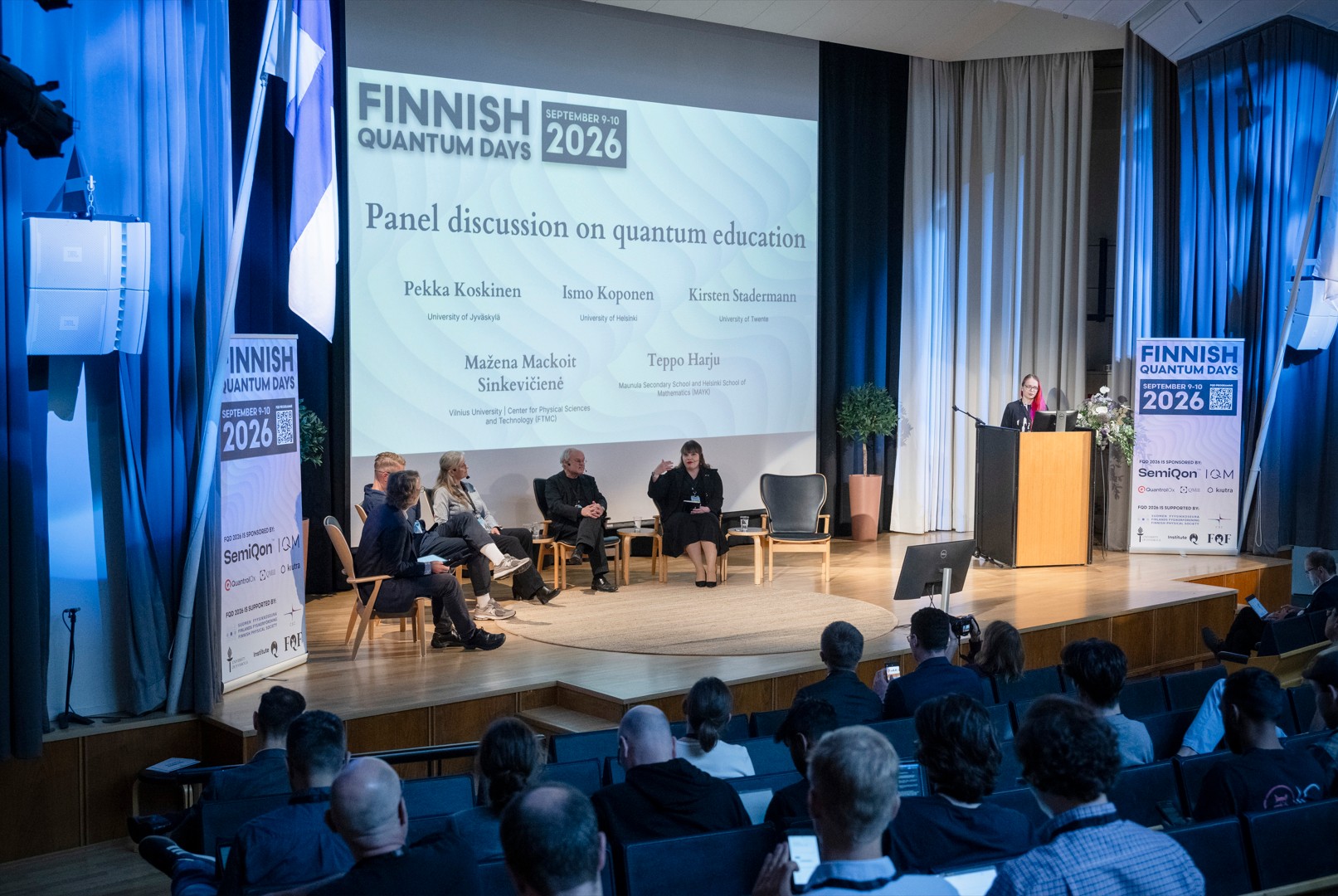
(Photo: Pasi Hakala / Studio Varjo)
Why Finland’s Experience Matters for Lithuania
Over the course of the two-day event, participants explored topics ranging from national strategies and industrial development to cutting-edge quantum device research. One of the keynote speakers was Nobel Prize laureate Prof John M. Martinis, a researcher in superconducting quantum circuits. He discussed fundamental quantum phenomena and experimental methods whose development helped lay the foundations for modern quantum computing. His presentation connected fundamental scientific questions with the practical challenge of precisely controlling and measuring quantum systems.
Other presentations covered research on new quantum computing components, electronics operating at extremely low temperatures, and advanced quantum measurement technologies. Discussions also addressed the integration of quantum processors with supercomputers, where different computational tasks are allocated according to the strengths of each technology.
“These topics help explain why the development of quantum and other advanced technologies requires researchers from many different disciplines. Some develop materials and investigate their properties, others design devices, improve measurement methods or create algorithms. The path from laboratory research to a reliable working device is complex and involves manufacturing, integration and testing at many different stages,” explains Mantas Skaržinskas.
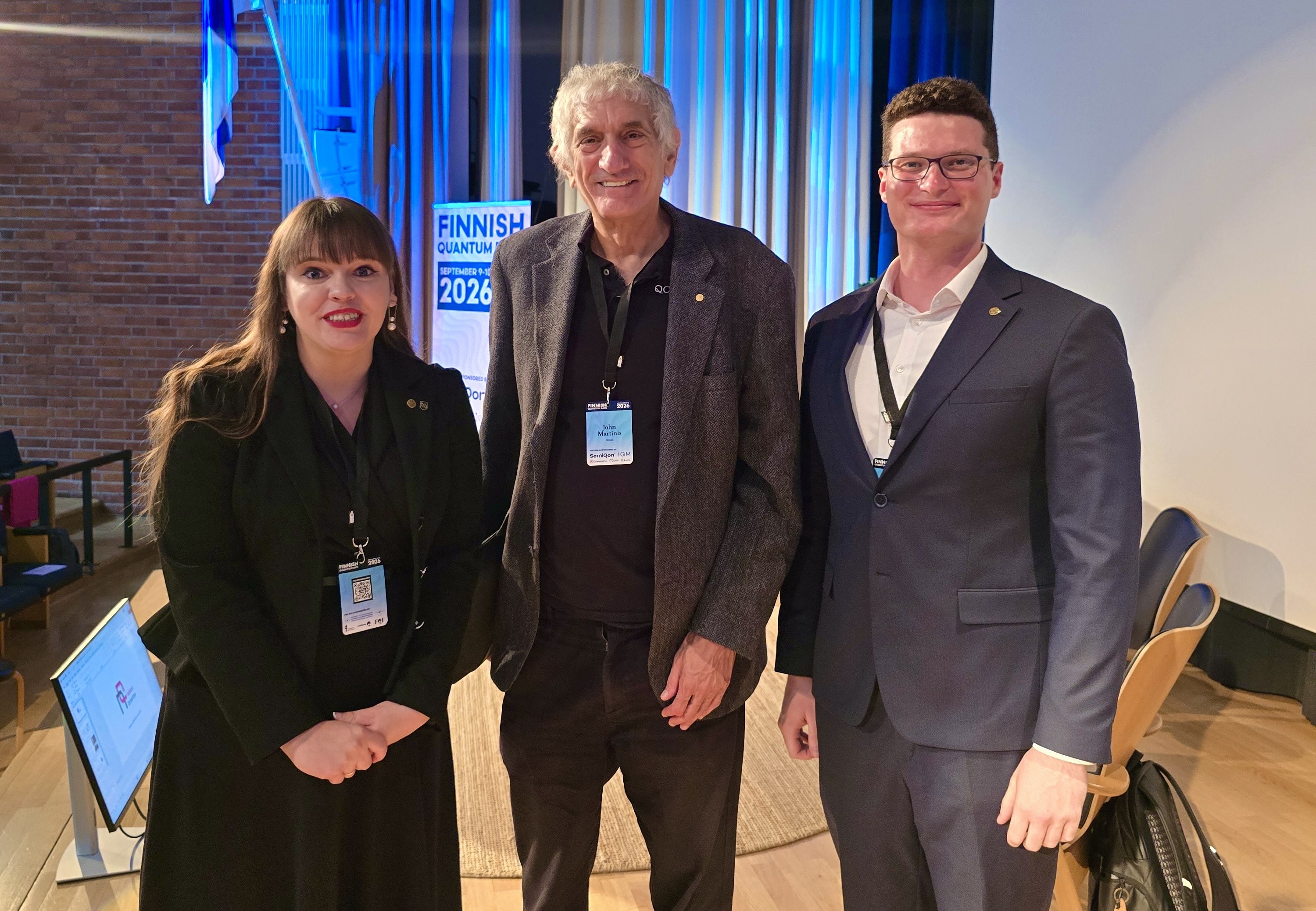
(Dr Mažena Mackoit-Sinkevičienė, Nobel Prize laureate Prof John M. Martinis and Mantas Skaržinskas. Photo from personal archive)
According to the FTMC Innovation Manager, Finland's experience offers Lithuania a valuable example of how a country can establish a clear position in the international technology landscape. Strategic discussions at the conference focused heavily on building long-term scientific expertise, specialised companies and international partnerships. One of the key questions explored was how national strengths can be transformed into concrete contributions valued by international partners.
“In Lithuania’s case, it is important to identify the areas of quantum technologies where existing expertise can be applied most effectively. These may include the development of materials and components, improvements in measurement techniques, software development, or the application of quantum technologies to specific practical challenges.
Participation in international projects does not require a country to develop the entire quantum technology value chain domestically. Meaningful contributions can also come through specialised expertise and infrastructure that address particular scientific or technological challenges,” says Skaržinskas.
Info: FTMC