- Home
- News & Events
- News
How the Human Body Would Respond to Long Space Journeys: FTMC Scientists Provide New Insights
Long-distance space travel has long been a dream for both scientists and science fiction enthusiasts but turning it into reality requires meeting many conditions. One of them is understanding how to protect astronauts from harmful effects on their health – both from cosmic radiation and from prolonged time spent in a spacecraft without the natural gravity of Earth.
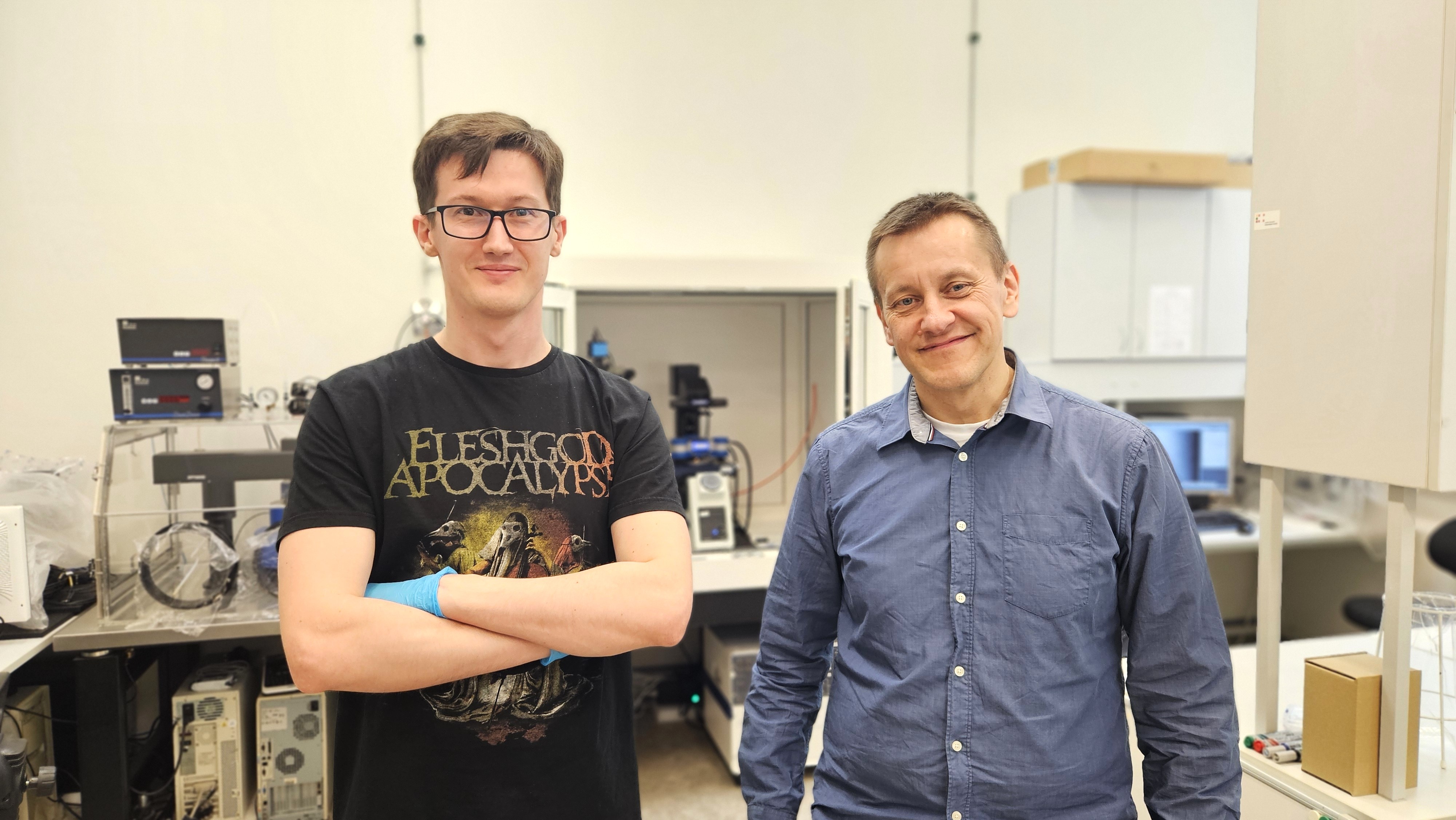
Scientists from the FTMC Department of Nanoengineering, Dr Artūras Ulčinas and PhD candidate Tadas Jelinskas, are contributing to solving this problem. They are carrying out a European Space Agency (ESA) project in which they study human cartilage cells – growing them in the lab, exposing them to microgravity experiments, and quite literally pressing on them with an atomic force microscope to observe changes. All of this is aimed at better understanding how astronauts’ cartilage changes in space.
According to the researchers, these experiments are the first of their kind in the world, and initial results are already providing valuable insights.
Cells Can Feel Pressure Too
In the Nanoformation and Biochips Technology Laboratory at FTMC Department of Nanoengineering in Vilnius, scientists seek answers to how materials “behave” at scales smaller than a living cell. They study chemical properties, molecular structure, and mechanical properties such as stiffness, surface roughness, and topography – all of which determine how a material functions.
“Our goal is to understand how combinations of properties at the nanoscale determine the final function of a material, and to learn how to engineer those materials to achieve specific outcomes. For example, we can create superhydrophobic coatings – self-cleaning glass or surfaces. On the other hand, we can design highly wettable surfaces where water flows easily. Another important application is locally activated reactions, where light or other stimuli can change surface acidity in specific areas,” says Dr Artūras Ulčinas, head of the laboratory.
One of the main tasks of his team is to apply these methods to studying the human body. To do this, they use mechanobiology – a developing field you have likely never heard of – which examines how cells change in response to pressure, stretching, vibrations, and other mechanical forces. Cells are believed to directly sense these processes and respond by altering their behavior.
A simple everyday example is exercise: when we work out, muscle cells experience pressure and stretching, signaling them to strengthen and produce more proteins.
This influence of external forces is also evident in research: to grow heart tissue from stem cells in the lab, it is not enough to simply place them in a suitable medium – they must be rhythmically stretched and released so they “think” they are part of a beating heart.
The body reacts not only to exercise but also to inactivity: when we move less, muscle cells receive signals that strengthening is no longer needed and begin to shrink.
This applies not only to muscles but to nearly all tissues – including articular cartilage, the main focus of FTMC’s research.
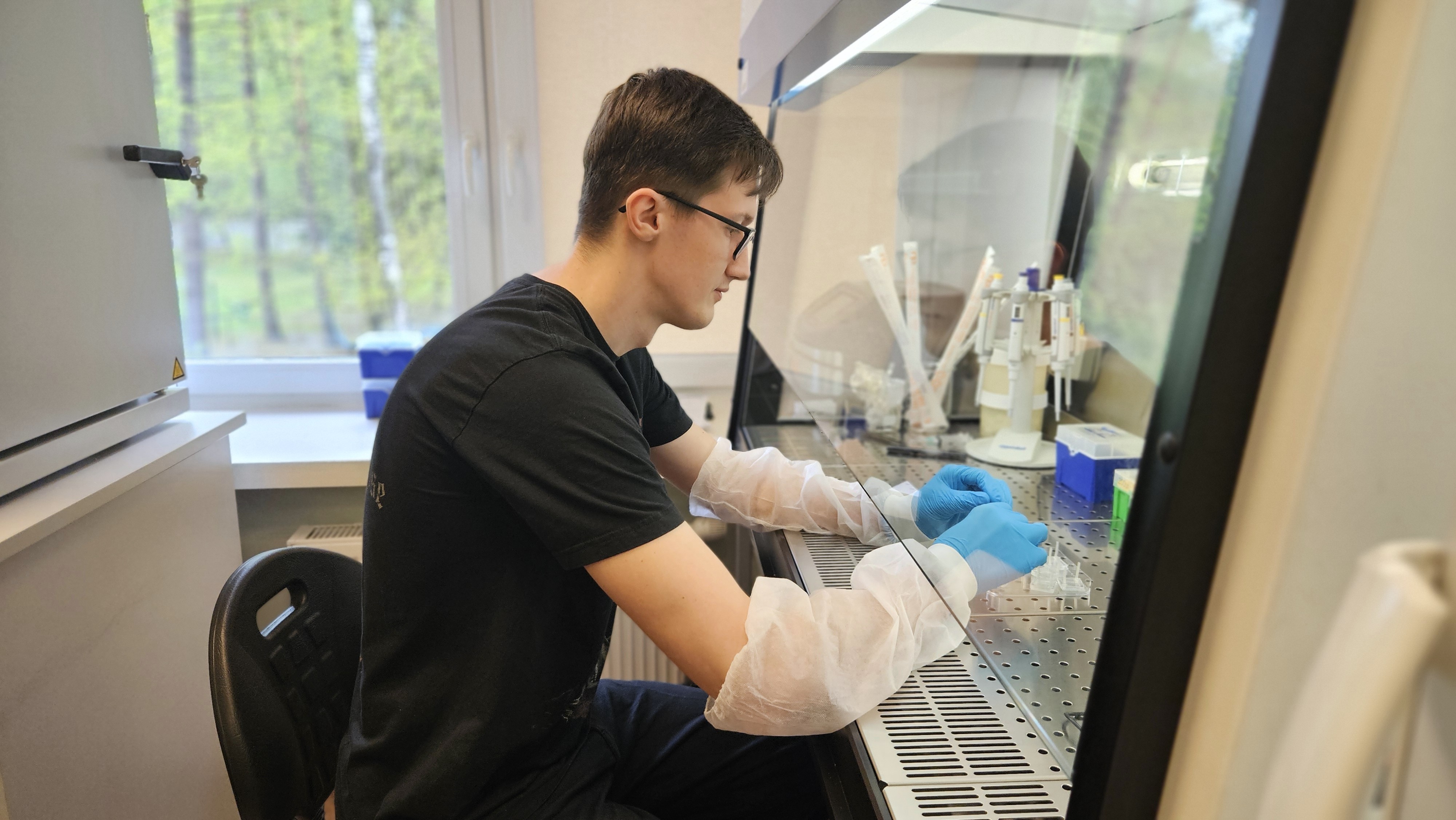
(PhD student Tadas Jelinskas. Photo: FTMC)
Fundamental Knowledge with Practical Benefits
“Cartilage tissue is constantly being compressed and pressed, especially when we walk or run. Our tissues are used to a certain level of physical load, but astronauts in space do not experience this kind of stress. And it’s not just astronauts – if a person is paralyzed or bedridden due to illness, their tissues also lack necessary mechanical stimulation.
Muscles can recover relatively quickly, but cartilage regenerates very poorly. That is why it is important to understand why – and how we might stimulate cartilage regeneration.
Science has long observed that the absence of gravity changes the structure of muscles and cartilage. However, it remains unclear what exactly happens at the level of individual cells,” explains FTMC PhD candidate Tadas Jelinskas.
The opportunity to study these questions arose when ESA invited Lithuania, as an associated member, to submit doctoral research proposals. The project is also part of Jelinskas’ dissertation.
According to Dr Artūras Ulčinas, the research will not immediately provide direct solutions for astronauts, but it will generate valuable knowledge for scientists worldwide:
“Fundamental science aims to build new understanding of the world around us. Once that understanding is achieved, engineers, pharmaceutical developers, and physiotherapists can step in. New opportunities emerge.
In our case, the knowledge gained can be widely applied in many directions. For example, there is already global interest in translating tissue stiffness measurements into clinical practice. This could allow earlier and less invasive detection of tissue changes. These methods could also be combined with organoid or cell culture technologies.”
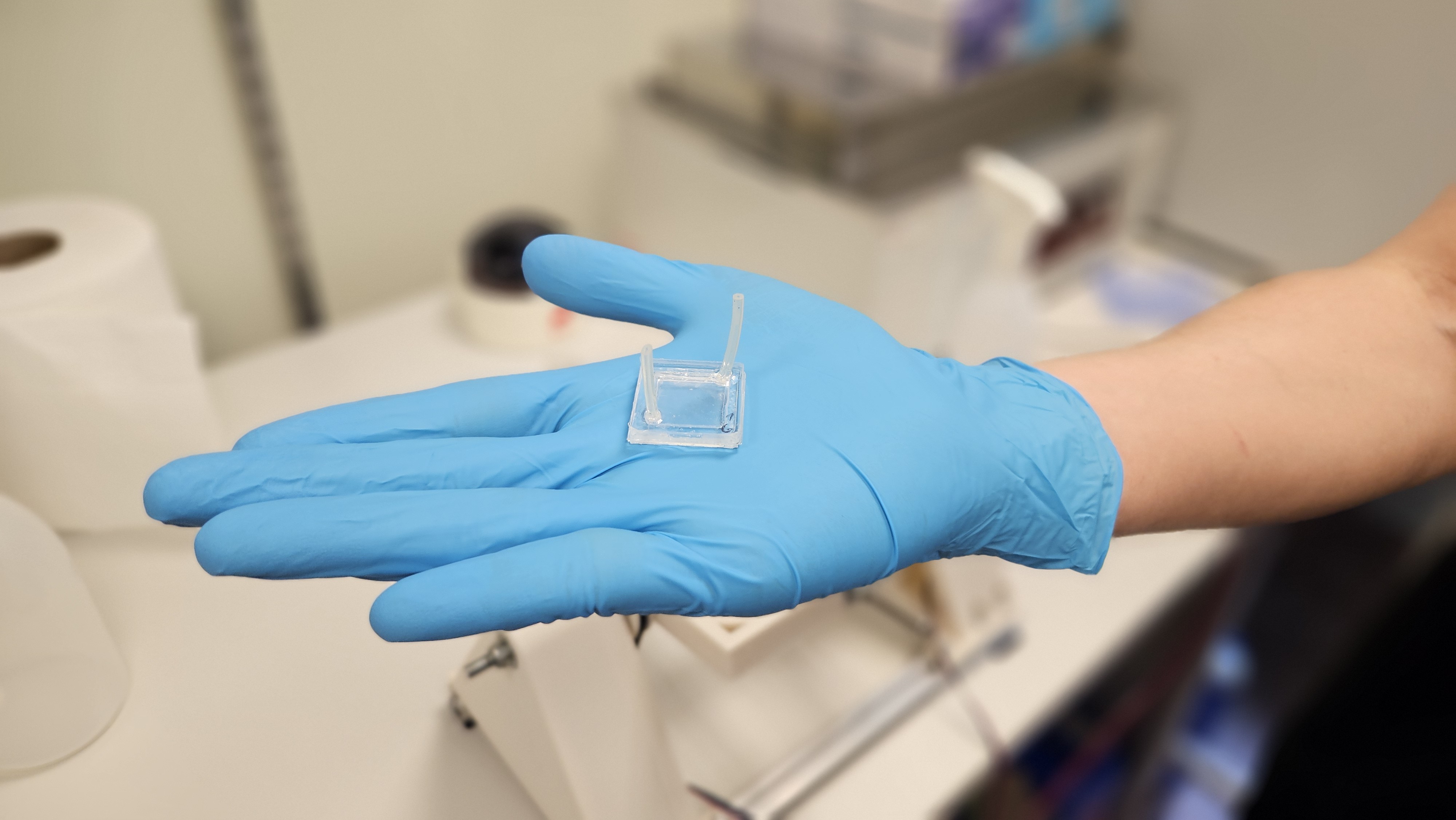
(Container with hydrogel and cartilage cells. Photo: FTMC)
Cells Being Spun and Prodded
In the FTMC lab, experiments are carried out in several stages. Scientists first grow purchased human stem cells into cartilage tissue. Depending on conditions, these cells can become bone, cartilage, or fat.
Jelinskas and Ulčinas place the cells into a gel-like medium called a hydrogel, which consists of 95% water and mimics the natural cellular environment. It allows nutrients such as vitamins and amino acids to circulate, and cells are extra fed with specific proteins to promote cartilage formation.
Once the cartilage has formed sufficiently, the cell container is placed into a clinostat – a laboratory device that rotates in multiple directions, effectively “canceling out” the effect of Earth’s gravity. Jelinskas built the clinostat himself and jokingly calls it a carousel for cells.
“Essentially, the device continuously rotates the cells along two axes. Gravity then acts on them in constantly changing directions, and over time these directions average out – there is no dominant force, so the cells cannot stabilize.
You can imagine it like this: if you hold a spoon with honey, it slowly drips downward. But if you continuously rotate the spoon, the honey keeps moving without flowing in one direction. Cells behave similarly.
Under normal conditions, their cytoskeleton – the internal ‘scaffold’ – forms a stable structure. In microgravity, however, this stability is disrupted, and the cytoskeleton constantly rearranges,” explains Ulčinas.
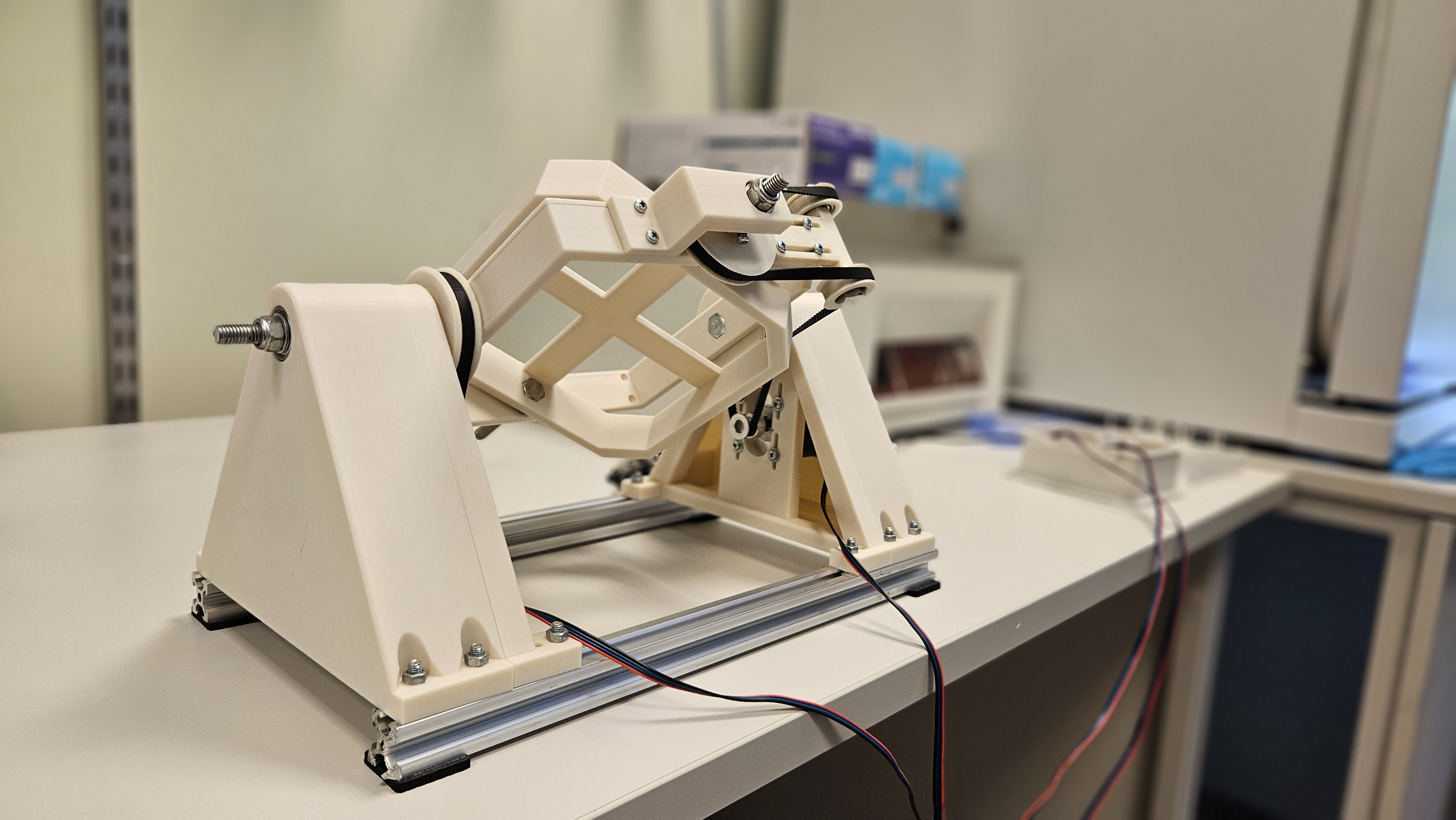
(A clinostat in which cells are rotated to simulate microgravity conditions. Photo: FTMC)
After their time in “space,” the cells are examined using an atomic force microscope. This device uses an extremely fine tip – down to 20 nanometers – to probe individual cells, measuring stiffness, response to vibrations, and other properties. To prevent puncturing the cell, the tip can be fitted with a small rounded bead.
“We aim to study not only changes in the cytoskeleton but also in internal structures such as the nucleus – whether it becomes more compact and stiff or softer and less organized.
We hope to correlate these measurements with changes in cell shape and biochemical signals. That’s why this topic is of interest to ESA,” says Ulčinas.
He compares the process to testing whether a basketball is properly inflated – by pressing it or bouncing it. Similarly, the microscope presses on cells to measure their resistance (Young’s modulus) or vibrates them at different frequencies to analyze energy dissipation. This makes it possible to determine the stiffness and viscosity of the entire cell as well as its individual organelles, and each such change may be significant for human health.
Unprecedented Research
Tadas Jelinskas has been carrying out this research for a year and a half. During this time, the effects of microgravity on cells have been tested, and the latest results show that cells soften under space conditions.
“This recently completed experiment essentially confirmed that the year-and-a-half-long effort is working and can provide answers to the questions raised by the ESA. We clearly see that microgravity reduces cell stiffness – cells become softer.
The mechanical properties of living cells have been studied for over 15 years, perhaps even longer, using atomic force microscopy, and it now appears that we have found an answer to this ‘space-related’ question.
Tadas’ experiments suggest that cell softening may also be related to other changes – biochemical signaling or cell phenotype, meaning their shape and interactions. These connections still need to be confirmed through further research, but our initial result on cell softening has already been achieved,” says Dr Ulčinas.
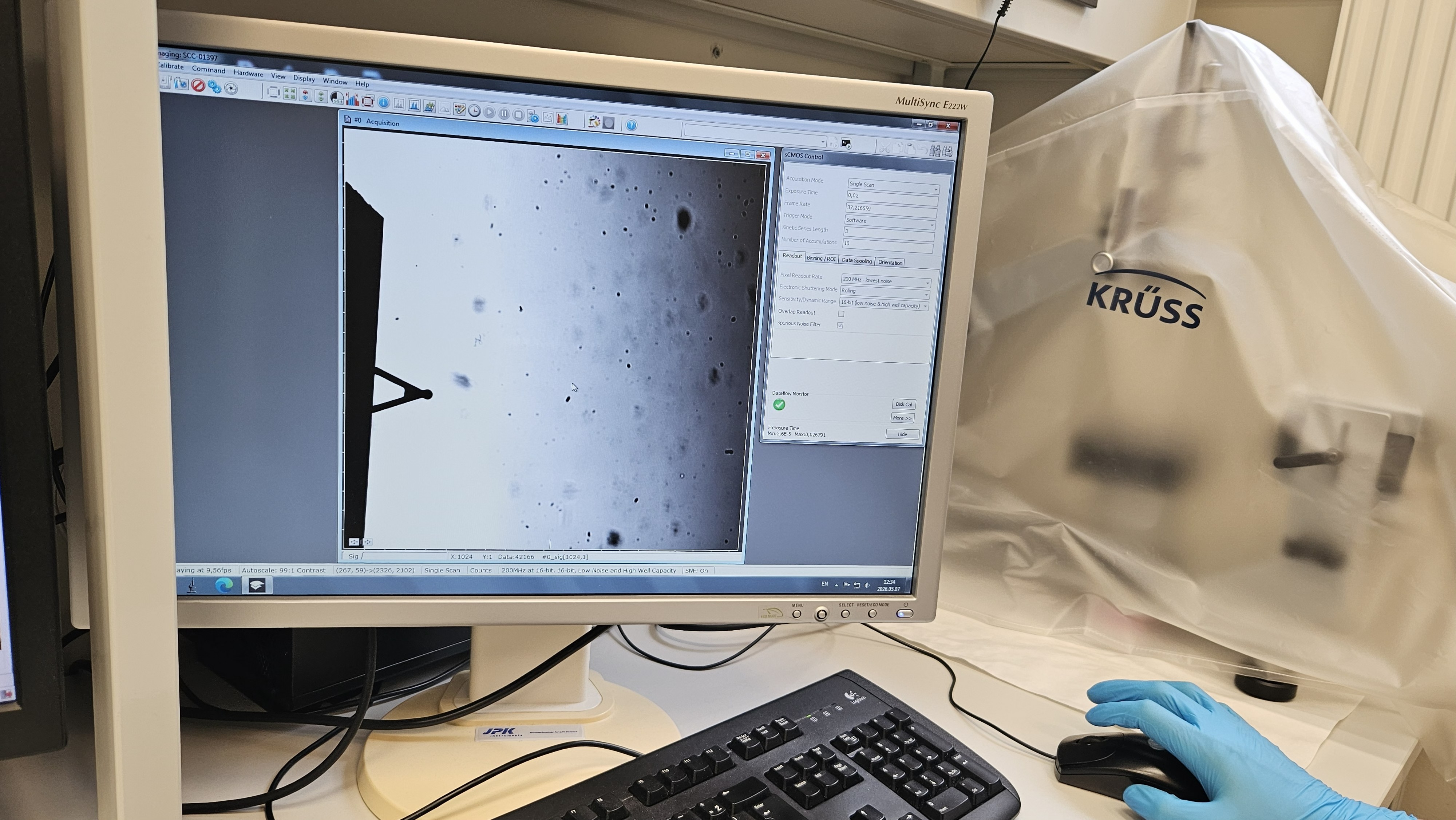
(The rounded probe tip of an atomic force microscope, magnified hundreds of thousands of times on a computer screen. Photo: FTMC)
According to the scientist, Jelinskas’ main work so far has been preparing the scientific equipment, experimental procedures, and methodology needed to obtain the desired results:
“This is truly a massive undertaking, as such experiments have not been conducted anywhere in the world before.”
Another important study involved examining how three different surfaces affect cellular responses to microgravity.
“We used glass as a standard since it is widely applied in many laboratories. We also studied two hydrogels: one made from the natural protein collagen derived from pig skin, and another fully synthetic hydrogel made from a collagen-mimicking peptide (a short chain of amino acids).
I compared how the natural hydrogel behaves and how it differs from the synthetic one. The advantage of the latter is that its properties can be very precisely controlled. Biological materials, on the other hand, exhibit greater variability – for example, collagen can differ depending on the organism it is extracted from. In addition, natural materials may contain endotoxins or other impurities related to viruses or bacteria. These issues are largely avoided in synthetic materials,” says Jelinskas.
The synthetic hydrogel is supplied by the Lithuanian company Ferentis, FTMC’s commercial partner in the ESA project. This collaboration aims to ensure that the work continues beyond the project and leads to real-world innovations.
During his research, Jelinskas observed that cells adhere better and maintain a more stable shape on natural collagen surfaces, while microgravity affects them somewhat less. In contrast, on synthetic hydrogels, cells change shape more frequently and tend to detach from the surface.
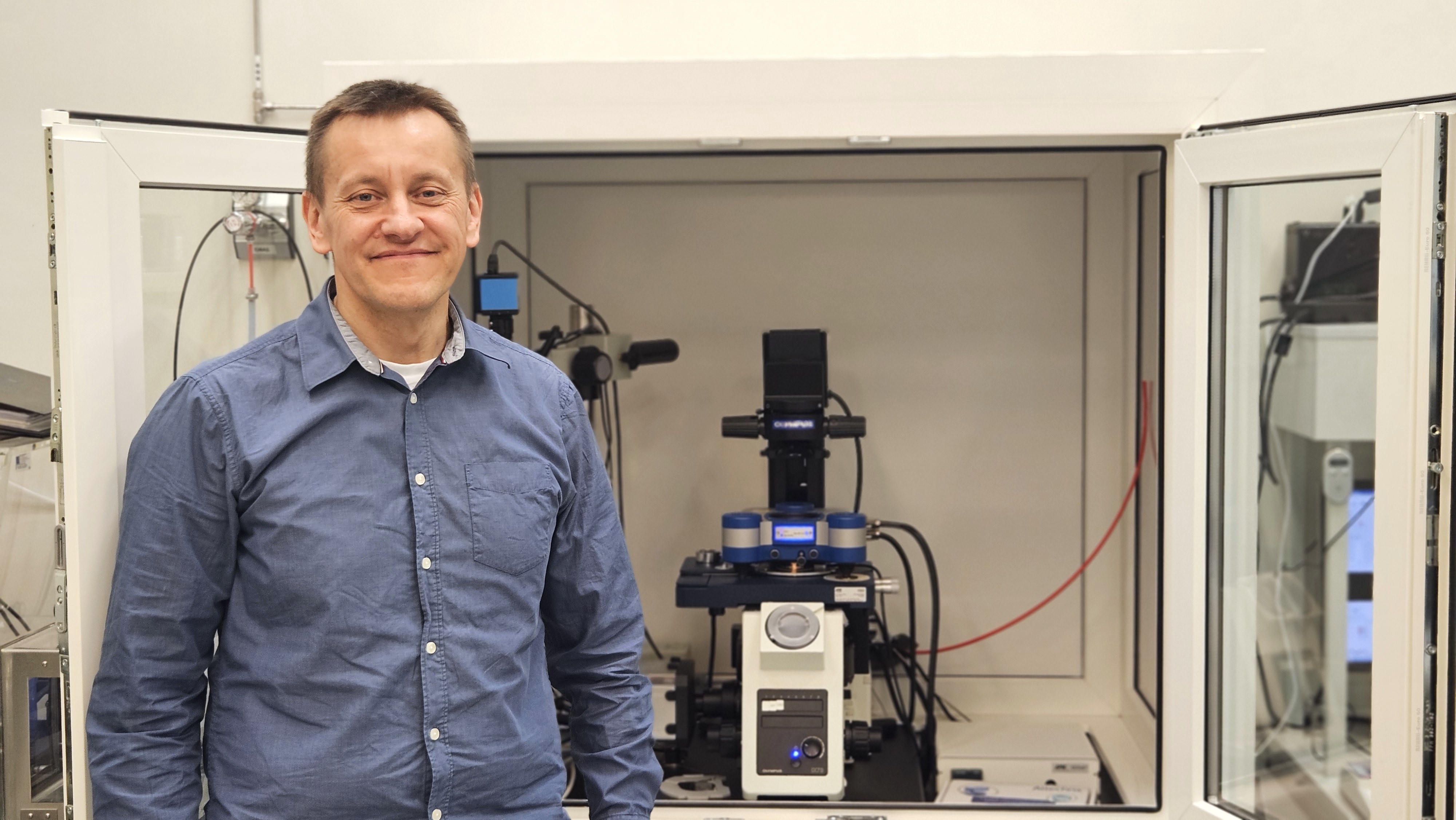
(Dr Artūras Ulčinas. Photo: FTMC)
Unimaginable Scales
“Space-related” cellular studies are taking place at a time when humanity’s attention is once again turning toward the sky. The successful Artemis II mission around the Moon has captured global attention, and discussions are ongoing about a new human landing on the Moon, permanent bases there, and future missions to Mars. Do FTMC scientists feel they are contributing to something big?
“It’s exciting to imagine that one day our hydrogel might even be sent to the surface of the Moon,” Jelinskas says, noting that researchers from various fields have already reached out to him during his doctoral studies after learning about these microgravity experiments.
“At the same time, it all feels somewhat comical. When we think about the universe, we imagine vast, endless expanses with as many stars as grains of sand on a beach – an unimaginable scale.
Meanwhile, we work at scales that are equally difficult to comprehend, but because they are so small. This contrast keeps us from completely ‘drifting off’ into space,” Ulčinas says with a smile.
Written by Simonas Bendžius