- Home
- News & Events
- News
FTMC Team Wins the Quantum Boost 2025 Hackathon!
On 14 November, the Grand final of the first quantum hackathon in the Baltic States, Quantum Boost 2025, took place in Vilnius. During the event, six teams of young researchers from Lithuania, Latvia, France, and Sweden presented their ideas on how quantum technologies could help address various global challenges.
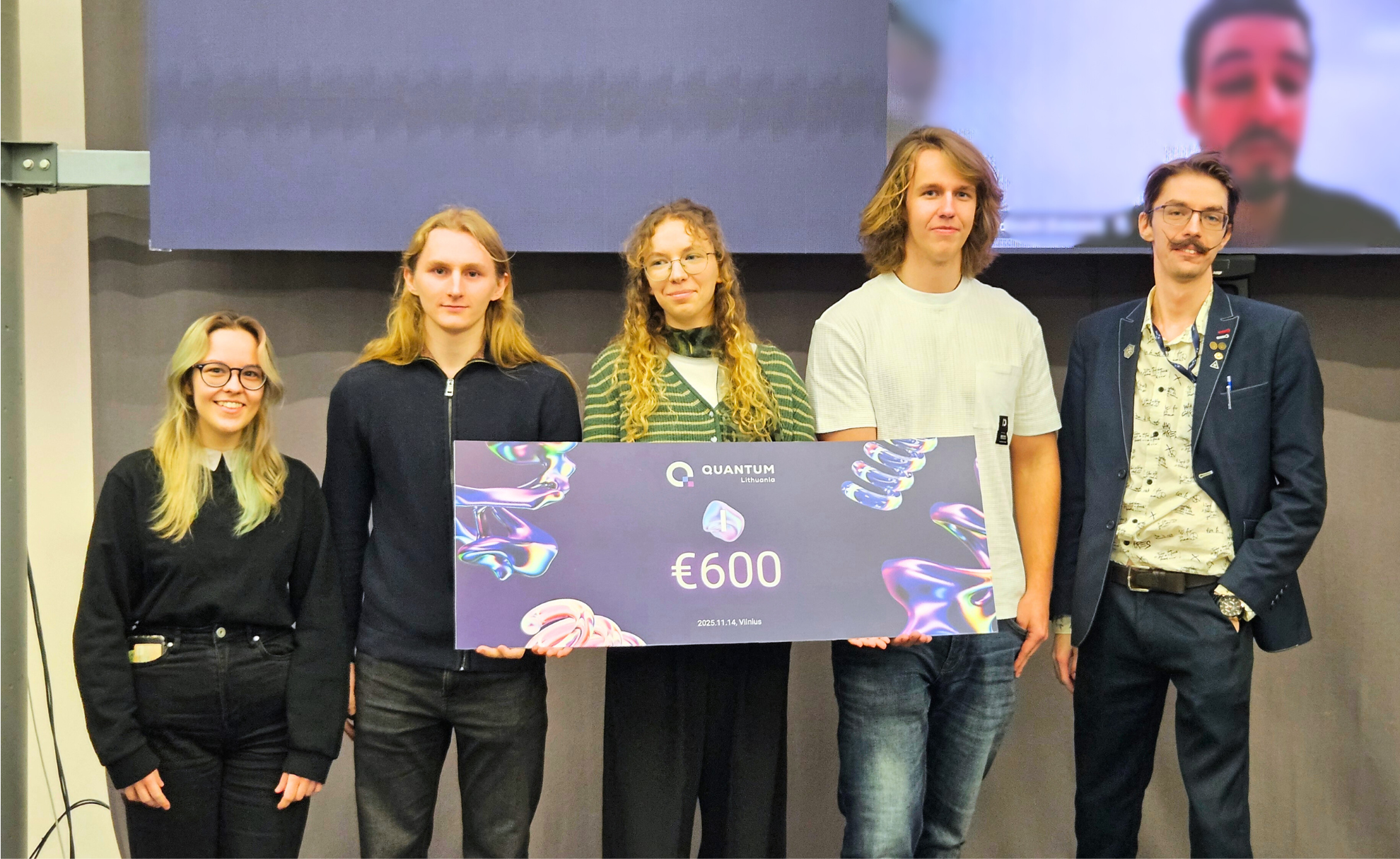
We are proud that the FTMC team Quantum Bäcon took 1st place!
The members of the team (in the main photo, from left): PhD candidate Ugnė Šilingaitė (Department of Optoelectronics), Paulius Rindzevičius (Department of Molecular Compound Physics), Akvilė Paskačimaitė (Department of Optoelectronics), Vakaris Šilys (Department of Optoelectronics), and PhD candidate Jorūnas Dobilas (Department of Fundamental Research).
Our colleagues won a €600 cash prize and a unique opportunity to apply for an investment fund from BSV Ventures (up to €500,000).
Second place went to the team Not Today Eve from Vilnius University Faculty of Physics, and third place to A.J.K.R.-Superposition from Riga Technical University.
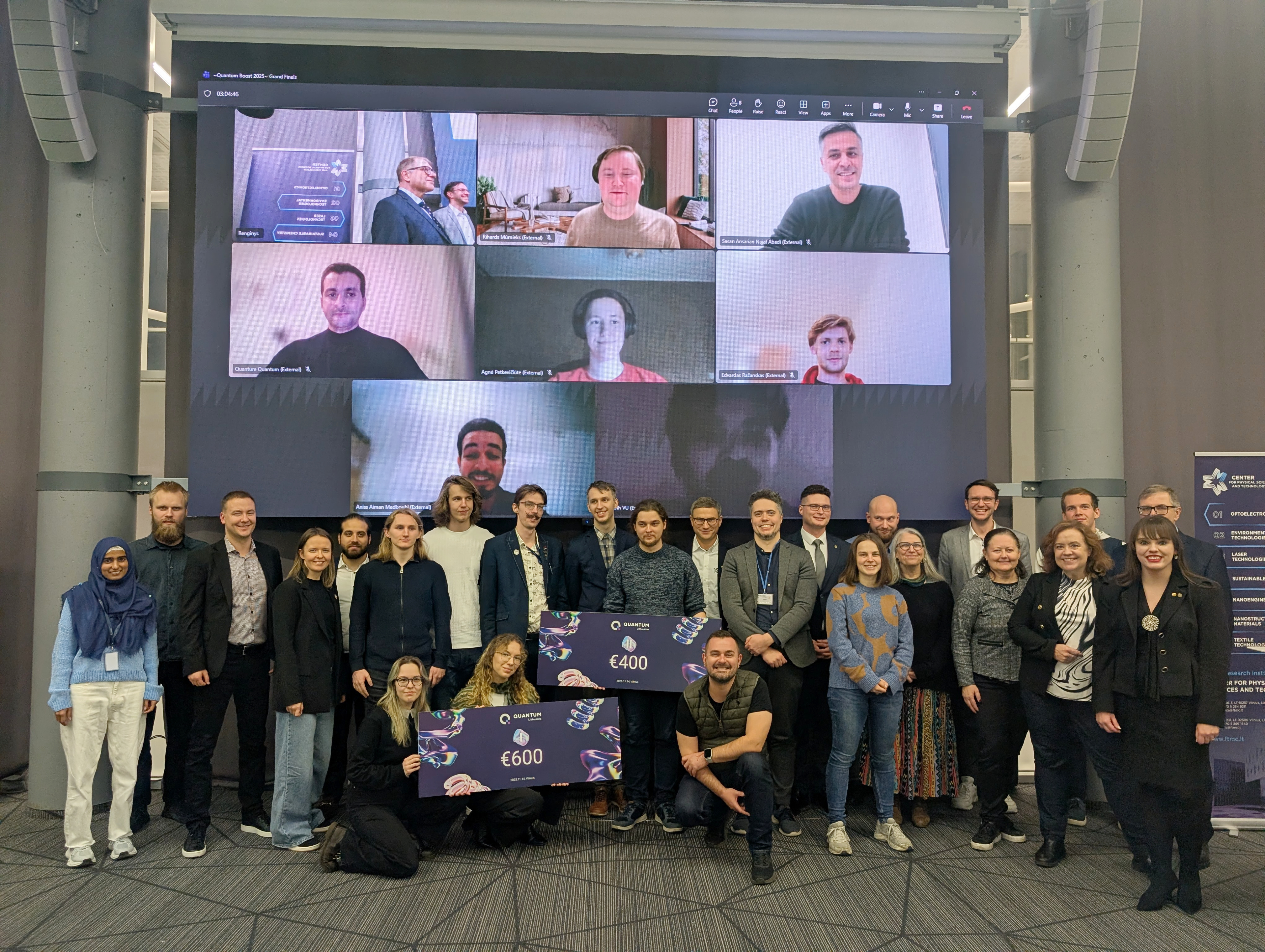
(Quantum Boost 2025 finalists, the jury, and the organizers. Photo: FTMC)
The FTMC team’s idea focuses on navigation without GPS. These signals are extremely useful, but they have drawbacks: they can be jammed or blocked entirely, and by sending them out we reveal our own location – a major issue in wartime. So what could be the solution?
Imagine walking through an unfamiliar city: you look at the buildings and commit them to memory. The next time you return to the same street, it becomes much easier to orient yourself. A similar principle underlies a navigation method called Visual Odometry: your smart device captures images of the surroundings, and the built-in system compares the photographs to calculate how much the device has moved and in which direction it has turned. In this way, you obtain information about your location.
Quantum Bäcon proposes Advanced Visual Odometry – a method in which a smartphone or other device calculates its movement in space by recognizing buildings or objects around it using a camera, a quantum magnetometer, quantum machine learning, and an inertial navigation system.
As the winning team emphasized during the hackathon final, such odometry is intended primarily for military use, as it would be simple to operate and adjust, and impossible to detect or jam.
“Our idea was: why not just use our own eyes?” explains team member Jorūnas Dobilas.
He notes that in the Middle Ages people navigated without GPS: they used maps and orientated themselves by visible landmarks – castles, towers, hills. Similarly, sailors still use a simple method: they observe one object, draw a bearing on the map, measure the angle to another object, and the intersection of the two lines reveals the ship’s position.
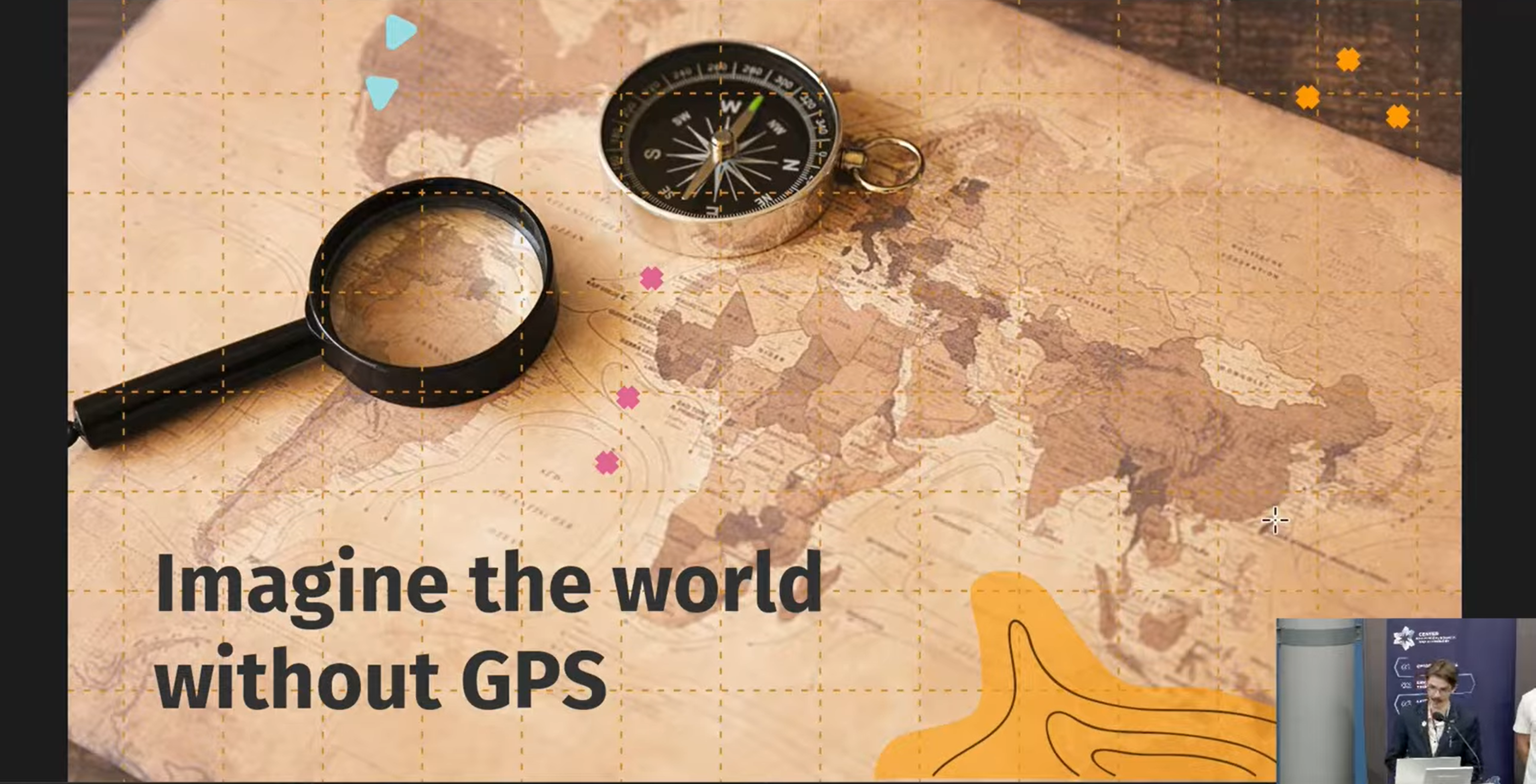
(Quantum Bäcon presentation. Screenshot from FTMC YouTube channel video material)
The FTMC team’s idea is similar but far more modern – to employ quantum sensors for determining true north and to use artificial intelligence.
“Let’s say I’m standing in a street and I don’t know where I am. I take a panoramic photo – AI recognizes the buildings and other objects around me. From their relative directions I can determine my position on the map. I walk further, take another photo – I see the same objects but from a different angle. This allows triangulation. The more objects I have, the more accurately I can pinpoint my location. The system becomes redundant – many measurements that refine one another,” says Jorūnas.
“Once I know the direction (true north) and the distance I’ve moved, I can easily recalculate my position in Earth coordinates. It’s surprisingly simple – it’s just that no one has implemented it in practice because for most of us GPS is enough. But in military situations where revealing one’s location would be dangerous, this becomes highly relevant,” adds the physicist.
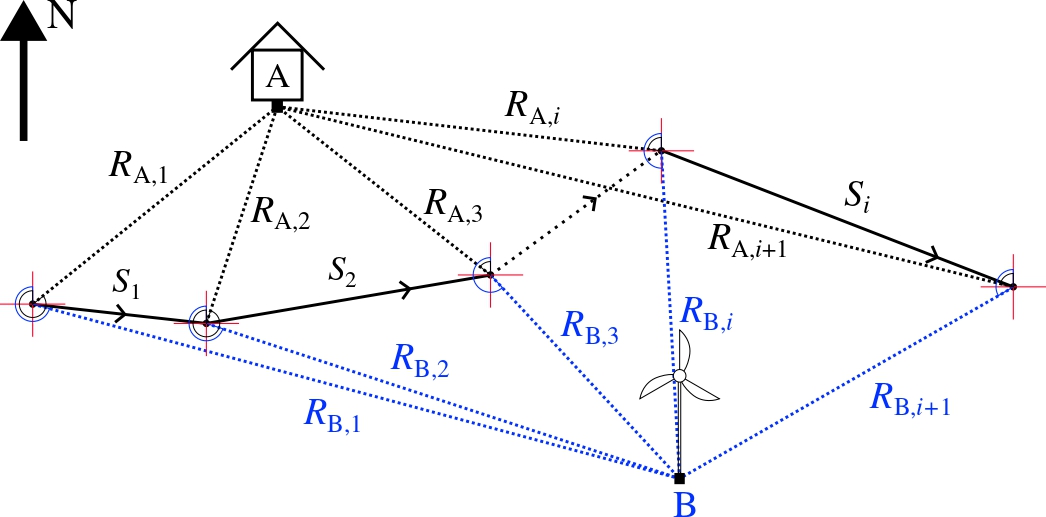
(Schematic diagram of Advanced Visual Odometry. Illustration: Quantum Bäcon)
According to the young researcher, the team now faces the task of developing the idea further and strengthening their team – and then, once the groundwork is complete, they will be able to present the refined concept to the venture capital firm BSV Ventures.
“Of course, I’m happy about the victory. But I’m most pleased with the FTMC team – we are specialists from different fields who can actually make such an idea work. The maths here is fairly straightforward, but the implementation is complex: you need programmers, you need to think through the technological aspects, and analyze what has already been done in the industry. There are many questions before creating a real product, but it is achievable,” Dobilas believes.
Congratulation to our colleagues, wishing every success and determination in developing their idea so that one day it becomes an outstanding technology!
Written by Simonas Bendžius, FTMC Public Relations and Communication Specialist