- Home
- News & Events
- News
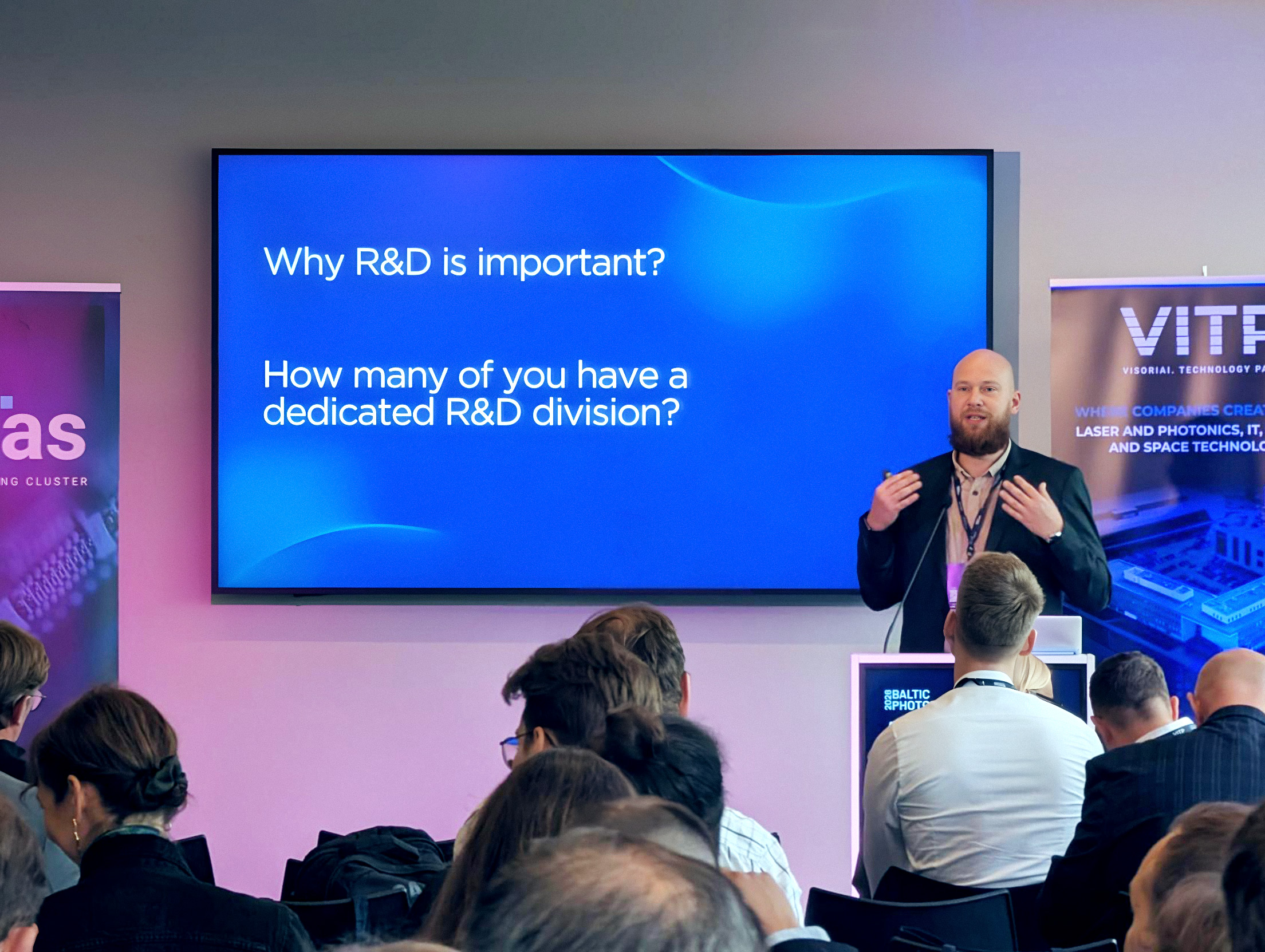
FTMC Expert Dr Karolis Stašys at International Photonics Event: Science Can Make a Significant Contribution to Industry
Photonics is a field of science and technology that studies light and its applications. It covers the generation, transmission, manipulation and detection of light using a wide range of devices. Technologies such as lasers, optical fibres, optical sensors and many other advanced systems are built on the principles of photonics. Developments in this field enable faster information transfer, improve communication systems and contribute to the creation of new technologies.
Photonics can play an important role in strengthening Europe's strategic autonomy in the fields of space, defence and semiconductors. Against this backdrop, the international conference Baltic Photonics 2026 was held in Vilnius to discuss these priorities. The event featured presentations by Dr Gediminas Račiukaitis, Head of the FTMC Department of Laser Technologies and President of the Lithuanian Laser Association, and Dr Karolis Stašys, FTMC Defence Projects Manager.
Dr Račiukaitis presented one of Lithuania's major initiatives, the ChipsC²-LT project, coordinated by FTMC. It is a unique undertaking that brings together the country's four leading research institutions and universities to support the growth of the semiconductor industry: FTMC, Vilnius University, VILNIUS TECH and Kaunas University of Technology.
The competence centre operates as a virtual platform that helps Lithuanian companies develop semiconductor technologies.
As coordinator of the ChipsC²-LT project, Dr Račiukaitis shared insights into efforts to unite Lithuania's semiconductor community, develop new technological solutions and strengthen the sector's growth.
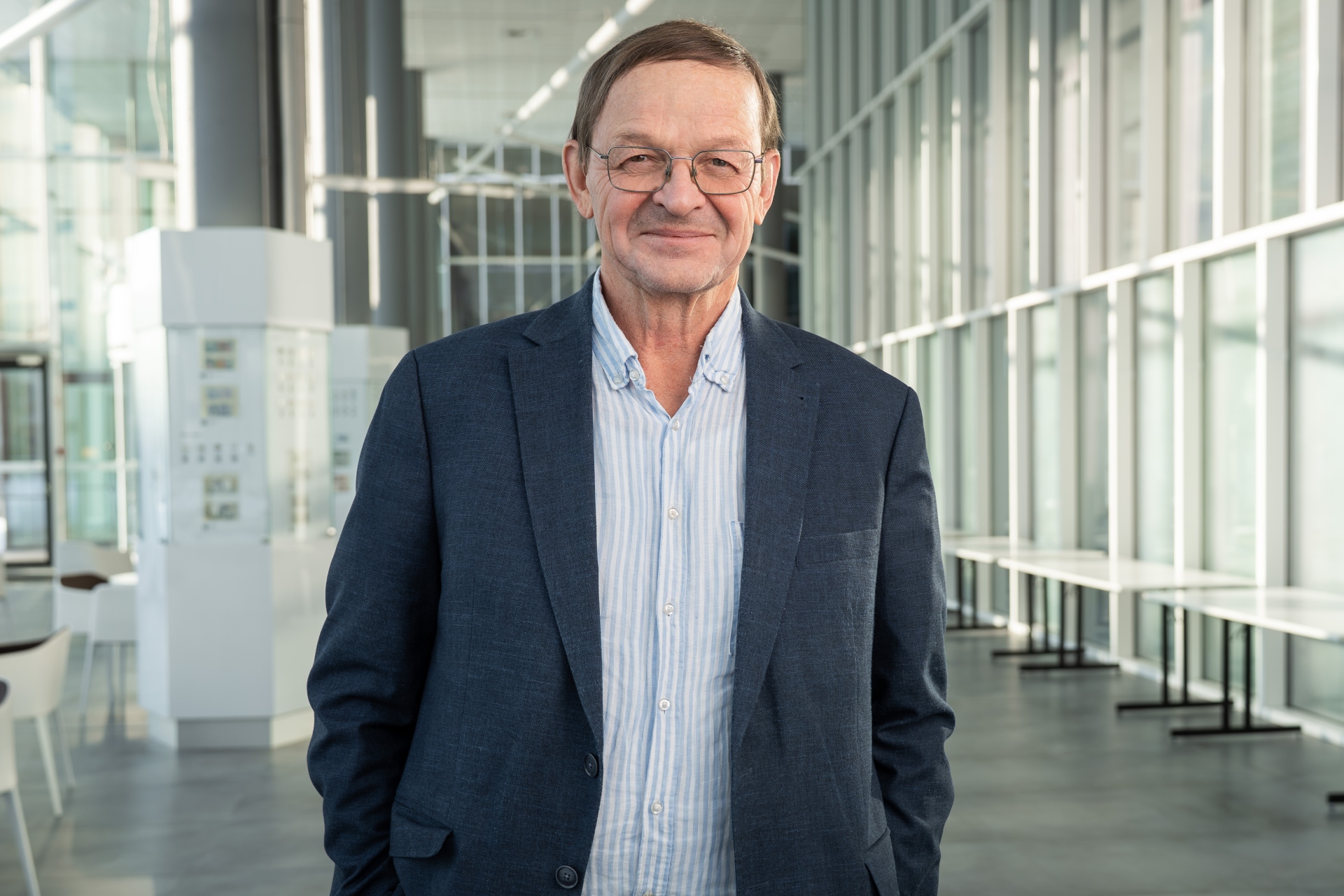
(Dr Gediminas Račiukaitis. Photo: Bernadeta Sisimbajevė / FTMC)
Meanwhile, Dr Stašys presented how research centres can support businesses and make a significant contribution to the growth of the photonics ecosystem.
"Although many high-tech companies develop innovative products and deep-tech solutions, not all of them have dedicated R&D departments where early-stage research can be carried out safely and consistently. Such research is often risky, does not always lead to success, and requires considerable investment. As a result, it can be particularly challenging for small or young companies to undertake these activities independently.
Yet these studies are essential for the development of new technologies and solutions. This is where research centres such as FTMC play a crucial role. They conduct research supported by public funding and various research programmes, explore new technological solutions and assume part of the risk that is often too great for businesses to bear. Successful results can later be transferred to industry and help strengthen companies' competitiveness," says the FTMC Defence Projects Manager.
According to Dr Stašys, the infrastructure available at research centres is equally important. Companies do not need to invest in expensive equipment that may only be required occasionally, as they can access the facilities, instruments and expertise available at research institutes. Furthermore, institutes are an important source of knowledge in both fundamental and applied sciences, and consultations with their experts often help companies address specific technological challenges.
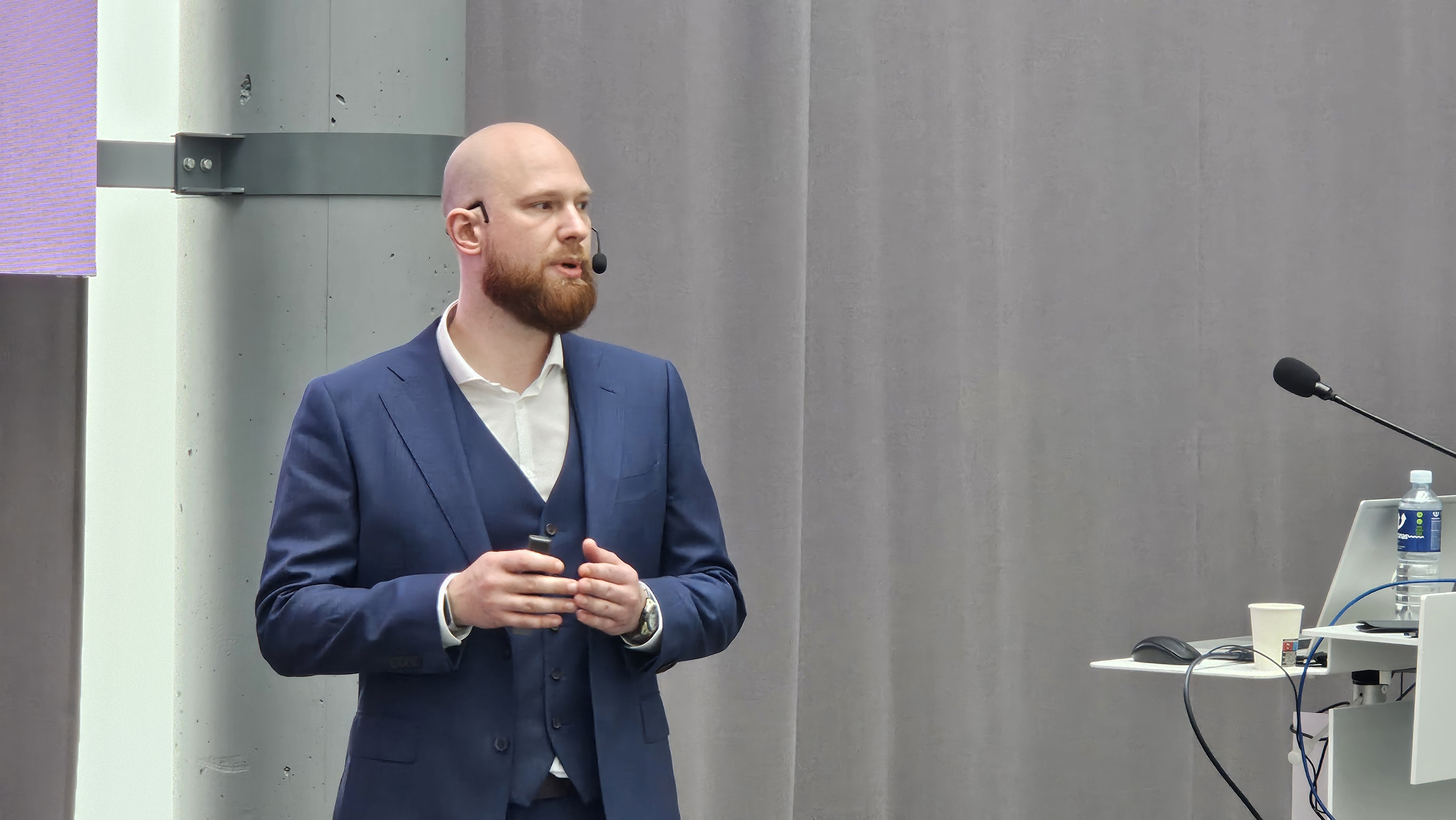
(Dr Karolis Stašys. Photo: FTMC)
The expert also introduced FTMC's main areas of activity and opportunities for collaboration, inviting members of the photonics community to work even more closely together and explore new forms of partnership.
"Events like this are extremely important for us. Sustainable partnerships require continuous engagement, and this is precisely where the entire photonics ecosystem comes together. It is an excellent opportunity not only to maintain and strengthen existing relationships but also to establish new ones. New participants continuously join the ecosystem and become familiar with our activities, expertise and cooperation opportunities. In this way, we strengthen the entire Lithuanian photonics ecosystem and encourage its further growth," says Dr Stašys.
Baltic Photonics 2026 was organised by the Lithuanian laser micromachining cluster Toolas in cooperation with the Visoriai Information Technology Park.
Info: FTMC