- Home
- News & Events
- News
FTMC Director Prof. Dr Ramūnas Skaudžius at the Defence Industry Conference: Treating Ukraine as an Equal Partner in Developing Innovation
“United for Security” – under this motto, the international German-Baltic Defence Industry Conference 2005 took place in Vilnius on 25 November. The event brought together more than 300 experts from the defence industry, politics, armed forces, and other fields.
The conference was organised by the German-Baltic Chamber of Commerce, which invited over 90 representatives of German companies operating in the Baltic States. Significant attention was also given to Ukraine: experts from the German-Ukrainian Chamber of Industry and Commerce (AHK Ukraine) attended to share their insights and experience.
Now in its second year, the conference aims to promote collaboration between Germany and the Baltic States, focusing on strengthening partnerships, exploring solutions to shared defence challenges, and discussing the latest developments shaping the industry.
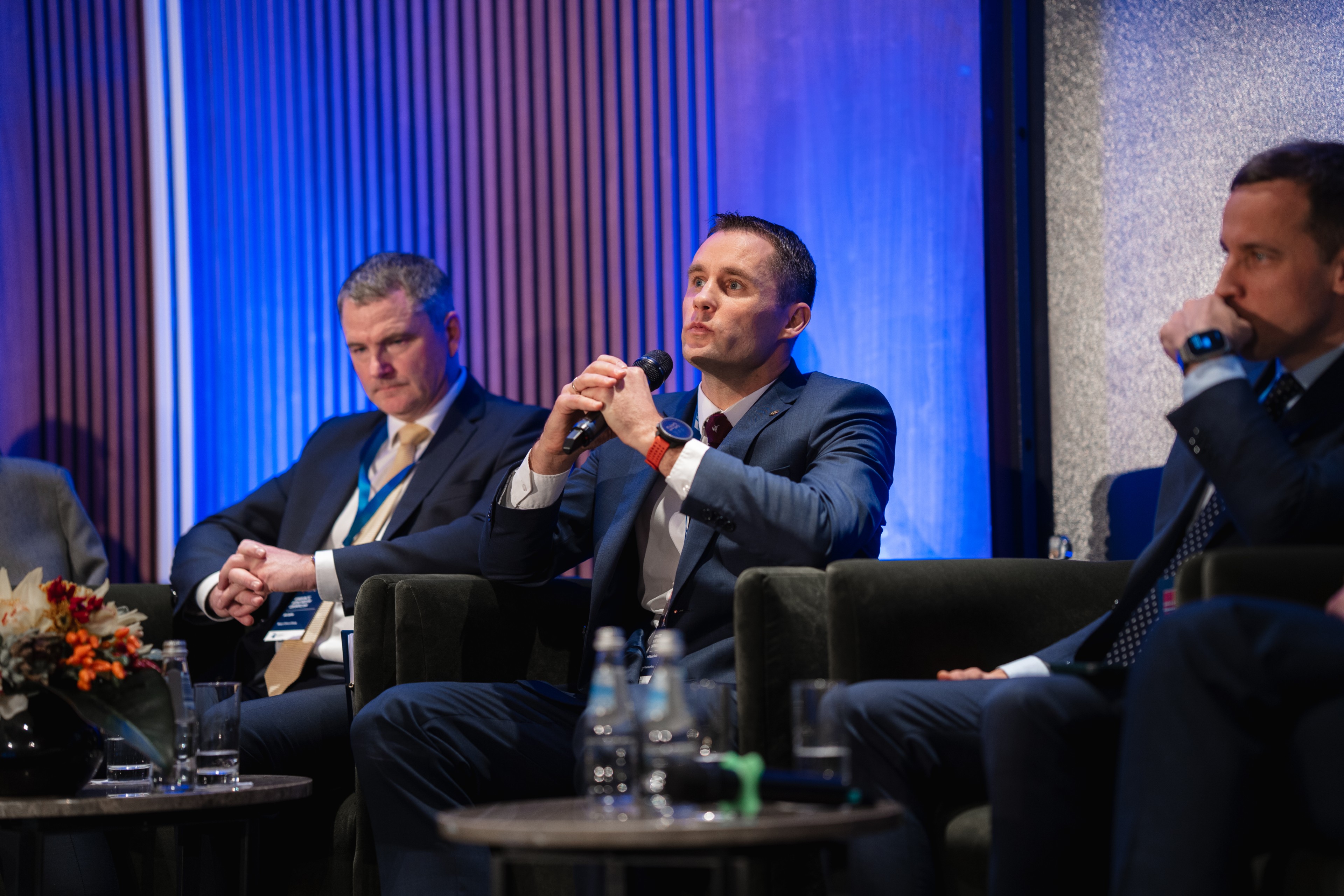
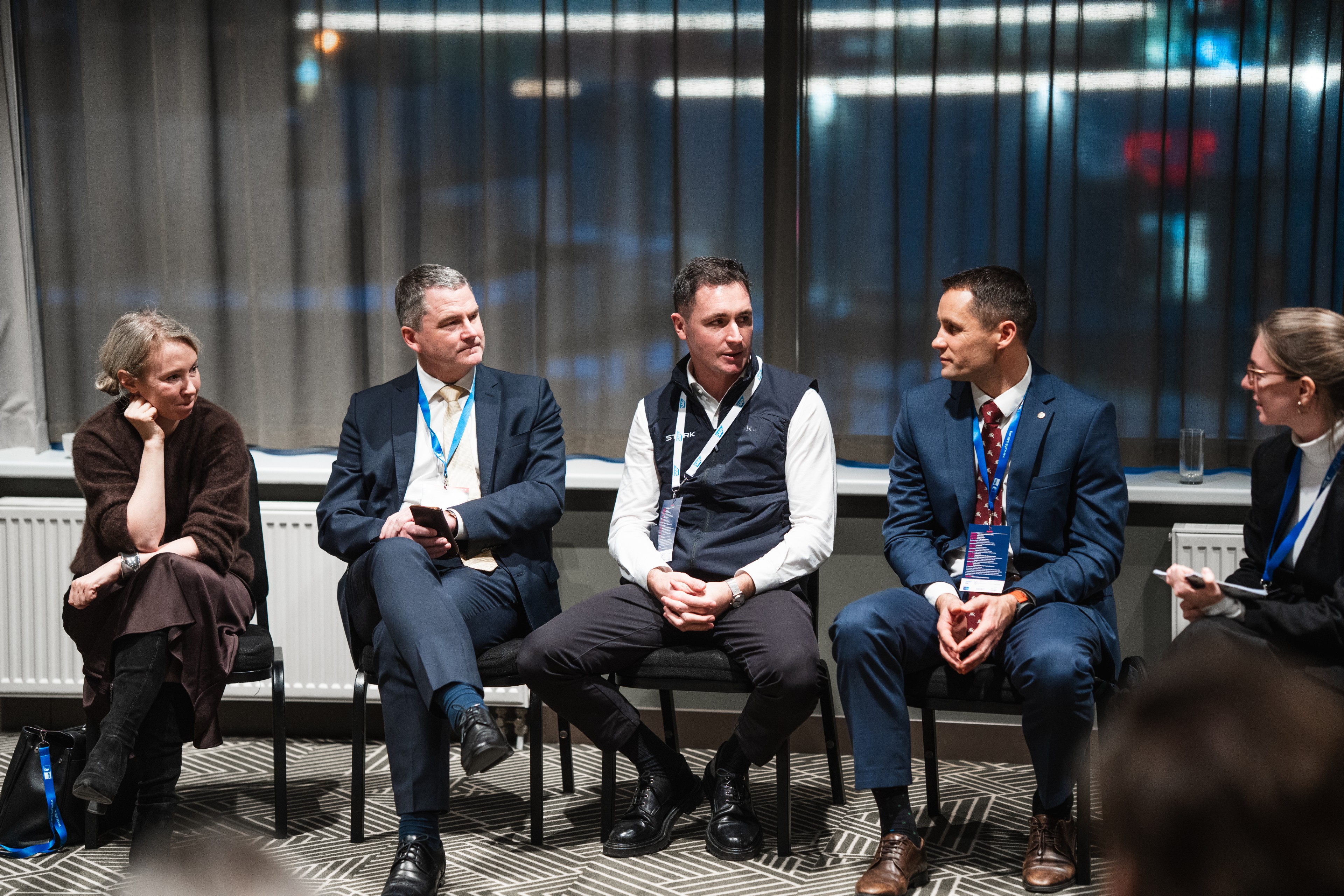
FTMC Director Prof Dr Ramūnas Skaudžius took part in two discussions focused on cooperation between Ukraine, the Baltic States, and Germany. He framed a practical triangle pipeline: Ukraine should articulate its real defence needs and assess the problems, the Baltic States should develop innovation prototypes, and Germany should ultimately scale-up these technologies for practical applications.
Prof. Skaudžius emphasises that Europe should treat Ukraine not only as a recipient of defence technologies but an equal partner in defining defence needs and challenges, as well as in developing innovations.
(Photo: Artūras Nikogosian)
Since Ukraine faces intense warfare every day, its experts, according to the FTMC director, can clearly identify what technologies are required to withstanding the pressure of the constant electronic warfare (military operations using electromagnetic radiation), how these technologies must function in extreme temperatures, and how to recognise targets in dense urban environments.
“Because operational feedback cycles in Ukraine are very short, research teams can have rapid iteration rounds of what improves outcomes and gives better results in laboratory conditions, which allows us to speed up dead ends early and scale the few approaches that truly work,” the FTMC director notes.
As mentioned, the Baltic States can design initial prototypes based on Ukrainian insights, while Germany – with its strong industrial base, business culture, and quality systems – can bring them fully to production.
“Science should be a core element of the defence innovation ecosystem. To accomplish this, government, research institutions, industry players, and civil society must work together to build a solid alliance that facilitates the adoption of innovations within the Ukraine-Lithuania-Germany triangle,” Prof. Skaudžius said at the conference.
Info: FTMC