- Home
- News & Events
- News
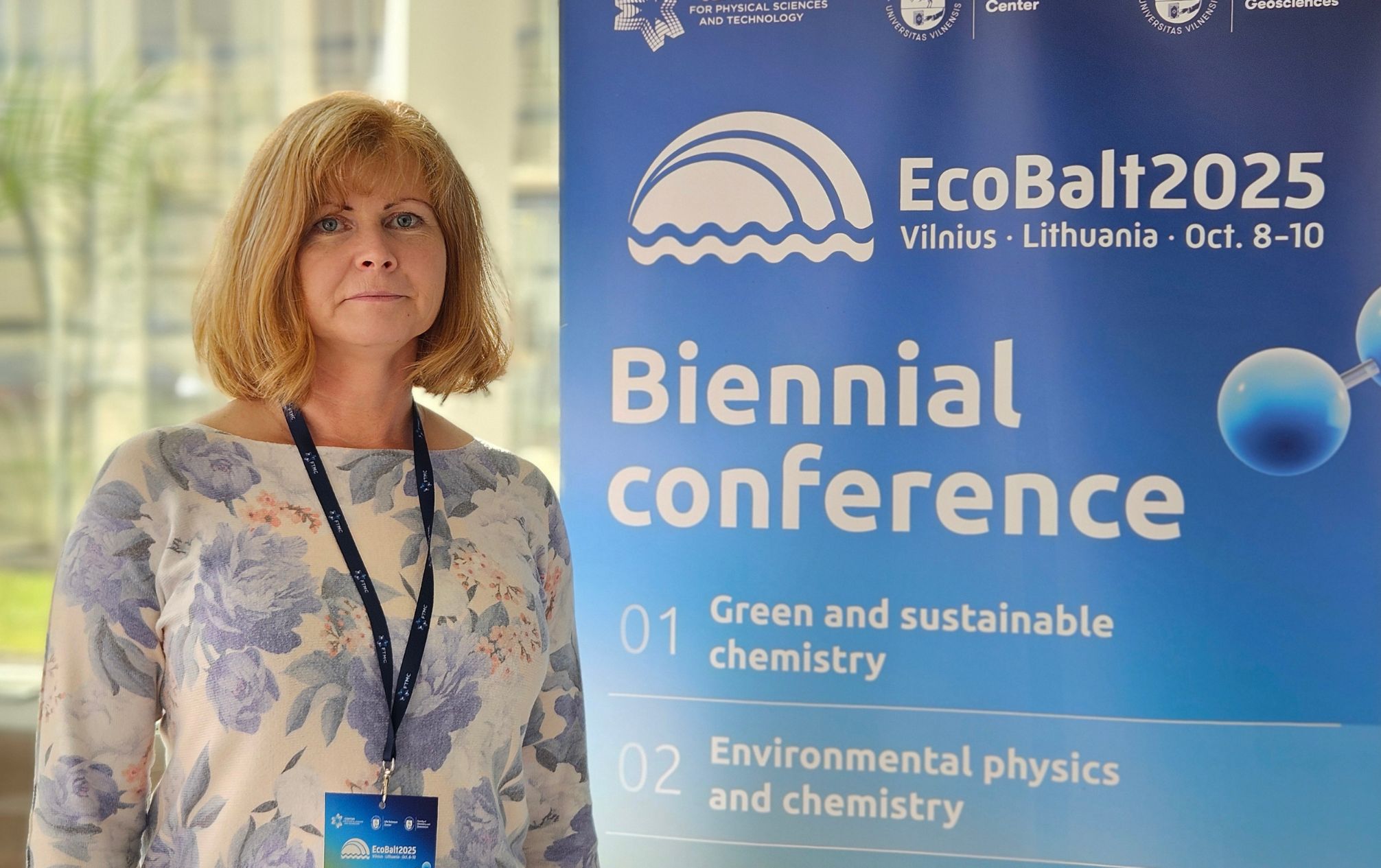
EcoBalt 2025: Dr Monika Mortimer on How Ecotoxicology Can Help Us Protect the Environment
How can modern science help tackle environmental challenges? More than a hundred researchers from the Baltic States and beyond are discussing this question in Vilnius from 8–10 October at the international conference EcoBalt 2025, organised by the Center for Physical Sciences and Technology (FTMC) and Vilnius University.
One of the keynote speakers is Dr Monika Mortimer from Estonia. She works at the National Institute of Chemical Physics and Biophysics in Tallinn, in the Laboratory of Environmental Toxicology, where her promising field of research is environmental ecotoxicology. For many of us, this term may sound unfamiliar. Simply put, ecotoxicology is the science that studies the harmful effects of chemical, physical, and other environmental factors on living organisms, populations, communities, and entire ecosystems.
“We want to know whether the chemicals that end up in the environment are harmful to organisms living in water or soil. Our aim is to determine whether these chemicals are toxic or poisonous, and at which concentrations. Each chemical has a different level of toxicity,” explains Dr Mortimer.
Her team’s main research focuses on aquatic ecosystems, and most of their experiments are carried out in water. One of the studies presented at the conference dealt with degraded polyester textile waste in water, and the results showed that the tested materials did not have harmful effects on algae or certain microorganisms. However, the researcher notes that more in-depth experiments are needed.
“We usually carry out short-term tests, lasting about 24 hours, which do not show what happens if the material remains in the environment for weeks or months. I think it is important to find out whether they also have long-term effects on the environment. If the material is solid, it could leach heavy metals or chemical compounds that are toxic or poisonous. This could happen over a long period of time due to sunlight or other environmentally relevant conditions, which are important factors for risk assessment of any material found in the environment,” observes the researcher.
.jpg)
(Dr Mortimer's talk. Photo: FTMC)
What other ecotoxicological studies are currently underway in Estonia? Dr Mortimer highlights microplastic pollution, which is a global problem. She and her colleagues are looking for ways to remove microplastics from wastewater treatment plants to ensure that clean water is returned to the environment.
Another pressing issue in Estonia is the country’s long history of oil shale mining. When processed, this rock can be used to produce combustible gases, fuels, technical oils, and other products. However, oil shale also poses environmental challenges: its processing leaves behind large amounts of ash and waste with a high pH, which can contaminate soil and water. These residues are stored in special landfills and waste heaps, yet toxic substances can still leach into the environment.
“Estonia does not have a very large industrial sector, which is good — the nature is still relatively clean, I would say,” smiles the scientist. However, she adds that Estonian ecotoxicologists still have plenty of work to do. They are studying chemicals of global concern, such as PFAS – per- and polyfluoroalkyl substances.
This large group of synthetic chemicals is known as “forever chemicals” because of their extreme persistence and inability to break down in the environment. They are widely used in products such as non-stick cookware, water-resistant clothing, and cosmetics, but accumulate in water, soil, and the human body, where they can cause various health problems.
“This area is still understudied in Estonia, I feel. So this might be the next important topic for researchers to focus on — PFAS in Estonian drinking water, food, or river fish,” says Dr Mortimer.
Written by Simonas Bendžius