- Home
- News & Events
- News
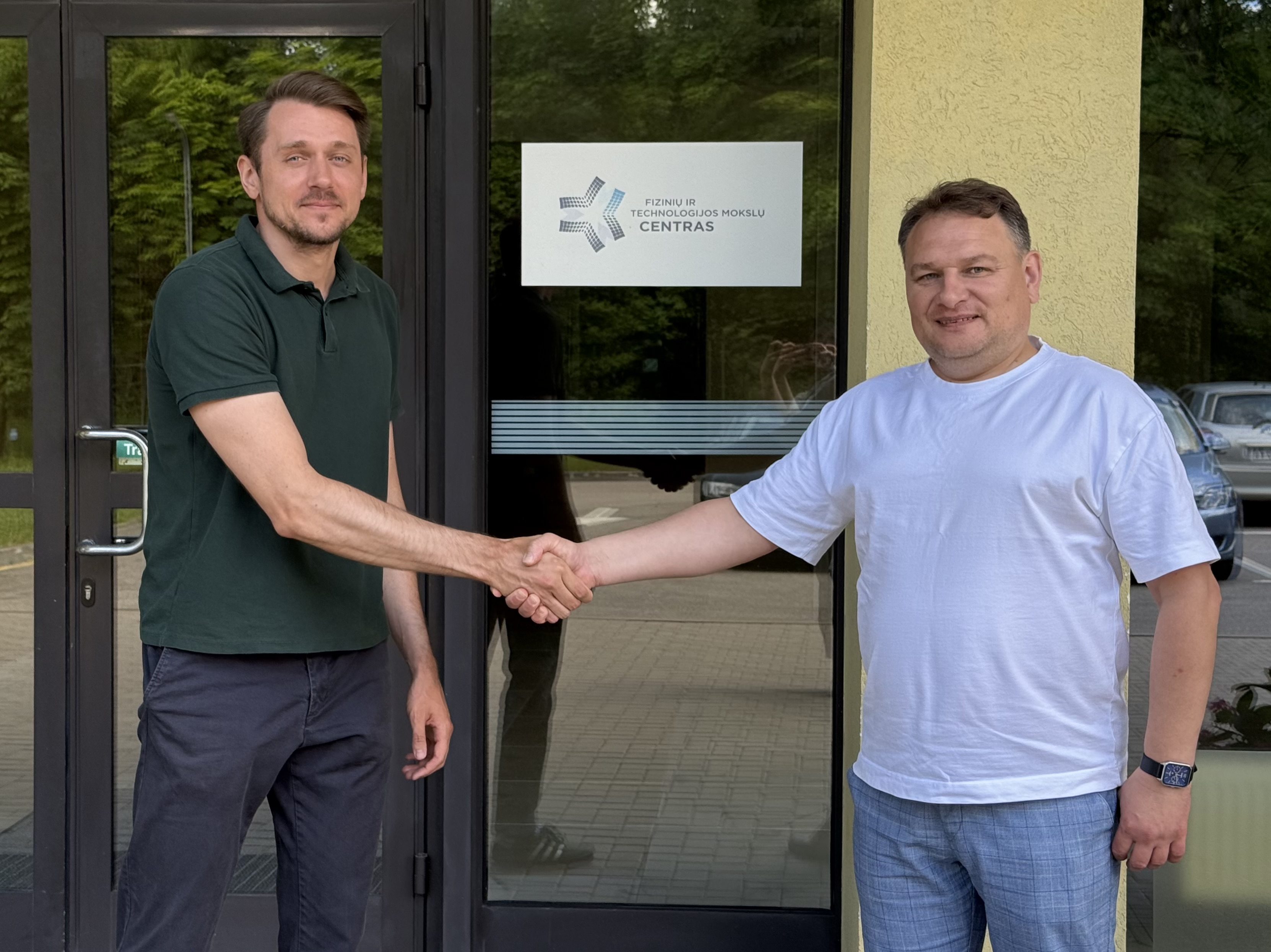
Creating More Value from Plastic Waste: FTMC 3DLab and Lithuanian Company Energesman to Develop a More Efficient Plastic Recycling Technology
Every year, hundreds of millions of tonnes of plastic waste are generated worldwide. A significant proportion of this material cannot be recycled into high value-added products such as automotive parts, electronic components or medical devices. The properties of recycled plastics deteriorate because they retain various impurities, while different types of polymers – long molecular chains – do not bond effectively with one another and cannot form a homogeneous material.
One of the key challenges of today’s circular economy is therefore how to transform recycled plastic into a high-quality raw material suitable for manufacturing new products.
To address this challenge, Lithuanian science and industry are joining forces. The FTMC 3D Technologies and Robotics Laboratory (3DLab) at the Department of Laser Technologies, together with Energesman, the waste sorting plant in Vilnius region, is launching a research and experimental development project to create a next-generation technology called REFA (Reactive Extrusion with Photonic Activation).
The joint team will become the first in the world to test a reactive extrusion – an enhanced manufacturing method in which compressed plastics are heated until they become soft, allowing their structure and properties to be modified. During the process, for example, unwanted impurities can be removed.
REFA will combine three technologies that have so far been applied separately: advanced polymer blending to create a homogeneous material, ultrasonic activation (using ultrasound to improve polymer mixing), and laser-assisted reaction control (using laser irradiation to accelerate targeted chemical reactions).
The researchers expect that this technology will enable different polymers within recycled plastics to be combined more effectively, improve the properties of recycled materials, and produce higher-quality composite materials. This would both reduce environmental impact and create economic value. The technology will be tested under real industrial conditions on Energesman's plastic recycling line.
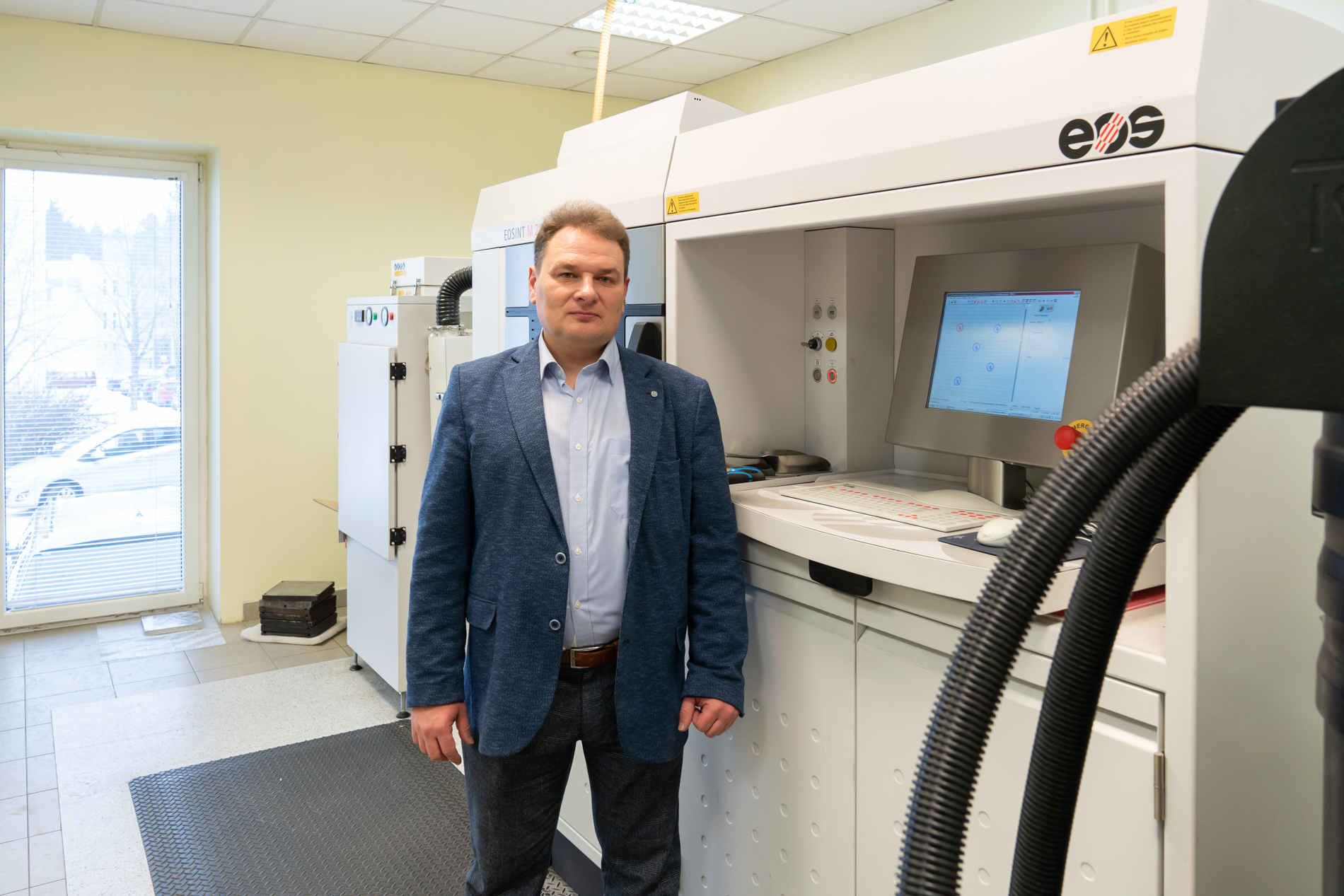
(Dr Genrik Mordas. Photo: Hernandez & Sorokina / FTMC)
"For several years now, our laboratory has been developing technologies for recycled polymer modification, composite materials, laser and ultrasonic processing, and advanced manufacturing. The REFA project naturally brings together these areas of expertise into a single technological solution. We are not creating a new type of plastic – we are developing a technology that will enable recycled plastics to be transformed into materials with entirely new performance characteristics," says Dr Genrik Mordas, project leader and researcher at FTMC 3DLab.
According to the scientist, the circular economy has long been one of the laboratory's principal research directions. The team expects that, in the future, the technology could be applied to the production of 3D printing filaments, engineering components, construction products, automotive parts and other high value-added products manufactured from secondary raw materials.
"The project is also important for training the next generation of researchers. 3DLab will involve Master's students from Vilnius University and VILNIUS TECH, as well as FTMC doctoral researchers, who will participate in developing technological modules, conducting experimental studies, analysing material properties and carrying out trials under industrial conditions," Dr Mordas explains.
His principal collaborator on the project is Lukas Razgūnas, Head of Technology Development at Energesman and a doctoral student at FTMC 3DLab. Successfully delivering the project forms the basis of his PhD research.
.jpg)
(Lukas Razgūnas. Photo from personal archive)
"We work with waste recycling every day and strive to ensure that recycled plastics can replace as much virgin raw material as possible. That is why we are constantly looking for technologies capable of improving the properties of plastics during the recycling process itself. We believe the REFA technology will represent an important step in that direction," says Razgūnas.
"My contribution to this project is built on both practical and academic experience. While studying for my Master's degree in Transport Engineering, I worked as a process engineer at a plastic sorting, recycling and manufacturing company. There, I gained first-hand experience of the challenges industry faces when working with secondary plastic raw materials, including contamination, variations in material properties and quality assurance issues. That experience is proving invaluable today," he adds.
Lukas recently completed a research placement at the prestigious Fraunhofer Institute for Chemical Technology in Germany, where he worked on materials and processing technologies.
"The greatest benefit was not only the technical expertise I gained, but also seeing how closely science and industry collaborate to develop solutions with real practical applications," he recalls.
He adds that beginning his doctoral studies at FTMC marks an exciting new stage in his academic career, providing an excellent opportunity to deepen his expertise in a field closely connected with sustainability and the circular economy.
Source: FTMC