- Home
- News & Events
- News
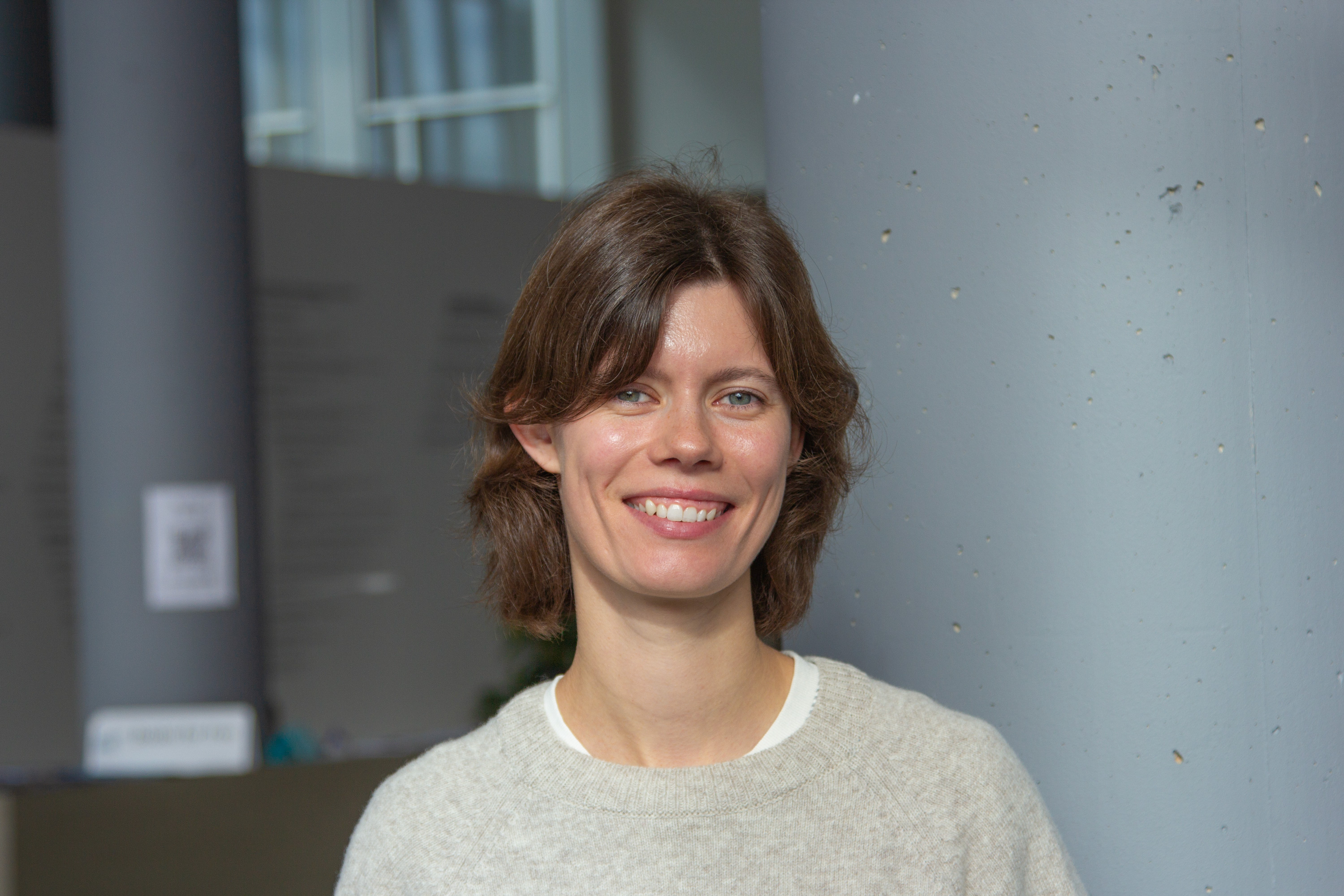
Cell Like a City, Molecules Like People: FTMC PhD Student Ernesta Vitulskienė to Compete in the Researcher Grand Prix 2026 Final
Ernesta Vitulskienė, a PhD researcher at the FTMC Department of Molecular Compound Physics, is developing advanced approaches for early cancer diagnostics. On 29 October, she will compete in the final of Lithuania’s best-known science communication competition, Tyrėjų Grand Prix (Researcher Grand Prix) 2026.
Ten early-career researchers from different institutions will have just four minutes on stage to present their work and explain its significance to society in a clear and engaging way.
"I believe competitions like this are particularly valuable for PhD students. It's also very important that the public better understand what scientists do and why their research deserves support," says the FTMC representative.
Why It Matters to Track Molecules
Together with her colleagues, Ernesta is developing a next-generation diagnostic approach for cervical cancer. Using advanced microscopy techniques, the researchers search for differences between healthy and cancerous cells and aim to detect them at the earliest possible stage.
To explain what happens inside human cells during such investigations, Ernesta invites us to imagine a large city viewed from above.
"If we had a powerful pair of binoculars and zoomed in enough to follow a specific individual, we could track where they walk, where they stop, how long they stay in one place, and observe their entire journey.
That is exactly what we do in single-molecule super-resolution microscopy. In this analogy, a living cell is like a large city, and we follow its 'people' - individual molecules - to observe how they move within it," explains Ernesta.
She studies various molecules whose behaviour reveals important biological processes, including one of the most significant: cancer development. When a cell becomes cancerous, molecular changes occur. For example, it may begin producing unusually high amounts of certain proteins. Instead of a handful or a few dozen molecules, thousands may appear. As a result, normal cellular processes become disrupted.
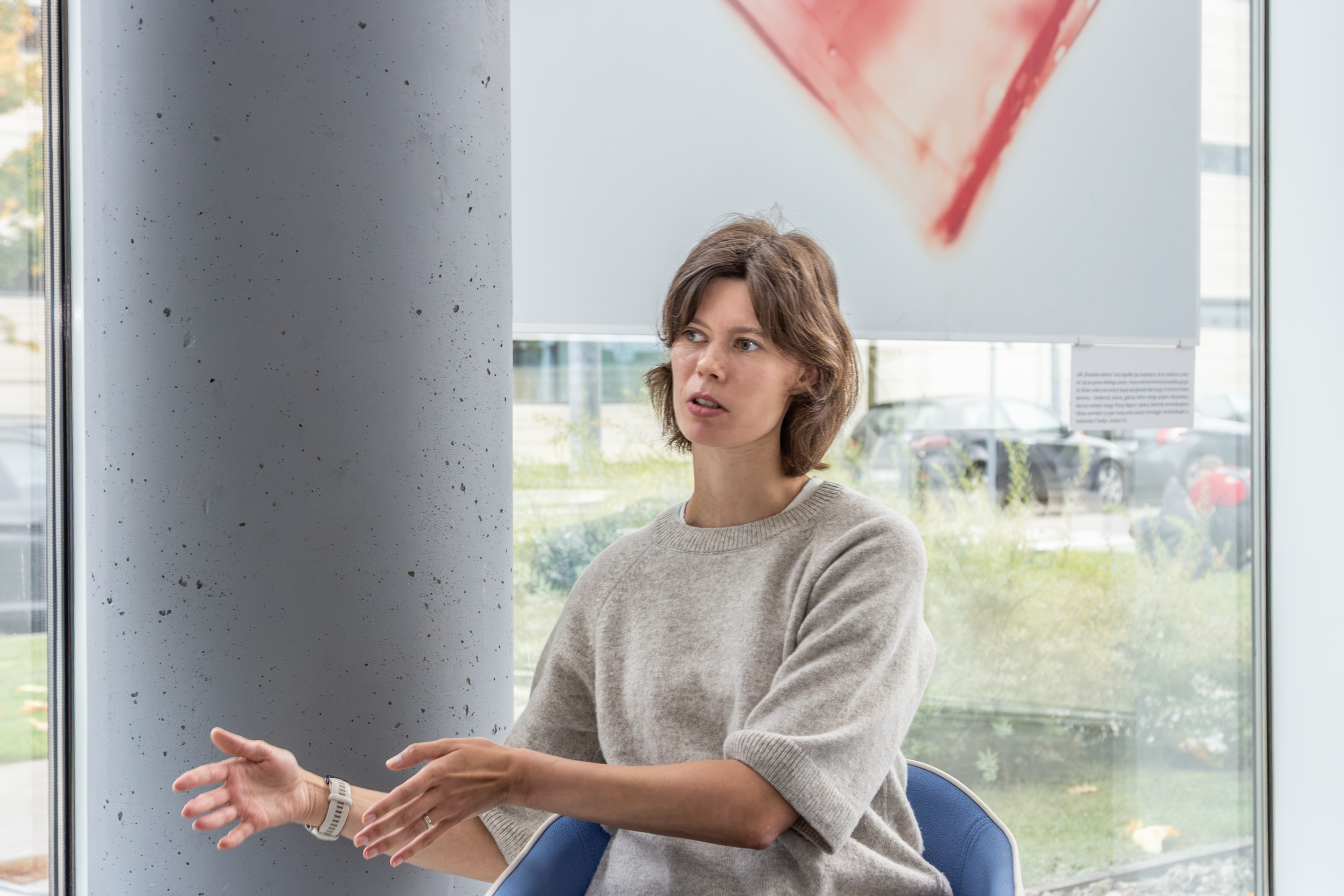
(Ernesta Vitulskienė. Photo: Gabrielius Mackevičius / FTMC)
"Using our methodology - labelling, microscopy and data analysis - we can detect a single molecule, count how many copies of it exist within a cell, and track its movement. In cancer cells, molecules may begin interacting differently, moving faster, more slowly, or stop moving altogether. We can observe these changes and compare how the same molecules behave in healthy and cancerous cells.
Many other studies only provide an overall picture or an average value. Our method is highly sensitive because we can analyse each molecule individually. For instance, one-third of the molecules may move very quickly while another third move very slowly, and these differences, which cannot be revealed by other methods, provide valuable information," says Vitulskienė.
To make individual molecules visible under a microscope, simply looking through the instrument is not enough. Researchers attach fluorescent proteins or antibodies to the molecules, effectively giving them glowing labels. Returning to the city analogy, this is like placing a brightly illuminated hat on a single person, making it possible to distinguish them easily in a crowd and follow their movements.
According to the young scientist, one of the greatest advantages of the method she is developing is its potential for extremely early detection of disease. Most illnesses are diagnosed only after symptoms appear, whereas single-molecule tracking could open new possibilities for earlier diagnosis and better disease management.
"The sensitivity of current diagnostic methods is still limited, meaning that changes can only be detected once the number of molecules becomes sufficiently large. None of the existing techniques allow us to observe how those molecules behave. We aim to monitor living cells and active molecules in real time."
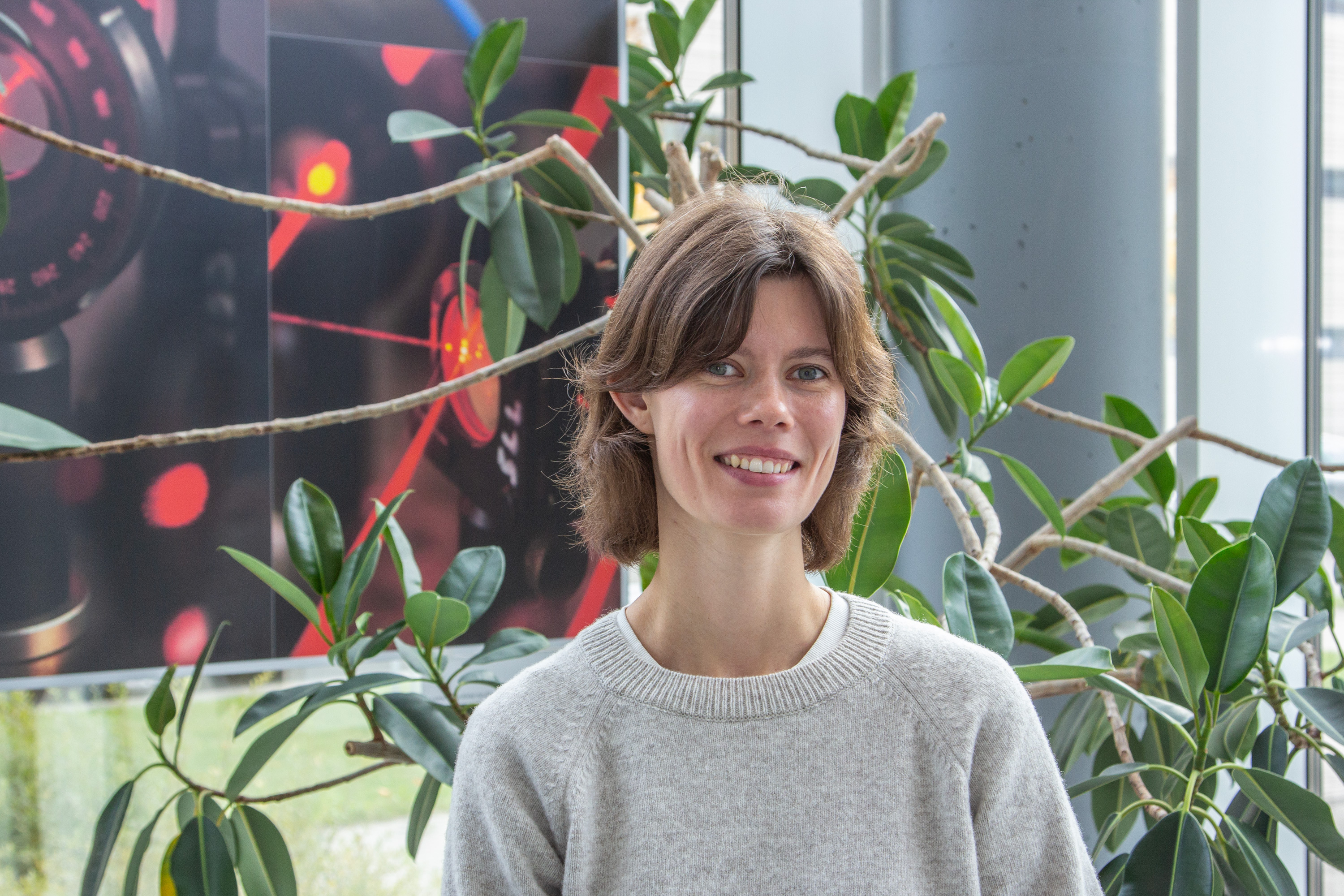
(Ernesta Vitulskienė. Photo: Gabrielius Mackevičius / FTMC)
First Steps Towards a New Diagnostic Approach
Ernesta is part of a joint research team from FTMC and the Vilnius University Life Sciences Center (VU GMC). The team includes Dr Marijonas Tutkus, Aurimas Kopūstas, Mohammad Nour Alsamsam, Dr Guoda Žukienė, Dr Švitrigailė Grincevičienė, Mantas Žvirblis, Agnė Kvietkauskaitė, Dr Jurgita Matulienė and Prof. Daumantas Matulis. Together, they are collaborating with the VU GMC Department of Biothermodynamics and Drug Design to investigate cervical cancer samples obtained from clinical partners.
The researchers aim to determine how carbonic anhydrase, a protein involved in regulating cellular pH, moves within these samples.
"This protein is often overproduced in cancer cells, and its activity changes. These alterations contribute to the formation of a tumour-supporting environment. The acidic conditions outside cells can damage surrounding tissues and the extracellular matrix, creating more favourable conditions for tumour growth and metastasis while making it harder for healthy cells to function properly," explains PhD researcher.
She emphasises that the research is primarily fundamental in nature, meaning that its main goal is to answer the question of how things work. Considerable work remains before the findings could be translated into clinical practice. Nevertheless, important progress has already been achieved. For example, Ernesta successfully identified a way to label carbonic anhydrase so that it can be monitored under a microscope. This was not a straightforward task because the protein can sometimes be so abundant that the entire cell appears fluorescent. Only using innovative labels has it become possible to distinguish individual molecules.
"We have also optimised the experimental conditions and carried out our first observations. We record thousands of images, which are subsequently analysed using algorithms. We can observe individual molecules, reconstruct their trajectories, and investigate the different modes of movement they exhibit inside a cell.
What I found particularly fascinating was that some labelled molecules travel considerable distances, while others hardly move at all. This immediately raises new questions and opens new research directions," says the young scientist.
She notes that single-molecule microscopy has applications far beyond her own research area. It can also be used to study bacteria and many other biological systems. If researchers succeed in fully understanding the differences between healthy and cancerous cells, the method could potentially become a versatile tool not only for cervical cancer diagnostics but for detecting other forms of cancer as well.
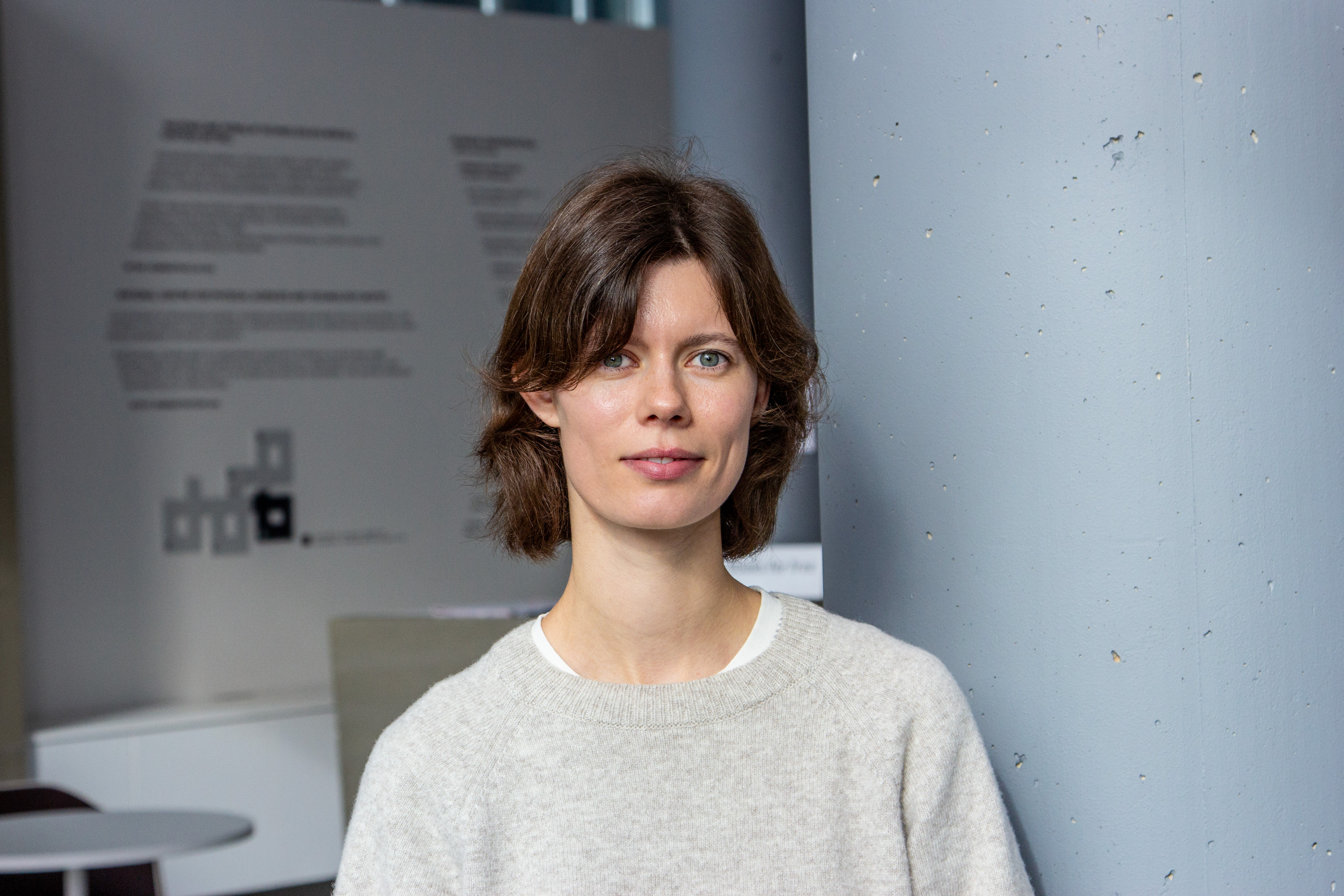
(Ernesta Vitulskienė. Photo: Gabrielius Mackevičius / FTMC)
Even Small Contributions Matter
Ernesta will share these ideas, albeit in a much shorter form, with the audience and judging panel at the Researcher Grand Prix 2026 final.
She was encouraged to take part by her supervisor, Dr Marijonas Tutkus, a researcher at FTMC Department of Molecular Compound Physics. Ernesta admits that public speaking is a challenge for her, making the competition an opportunity to step outside her comfort zone and overcome that fear.
"One thing I particularly appreciate is that participants are not left on their own. We receive support from mentors who provide advice on breathing techniques, managing stage fright, improving delivery, and refining the structure and content of our presentations. These skills will benefit me not only during the final but also in the future when presenting my research to colleagues or at scientific conferences.
I believe competitions like this are especially valuable for PhD students. It is also important for society to better understand what scientists do and why research deserves support. To be honest, family members and friends often ask me what exactly I work on, so this experience will be useful for those conversations too," smiles the Researcher Grand Prix finalist.
She adds that working in cancer research gives her a strong sense of purpose and motivation:
"I may never develop a new drug or treatment myself, but I believe that the data I collect will contribute to our broader understanding of these processes. That knowledge may help researchers elsewhere in the world develop new diagnostic or therapeutic approaches in the future. That is why I believe that even a small contribution can become an important part of larger progress."
FTMC PhD students have won the Researcher Grand Prix competition twice: physicist Karolina Maleckaitė-Mačiulė took first place in 2022, while chemist Raimonda Bogužaitė won in 2023. Since then, FTMC has not had a representative in the final until this year.
Whether Ernesta Vitulskienė can follow in their footsteps and step onto the winners' podium will be revealed on 29 October.
Further information about the competition and ticket sales is available here
By Simonas Bendžius