- Home
- News & Events
- News
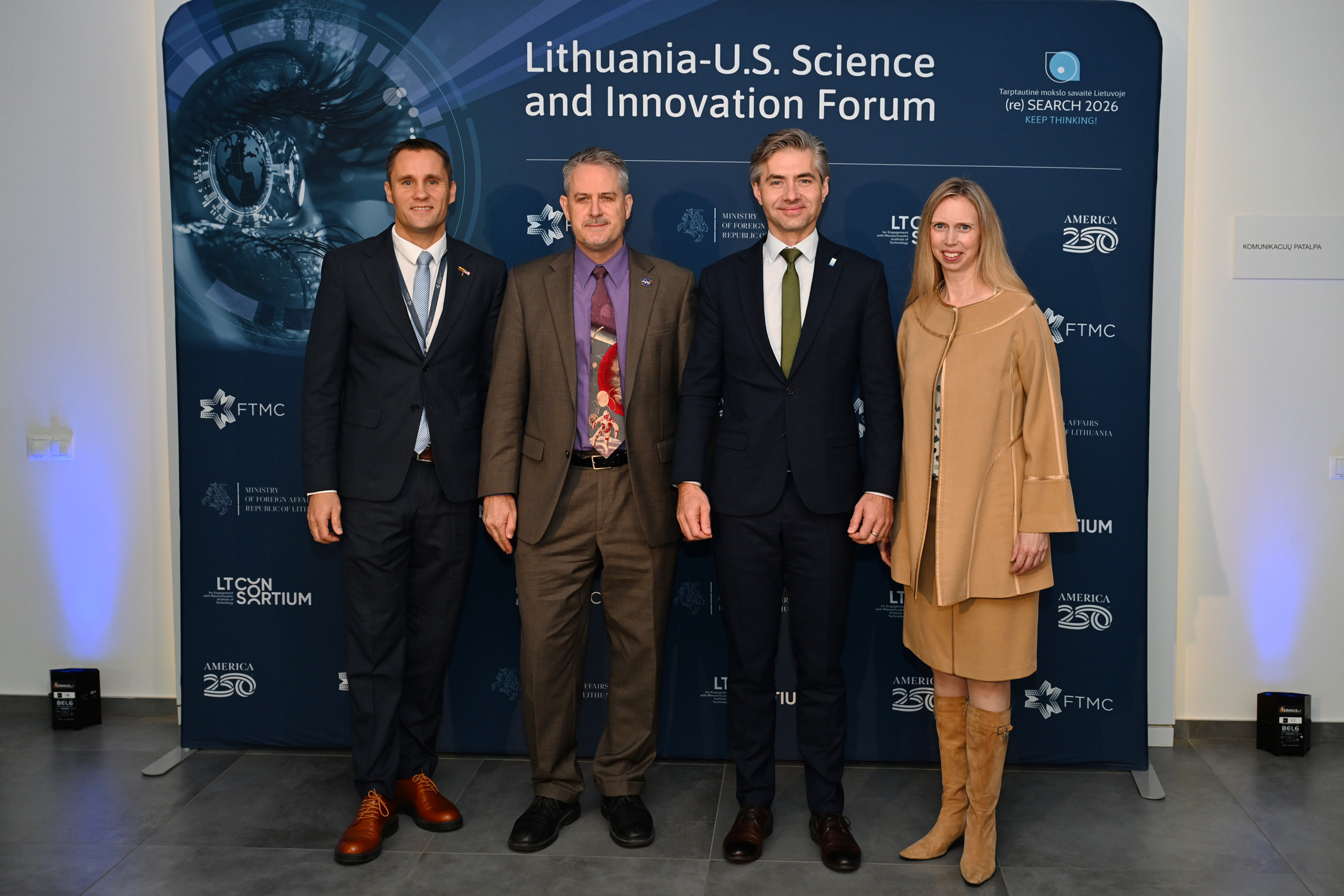
“A Special Day”: the First-Ever Lithuania-U.S. Science and Innovation Forum Held at FTMC
Policymakers, world-class scientists and leaders from business and innovation took part in the first-ever Lithuania-U.S. Science and Innovation Forum held in the country, hosted by FTMC.
The event aimed to strengthen transatlantic cooperation, promote technological leadership, and ensure the competitiveness and resilience of innovation.
Participants in the forum, organised to mark the 250th anniversary of US independence, attended presentations, discussed key issues, and established new connections. The event was organised by the Ministry of Foreign Affairs of the Republic of Lithuania together with its partners, FTMC and the Lithuanian Consortium for Engagement with MIT.
Strong Foundations for New Breakthroughs
Opening the forum, Minister of Foreign Affairs Kęstutis Budrys emphasised that Lithuania wants to expand cooperation with U. S. as strategic partner not only in the fields of security, defence, and the strategic alliance that have been building throughout the years, but also in other areas that will form the new foundation of cooperation. First and foremost, this means science, research, and technology.
Speaking about Lithuania’s strengths, Budrys highlighted photonics, lasers, biotechnology, life sciences and other fields in which significant achievements have already been made, with ambitions to go even further.
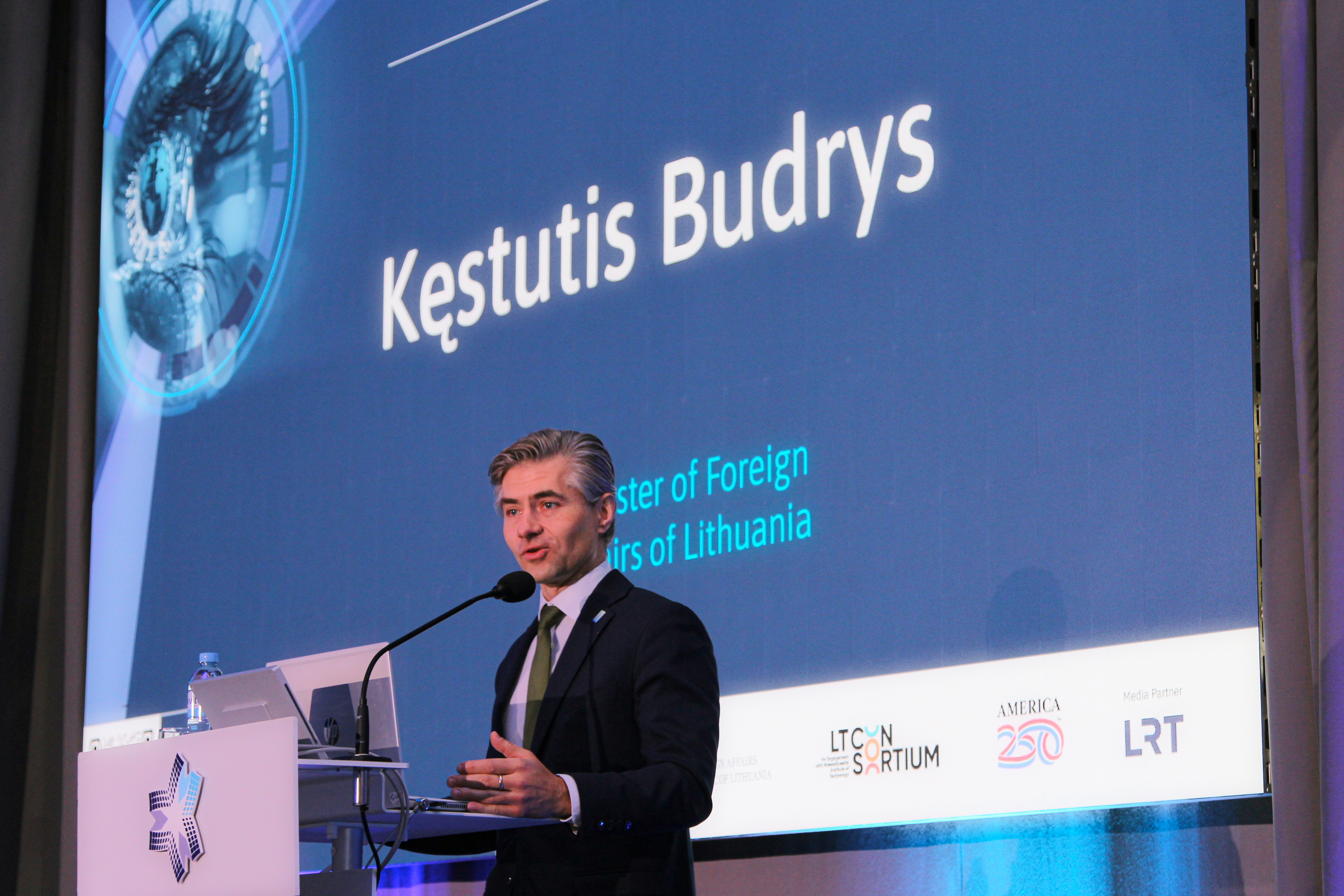
(Kęstutis Budrys. Photo: Gabrielius Mackevičius / FTMC)
“All in all, this shows that we have a broad agenda. We need to streamline our efforts, and I want scientific research and innovation cooperation to become an integral part of our strategic partnership with the United States for generations to come.
Finally, I would like to mention Lithuania's Presidency of the Council of the European Union, which begins on 1 January. One of our priorities will be strengthening the importance of transatlantic cooperation. Our positive agenda and scientific cooperation will be among the themes that we emphasise across all events and policy initiatives during our Presidency”, the minister said.
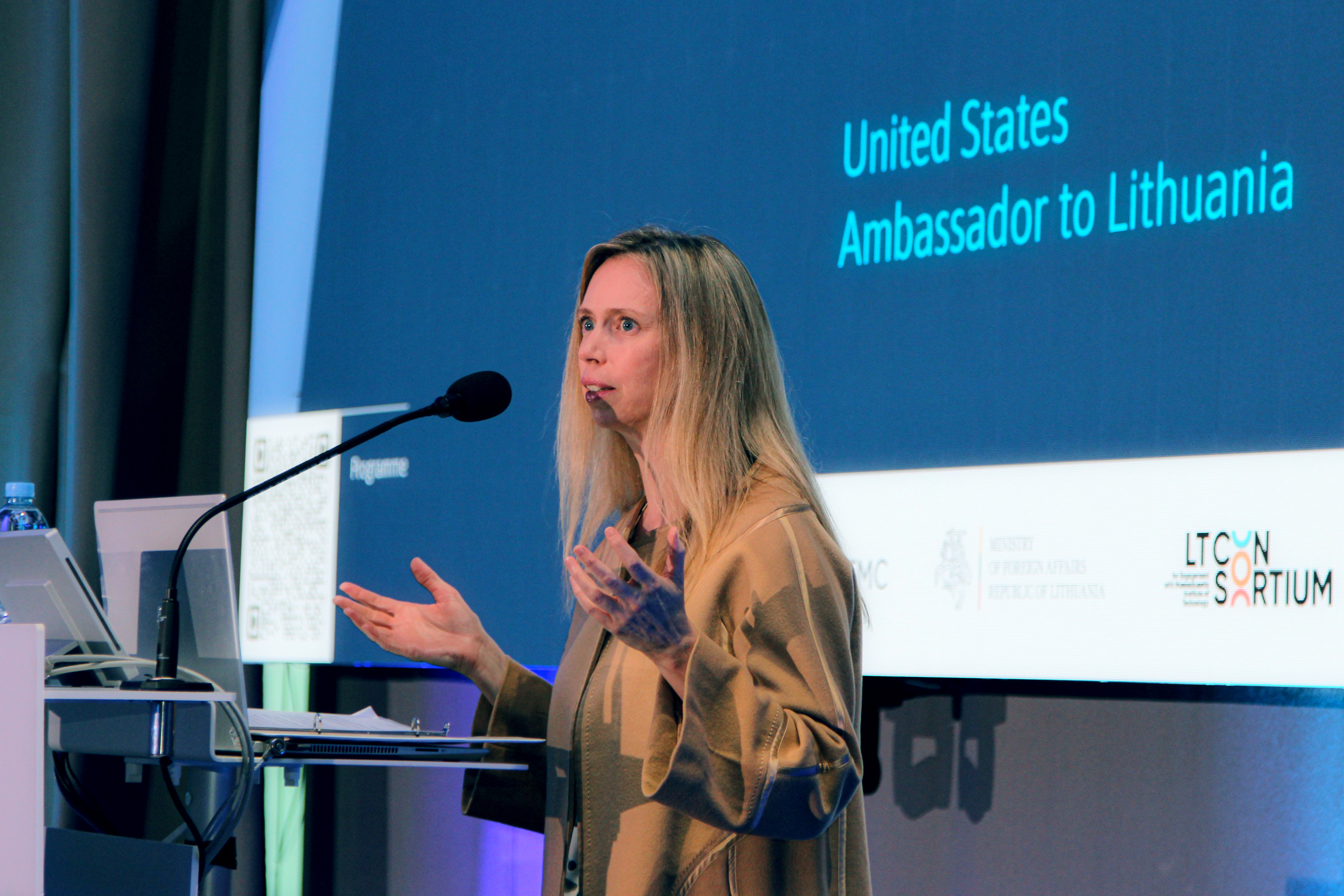
(Kara C. McDonald. Photo: Gabrielius Mackevičius / FTMC)
U.S. Ambassador to Lithuania Kara C. McDonald noted that, as the United States celebrates the 250th anniversary of its independence, it is also commemorating a long tradition of scientific progress and innovation, while American ingenuity continues to push the frontiers of what is possible.
However, according to the diplomat, revolutionary ideas rarely flourish in isolation. In today's rapidly evolving world, the reality is that countries that act with speed, clarity, and trust in their partners are the ones that will win the next decade. Lithuania also has an important place in this landscape:
„When we talk about the U.S.-Lithuanian partnership, we're talking about a relationship rooted in ironclad trust from 1918 to the present day. Our cooperation is driven by the understanding that economic security and technological leadership are key components of national security. Innovation is not only an engine of prosperity for both our countries, but also a driver of our shared security. The two are very much linked. Like the United States, Lithuania has proven time and again that it is a leader in science and technology.“
Highlighting Lithuanian achievements ranging from biotechnology and lasers to artificial intelligence (AI) and space satellites, McDonald added that this forum is not only about science and technology. It is also a reminder of the successful and mutually beneficial partnership between Lithuania and the United States, which will continue into the future.
„Our goal is to accelerate prosperity and cutting-edge capability. We're here to foster a safe and prosperous partnership between Lithuania and the United States. We want to help you take technologies and discoveries from the laboratory and find opportunities to scale them in global markets, leveraging US manufacturing capabilities,“, said the U.S. Ambassador to Lithuania.
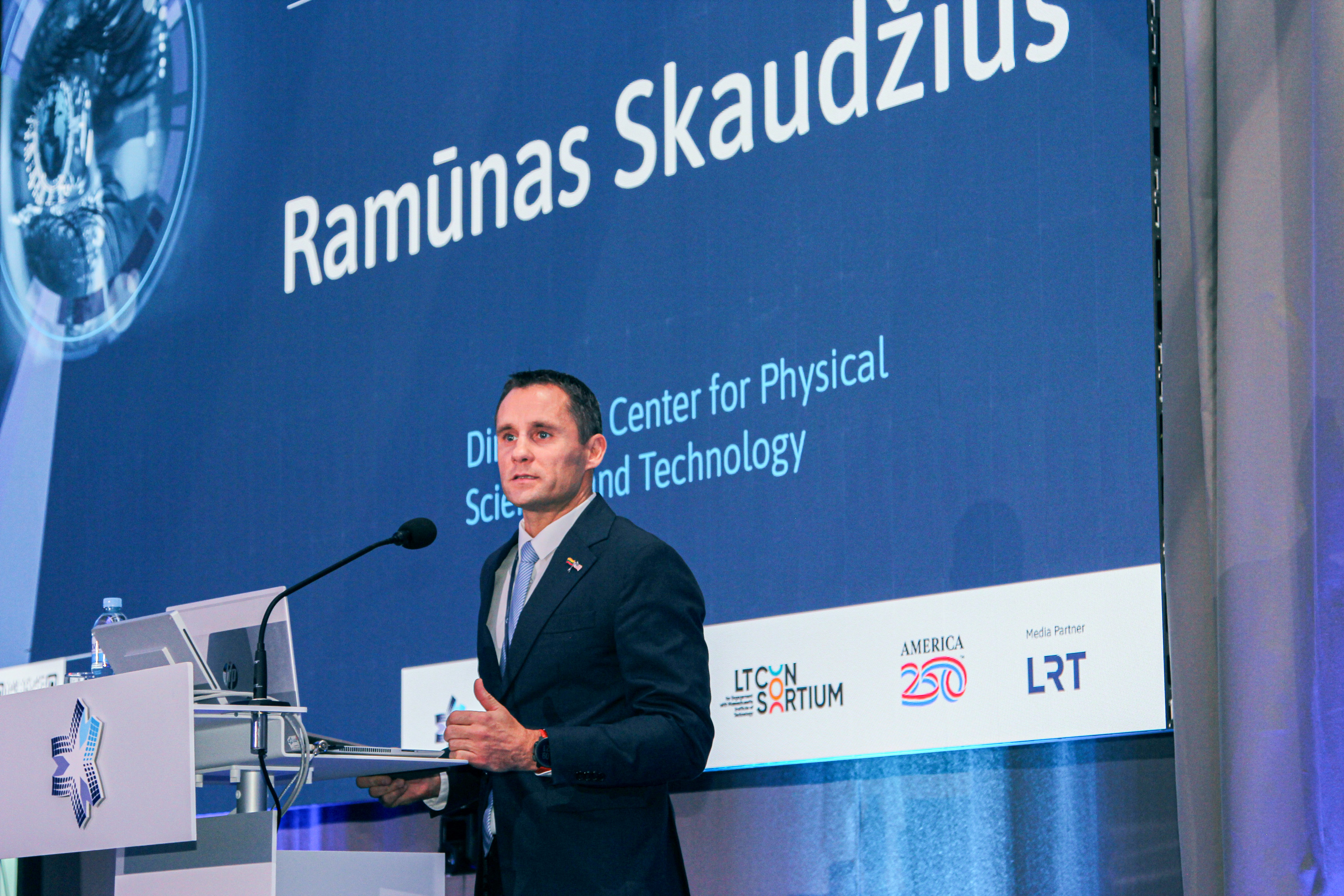
(Prof. Dr Ramūnas Skaudžius. Photo: Gabrielius Mackevičius / FTMC)
„We are proud to host an event like this. This is a special day. We have gathered people from different areas, and this is exactly the kind of dialogue that is needed if we want scientific knowledge to create real-world impact,“ FTMC Director Prof. Dr Ramūnas Skaudžius told forum participants.
According to him, we are living in a time when technology is changing rapidly, and society itself is changing as well. Technologies are no longer separate from questions of security, resilience and geopolitical influence. But technology is not the only thing that matters. Science, knowledge, and innovation are equally important.
“A resilient society is not only about defence capabilities. It is also about talented people, critical thinking, and scientific excellence. This is why gatherings like today's are so important. The most complex challenges cannot be solved by a single institution, a single country, or even a single discipline. They require collaboration across borders and across fields of expertise.
The same is true of the partnership between Lithuania and the United States. We move further when we work together,“ noted Prof. Skaudžius.
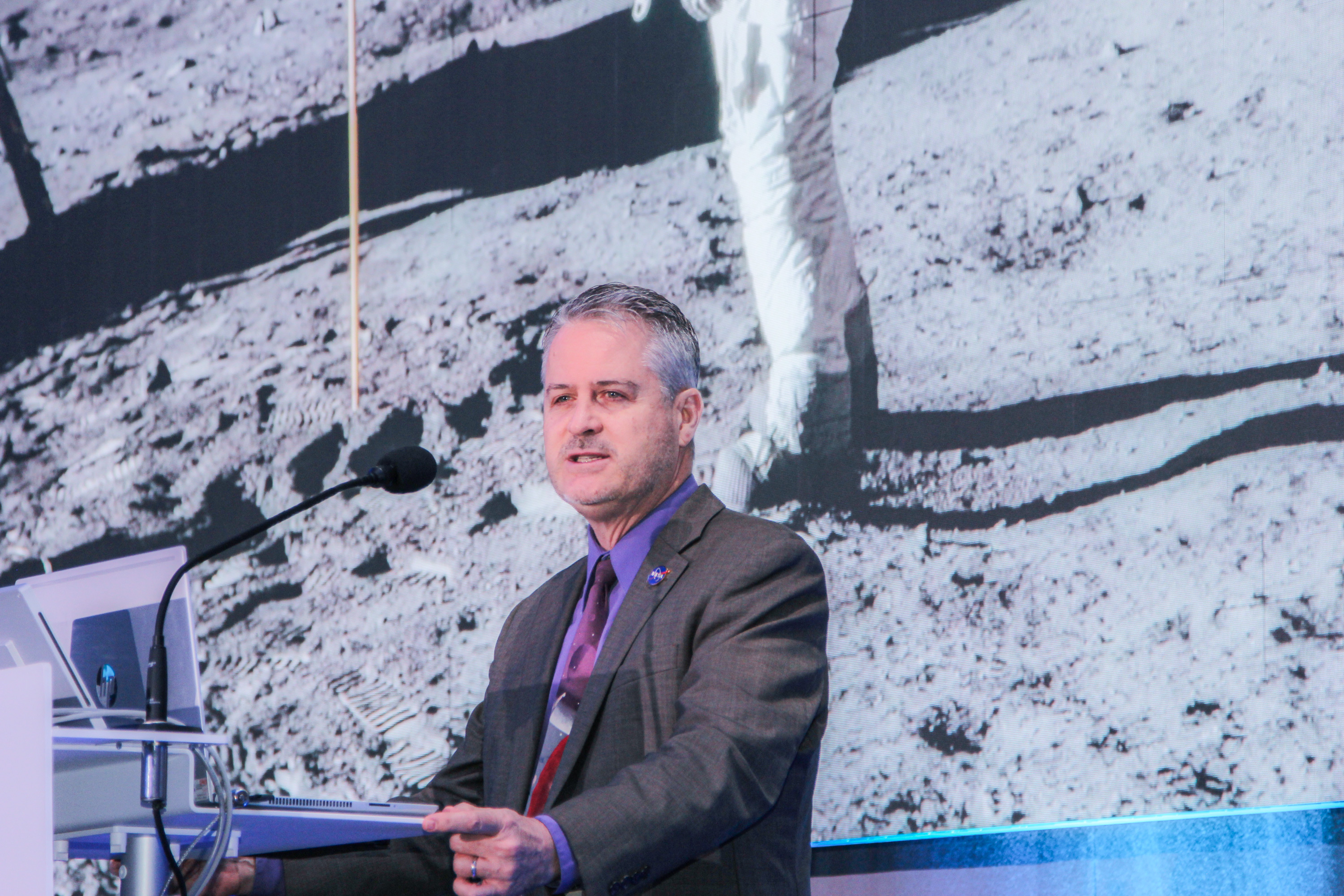
(Gregory Mann. Photo: Gabrielius Mackevičius / FTMC)
From Lunar Bases to Intercontinental AI Agents
One of the highlights of the forum was a series of keynote presentations by experts from globally renowned U.S. organisations, including the space agency NASA and the Massachusetts Institute of Technology (MIT).
NASA Europe representative Gregory Mann spoke about American plans to return humans to the Moon after a hiatus of more than 50 years and eventually establish a permanent base there. This time, however, according to the speaker, the United States intends to achieve this together with international partners, with the Artemis Accords serving as a key framework for cooperation.
„The Moon presents opportunities for scientific discovery, technology development and the demonstration of capabilities needed to operate farther from Earth. Lessons from sustained lunar operations will inform our eventual human exploration of Mars.
The Artemis campaign and Moon Base initiative will create opportunities for Artemis Accords signatories to contribute scientific instruments, technological capabilities, infrastructure, robotic systems, and other mission-critical elements. Lithuania’s signing of the Artemis Accords in 2024 provides an opportunity to join us in this new space race,“ said Mann.
Asked by FTMC about Lithuania’s potential role in this endeavour, the NASA representative replied that both the Lithuanian state and industry would need to earn their place through competition and sustained effort. Nevertheless, he stressed that participation is highly worthwhile, as space exploration is closely linked to technological advances that ultimately find applications on Earth:
“Space infuses everything in our lives right now. And so for every citizen here in Lithuania and around the world, space is intricately tied with their lives. But for the future and where we head from here, some of that's unknown. Is there gonna be opportunities for mining or things on the Moon or in the asteroids? We don't know yet, but it's a new frontier, and the technologies that are expanding dramatically are gonna open up opportunities for people here and around the world,” emphasised Mann.
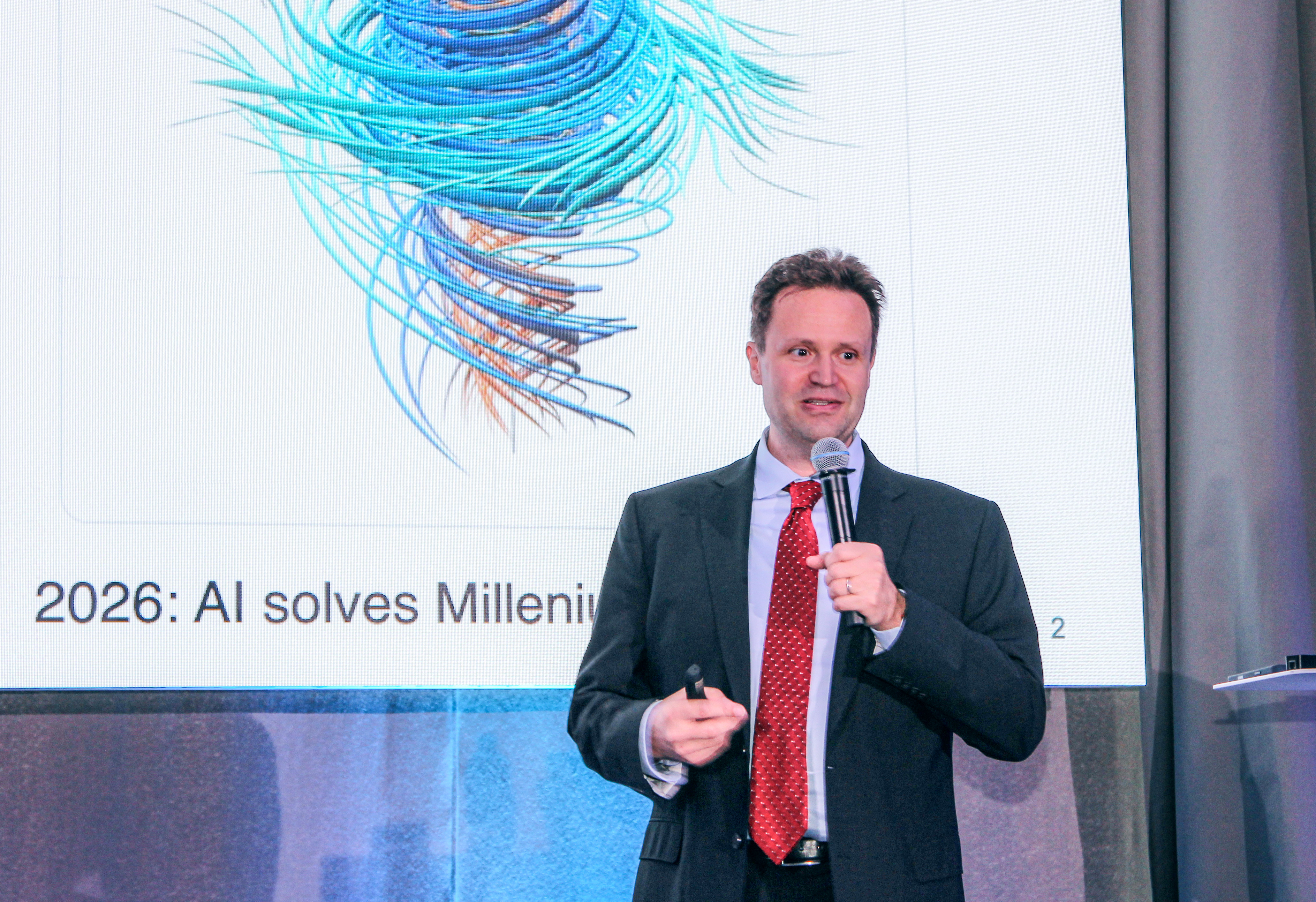
(Prof. Markus Buehler. Photo: Gabrielius Mackevičius / FTMC)
The other keynote speaker was MIT Jerry McAfee Professor of Engineering and member of the U.S. National Academy of Engineering (NAE) Markus Buehler, one of the world’s leading scientists working at the intersection of materials science, artificial intelligence and bioengineering.
The expert presented his latest research and insights into how AI can help design new proteins, biomaterials and sustainable engineering materials, as well as predict their properties.
The scientist observed that AI is already capable of solving mathematical and scientific problems that remained beyond humanity’s reach for decades. It is also becoming a powerful intermediary connecting science with music and other forms of art.
Prof. Buehler placed particular emphasis on AI agents, artificial intelligence systems that not only answer questions but also independently perform tasks in pursuit of specific goals. According to the speaker, in the future these agents will not only carry out tasks assigned by humans but will also formulate important new questions of their own, seek answers independently, and even communicate with one another across the globe. He believes Lithuania could play a role in this process.
“Deep tech, I think, offers particularly interesting prospects for AI because it needs problem spaces to work in. It also often requires experimental validation. So connecting your infrastructure, industries and visions for the future with AI presents a really exciting opportunity.
I can see significant potential in opening up your laboratories into what we call cloud labs. If you make these labs accessible to AI agents, you'll not only accelerate the pace of innovation, but you'll also open up a much larger market. AI agents from around the world will be able to utilise your facilities and contribute to innovation here. It's mutually beneficial to different countries,” the MIT professor told FTMC.
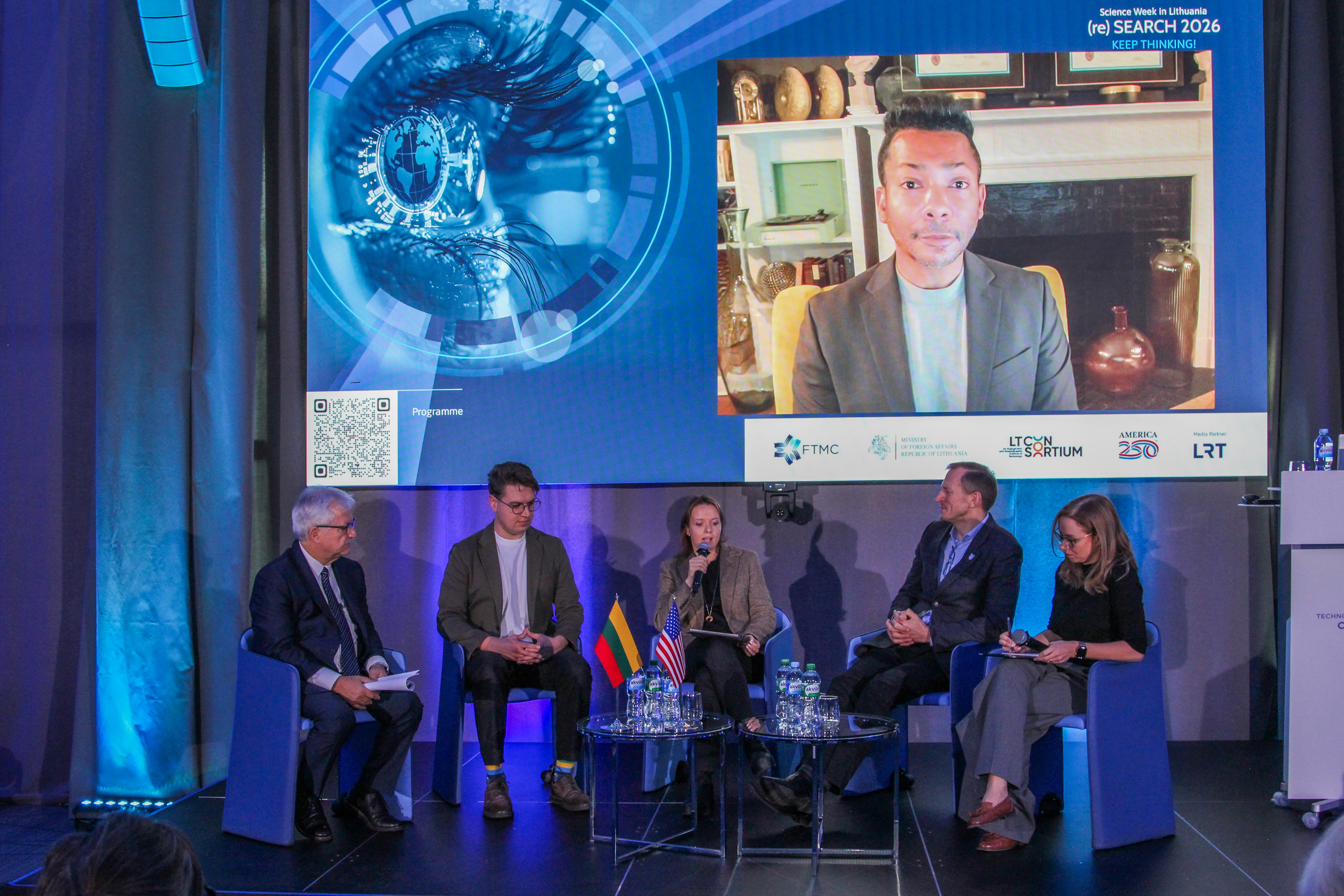
(Photo: Gabrielius Mackevičius / FTMC)
Participants and speakers at the Lithuania-U.S. Science and Innovation Forum also shared insights and success stories. Experts from various fields discussed how to turn a scientific idea into a functioning technology, and how to transform a developed technology into a highly visible product on the international market.
Among the panellists were Angelos Angelou, founder and CEO of the International Accelerator for foreign-born start-ups; Dr Adler Archer of the prestigious Johns Hopkins University; Nikolajus Gavrilinas, CEO of the Lithuanian femtosecond laser company Litilit; Dr Reda Nausėdaitė, FTMC Vice Director for Innovations and Development; and others.
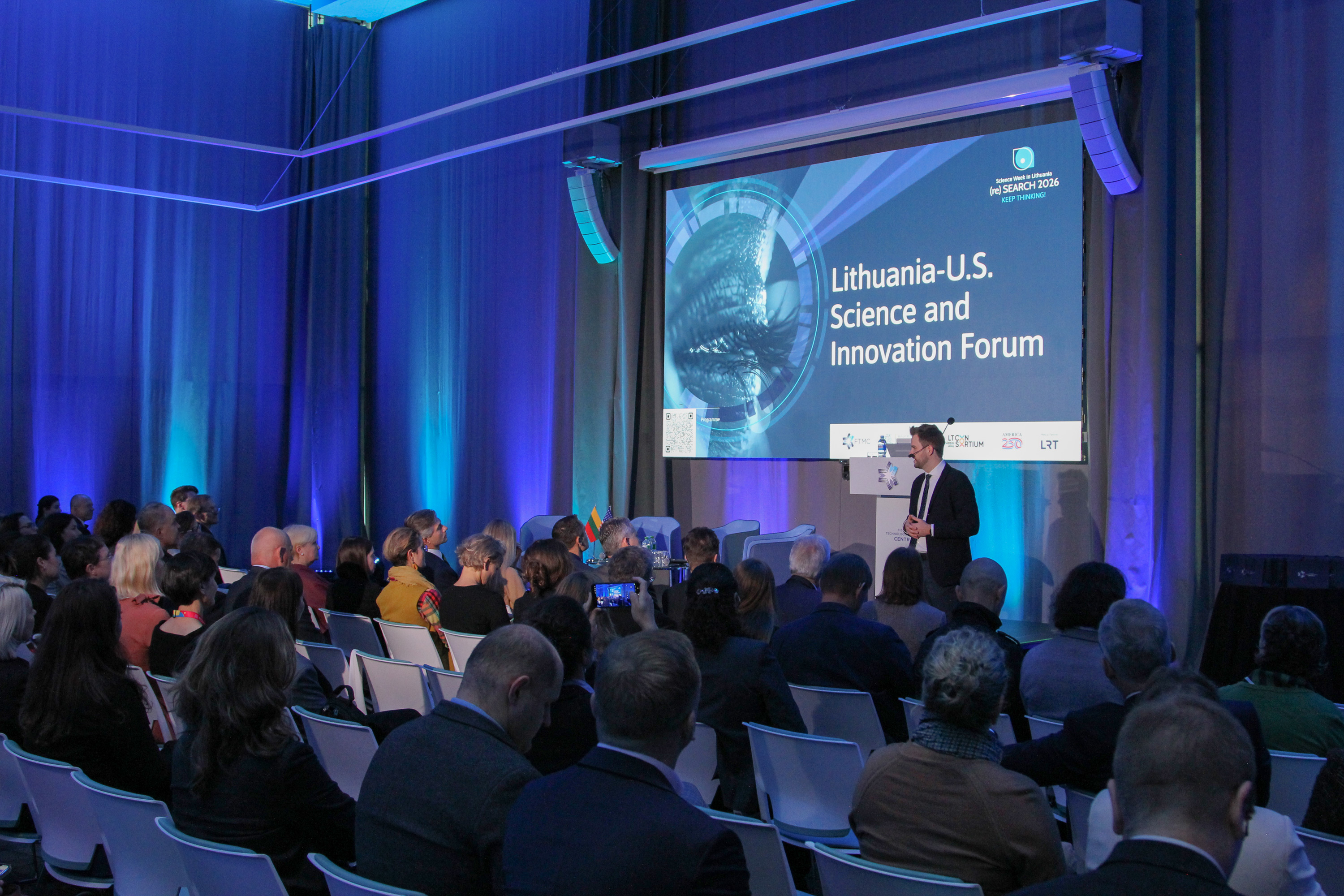
(Photo: Gabrielius Mackevičius / FTMC)
The Lithuania-U.S. Science and Innovation Forum forms part of the programme of International Science Week in Lithuania, “(re)SEARCH 2026”. For more information, please visit scienceweek.lt.
Source: FTMC