- Home
- Structure
- Scientific Divisions
- Department of Nanotechnology
- About the department
About the department
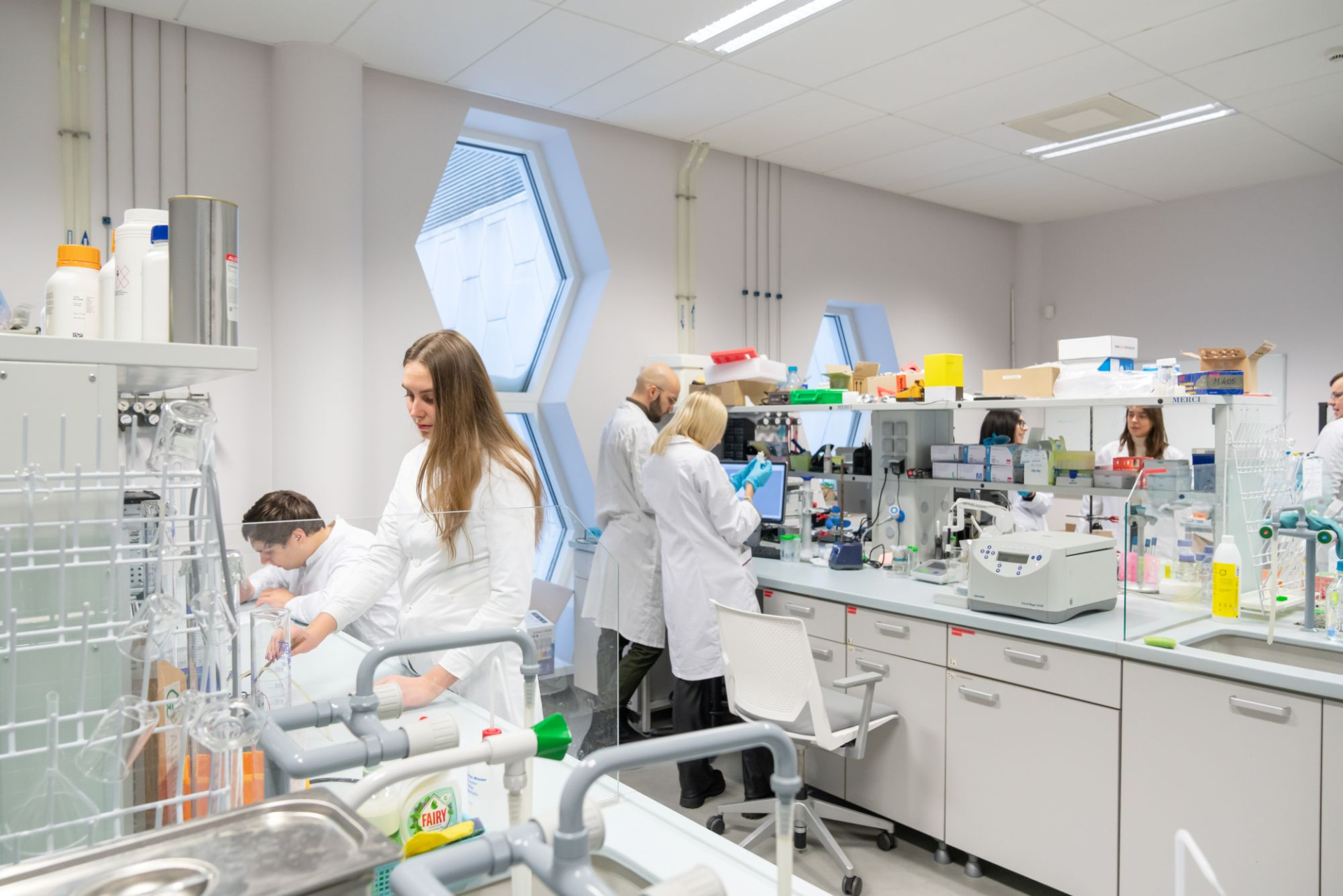
The Department of Nanotechnology conducts a wide range of research in the field of biological sensors.
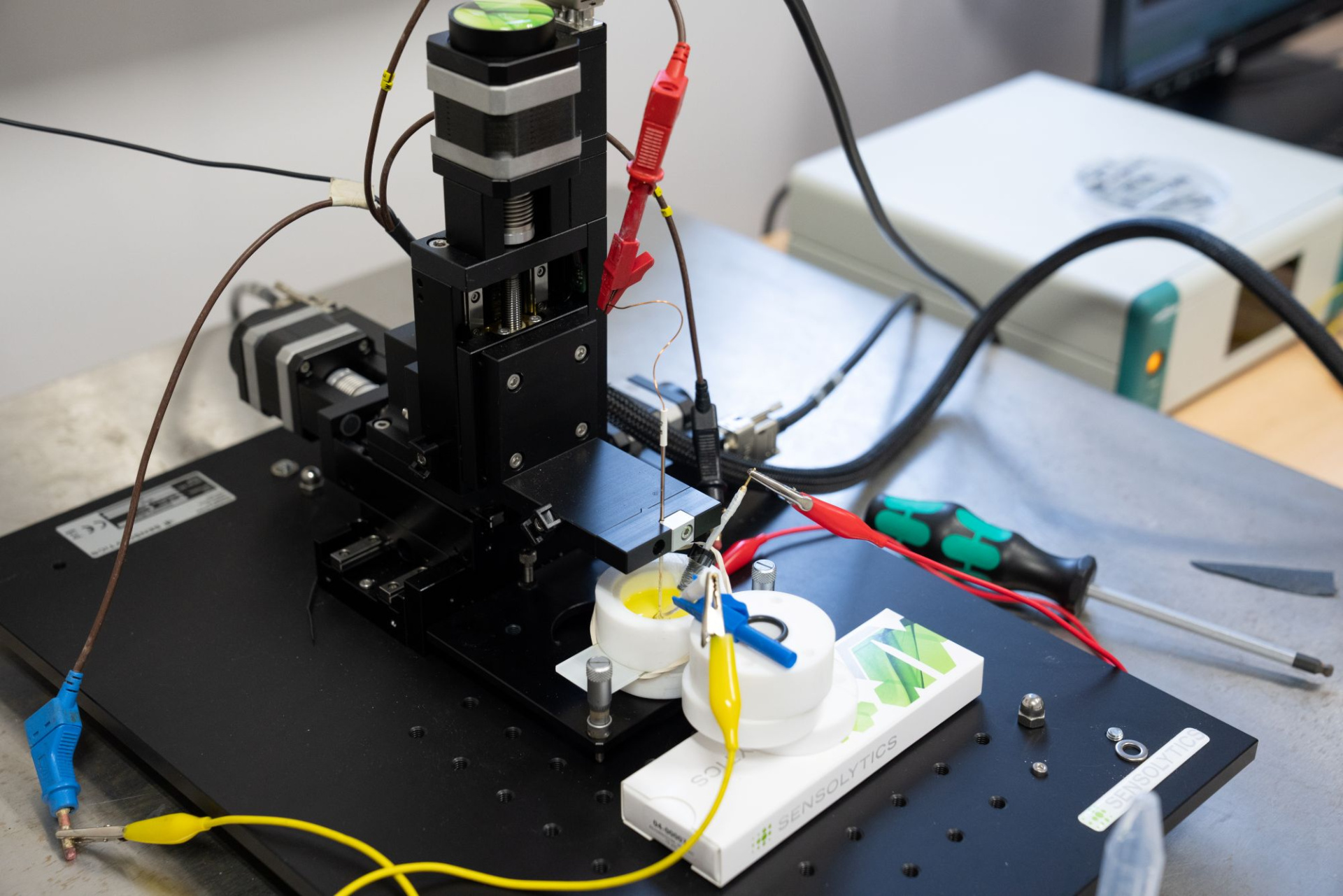
One of these areas is the development of optical biological sensors. Spectroscopic ellipsometry, surface plasmon resonance, and spectroscopic ellipsometry enhanced with surface plasmon resonance techniques are used for this purpose. The optical properties of various substrates intended for use in biosensors are determined during the research. For this purpose, different substrates such as nanolaminates are used, consisting of repeating bilayers of metal oxides with different thicknesses. By choosing the required number of bilayers and the thicknesses of individual layers, it is possible to obtain the coatings required for optical sensors with specific optical properties. Materials such as Al2O3/ZnO, Al2O3/TiO2, and ZnO/GOx bilayers are used in nanolaminates. Also, nanowires formed from ZnO and TiO2 coating or metal layers are used to create optical biological sensors to excite surface plasmon waves. After carrying out the necessary tests on the pallets, they are further modified with biological layers formed from different proteins or enzymes. The kinetics of the formation of these layers can be analyzed in real-time using the spectroscopic ellipsometry technique. After measuring the kinetics, various analytical and numerical modelling methods are further applied to calculate the kinetic parameters and reveal the mechanisms of the formation of molecular layers and their interactions with other proteins.
Another topic of research carried out in the Department of Nanotechnology is electrochemical research using electrically conductive polymers as research objects. Conductive polymers such as polypyrrole (Ppy) and its derivatives, polyaniline (PANI) and its derivatives, poly(3, 4-ethylenedioxythiophene) (PEDOT) are used for research. Also investigated are copolymers obtained by electrochemical polymerization of the mentioned monomers. The main directions of research of these polymers are studies of electrochromic properties, application of molecular imprint polymers in the production of sensors for the determination of small molecular compounds in solutions, etc.
The nanotechnology department creates and analyzes several different types of biofuel cell systems. We focus on enzymatic (Glucose oxidase, horseradish peroxidase-based) and microorganism (Yeast, aerobic and anaerobic bacteria-based) biofuel cell systems that operate in a single chamber or in multi-chamber configurations. With the intent to be used for energy production in off-grid installations and waste treatment applications.