- Home
- Structure
- Scientific Divisions
- Department of Molecular Compound Physics
- About the department
About the department
The investigations carried out in the Department of Molecular Compounds Physics are focused on photoinduced electronic processes and their characteristics in various organic, inorganic, hybrid and also biological systems. The examples are organic and perovskite solar cells and other devices, photosynthetic protein complexes, fluorescent sensors. Our goals are to understand both sequence of the photoinduced processes and the effect the structure of the systems has on these processes. Additionally, we strive to control processes in new organic optoelectronic devices and biological sensors and to create new methods of characterization for organic systems.
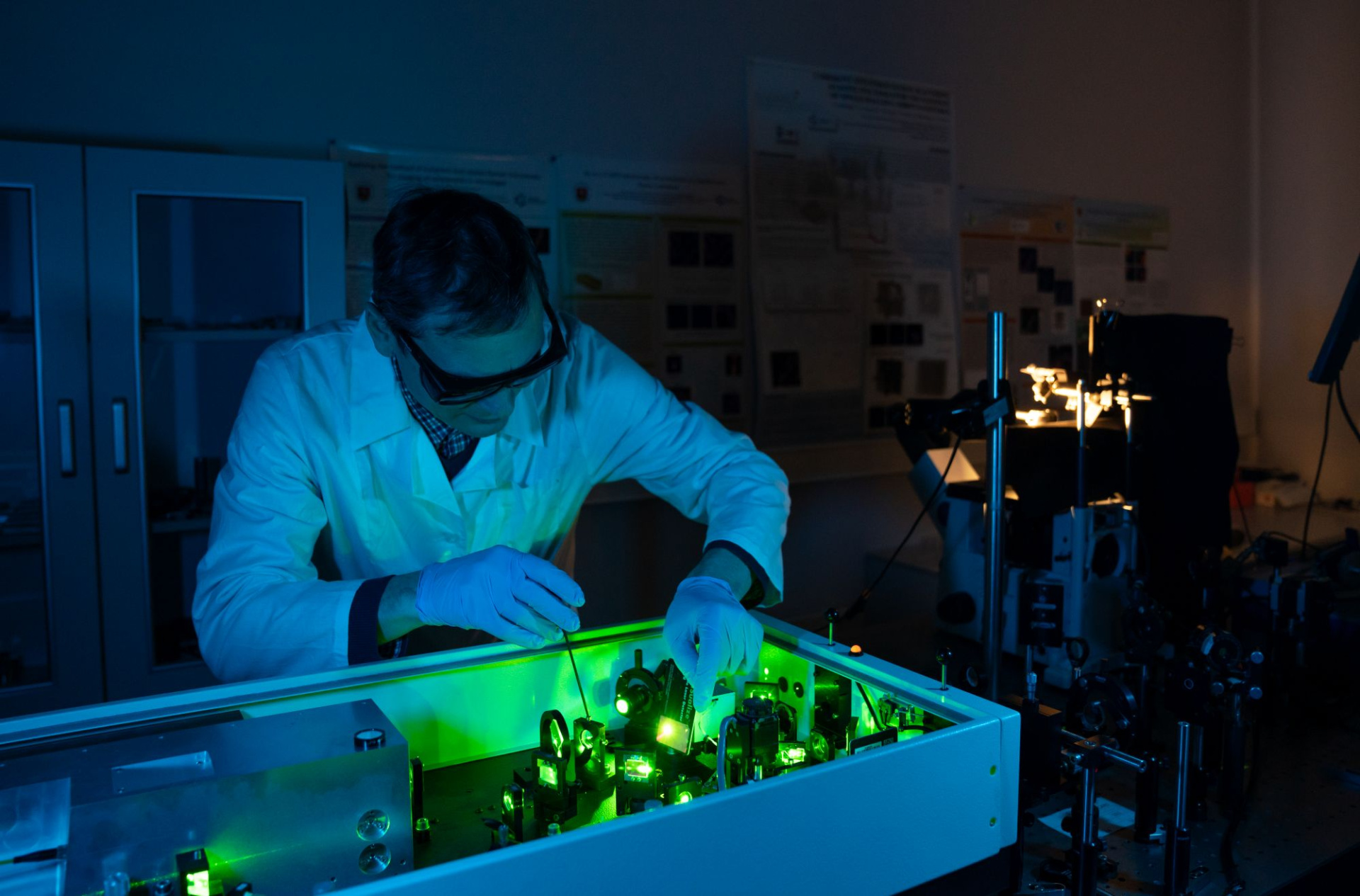
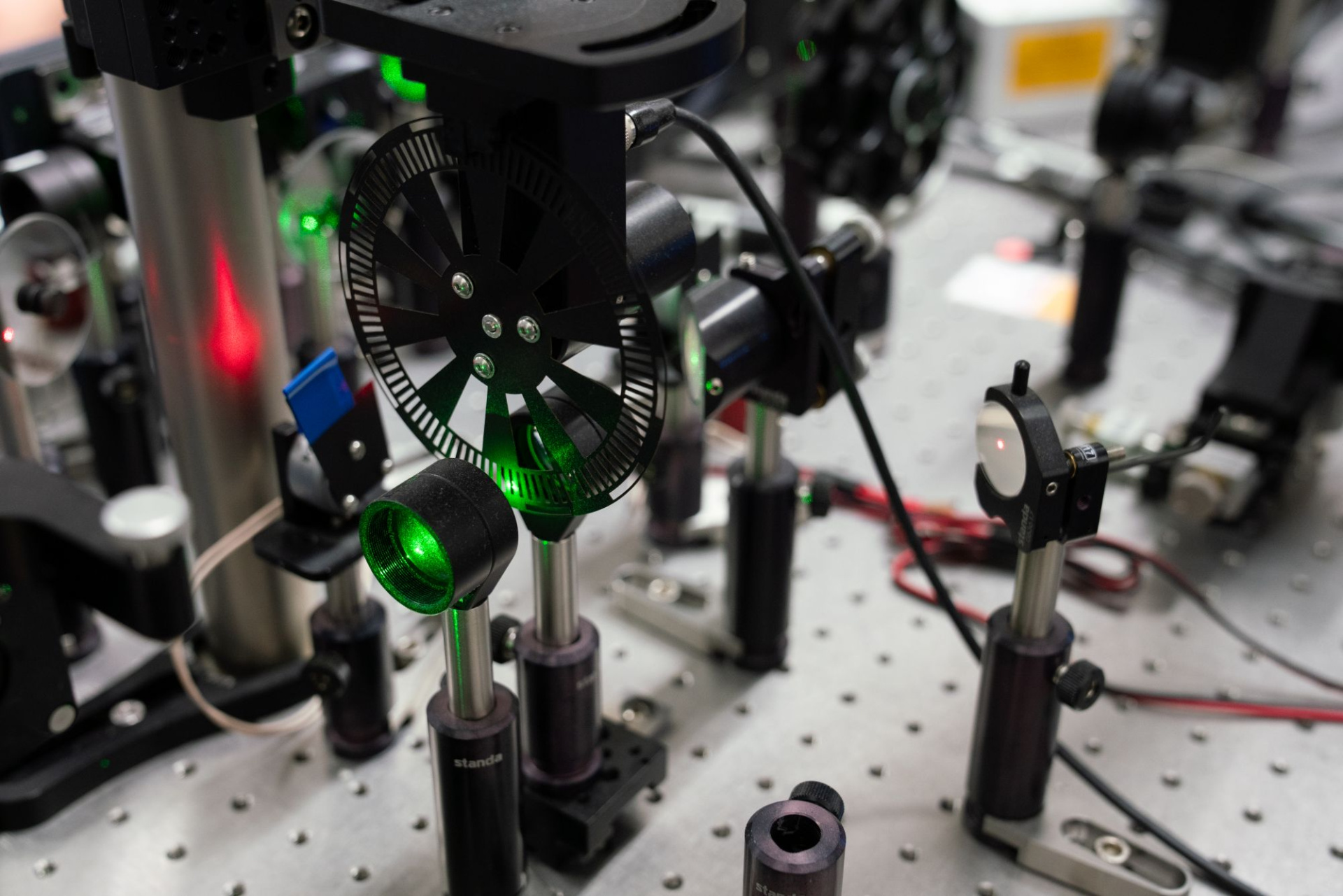
We employ a number of different ultrafast spectroscopy methods and combine them with time-resolved electric methods for achieving our goals. Together, these techniques allow us to determine the spectroscopic and electric properties of molecules and materials, which then aid us in creating new molecular devices or by improving existing devices for use in new areas. Unique ultrafast optical techniques are used, results of which are combined with transient absorption, time-resolved fluorescence and time-of-flight methods for studying photogeneration of charge carriers and quickly-evolving rates of carrier drift and diffusion.
Besides optoelectronic devices, another research direction that is being pursued in the Department is the investigation of processes occurring in natural biological systems. The mechanism of initial steps in photosynthesis is investigated by ultrafast spectroscopy techniques such as two-dimensional electronic spectroscopy and time-resolved fluorescence. New theoretical models are being developed for describing excitation and carrier dynamics and the effect protein environment has on them. Structural properties of biological and other molecular objects are being determined using CARS, multiphoton fluorescence and single-molecule fluorescence microscopies. Viscosity and temperature on the microscale are being determined by fluorescent sensors.